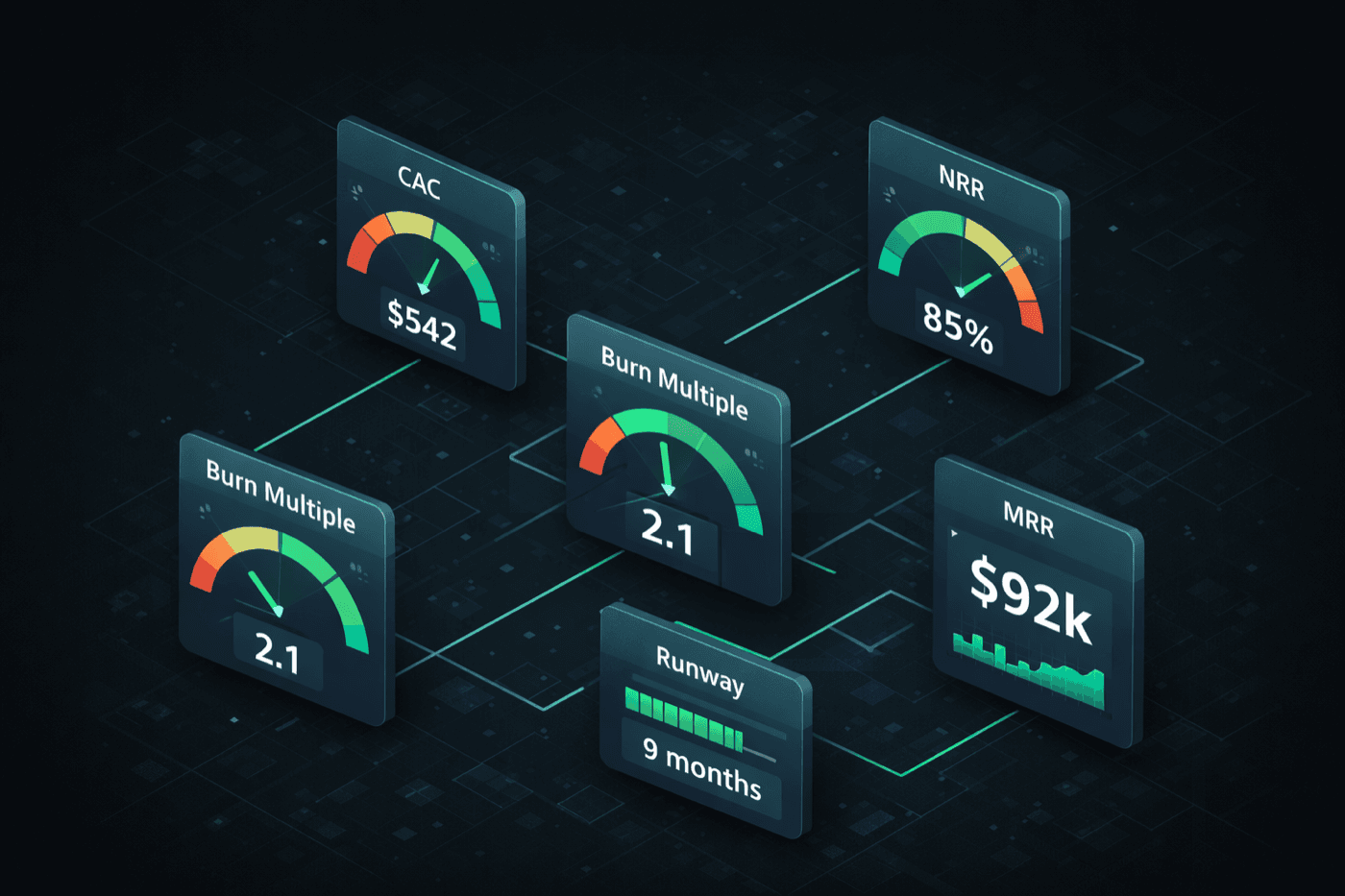



Why Your Board Deck Matters More Than You Think
Board meetings represent one of the most consequential touchpoints between founders and investors. Yet many Seed to Series A companies treat board reporting as an administrative burden rather than a strategic opportunity. The difference between founders who build lasting investor relationships and those who struggle often comes down to how they communicate through their board of directors materials.
Effective board reporting does more than satisfy governance requirements. It demonstrates financial acumen, builds credibility, and creates the foundation for future fundraising conversations. When investors see consistent, transparent reporting, they develop confidence in the founder's ability to manage the business through both growth and adversity.
The Anatomy of a Board Deck That Commands Respect
A well-structured board deck template for startups typically covers five core areas: financial performance, key metrics, strategic initiatives, challenges and risks, and forward-looking guidance. The order matters because it establishes narrative flow from what happened to what comes next.
Financial performance should lead with the numbers investors care most about. For SaaS companies, this means MRR or ARR trends, net revenue retention, and gross margin progression. For ecommerce founders, GMV, average order value, and contribution margin take center stage. Present these metrics in context, showing period-over-period comparisons and variance against plan.
The key metrics section should highlight the operational drivers behind financial results. Customer acquisition cost, lifetime value, and CAC payback period tell the story of unit economics health. Churn rate trends reveal customer satisfaction and product-market fit signals. Present these with enough historical context (typically 6-12 months) to show trajectory rather than isolated snapshots.
Investor Update Best Practices That Build Credibility
The most effective board communications share common characteristics that distinguish them from compliance-driven reporting. Consistency ranks first among these practices. Establish a regular cadence (monthly updates, quarterly deep dives) and maintain it regardless of whether news is good or bad.
Transparency about challenges builds more trust than relentless optimism. Sophisticated investors expect problems; they evaluate founders based on how quickly issues are identified and addressed. Present challenges alongside the specific actions being taken to resolve them, including timelines and success metrics.
Forward-looking guidance demonstrates strategic thinking. Share your runway projections, burn rate assumptions, and the scenarios you are planning for. This shows investors you are managing the business proactively rather than reactively.
Connecting Board Reporting to Fundraising Success
Board materials serve as the foundation for future due diligence processes. When Series A conversations begin, investors will request historical financials and board decks. Companies with organized, professional documentation move through diligence faster and with fewer red flags.
The metrics you track in board reporting should align with what Series A investors evaluate. Understanding which financial metrics matter most to growth-stage investors helps founders prioritize what to measure and report from day one.
Your cap table management and valuation cap tracking should also feature in board discussions. Clear communication about dilution expectations and pro-rata rights helps existing investors plan for follow-on participation.
The Mechanics of Effective Board Communication
Beyond content, the mechanics of board communication matter. Send materials at least 48 hours before meetings to give board members time to prepare thoughtful questions. This shifts meeting time from information transfer to strategic discussion.
Structure your deck for both reading and presentation. Board members who review materials in advance will skim differently than those encountering information live. Use clear section headers, executive summaries for each section, and appendices for detailed backup data.
Track key decisions and action items from each meeting. Circulate meeting notes within 24 hours and reference open items in subsequent updates. This creates accountability and demonstrates operational rigor.
Common Board Reporting Mistakes to Avoid
Several patterns consistently undermine board effectiveness. Vanity metrics that look impressive but do not connect to business fundamentals erode credibility over time. Revenue growth without corresponding unit economics improvement raises questions about sustainability.
Inconsistent metric definitions create confusion and suggest either analytical weakness or intentional obfuscation. Define how you calculate each metric, stick to those definitions, and note any methodology changes explicitly.
Overwhelming boards with data rather than insight wastes everyone's time. The goal is not to demonstrate how much you track but to surface the 5-10 metrics that actually drive decision-making. Everything else belongs in an appendix.
Building the Foundation for Long-Term Investor Relationships
Board reporting represents an ongoing conversation with your investors, not a series of isolated presentations. The trust built through consistent, transparent communication compounds over time. When challenges arise (and they will), that trust becomes your most valuable asset.
Founders who master board communication often find that investors become more valuable advisors. When board members understand the business deeply, they can offer more targeted guidance and make warmer introductions. The investment in quality reporting returns dividends well beyond governance compliance.
Start with the fundamentals: clear financial reporting, honest assessment of progress and challenges, and forward-looking guidance that demonstrates strategic thinking. Build from there based on what generates the most productive board discussions. The goal is not perfection but continuous improvement in how you communicate the business to those who have invested in its success.