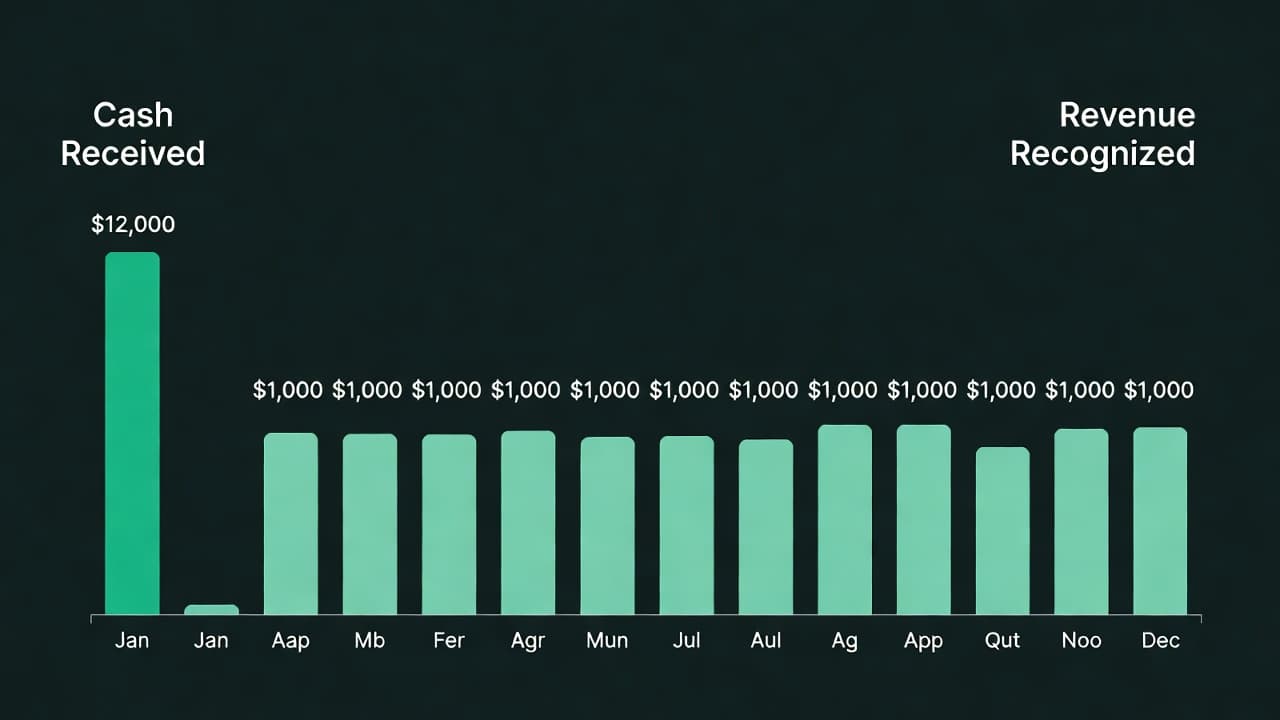


Most founders treat bookkeeping as a problem for later. Revenue first, tracking second. The logic makes sense on the surface, but it misses something fundamental: bookkeeping for startups isn't about tracking money you already have. It's about building the financial visibility that prevents expensive mistakes, saves you money at tax time, and keeps investors confident in how you run your business.
From the day you incorporate, financial events are happening. Incorporation fees, software subscriptions, contractor payments, founder contributions. Without a system capturing these transactions in real time, you're left reconstructing history from scattered bank statements and email receipts when it actually matters: during fundraising, tax season, or a cash crunch.
The founders who get startup bookkeeping right early build companies with clean financial foundations. The ones who delay spend weeks doing painful reconstruction work during the worst possible moments.
How to Set Up Startup Bookkeeping
The right bookkeeping setup depends on where your company is today. A pre-revenue startup needs different infrastructure than a company preparing for Series A due diligence. Here's how to build the right foundation at each stage.
Pre-Seed Stage: Founding to First Revenue
The earliest stage requires minimal infrastructure but establishes habits that scale. Open a dedicated business bank account and business credit card immediately, even before first revenue. Commingling personal and business expenses creates tax complications and makes investor due diligence unnecessarily painful.
At this stage, transaction volume remains low enough for manual tracking. A simple spreadsheet categorizing expenses by type (software tools, contractor payments, incorporation costs) provides sufficient visibility for tax preparation and basic budgeting.
The key discipline involves recording every transaction promptly rather than reconstructing months of activity when tax season arrives. Transition trigger: move to automated bookkeeping software at 20 monthly transactions or your first paying customer, whichever comes first. Pre-seed founders spending more than two hours monthly on bookkeeping should implement solutions that scale with transaction growth.
Seed Stage: $0 to $1M ARR
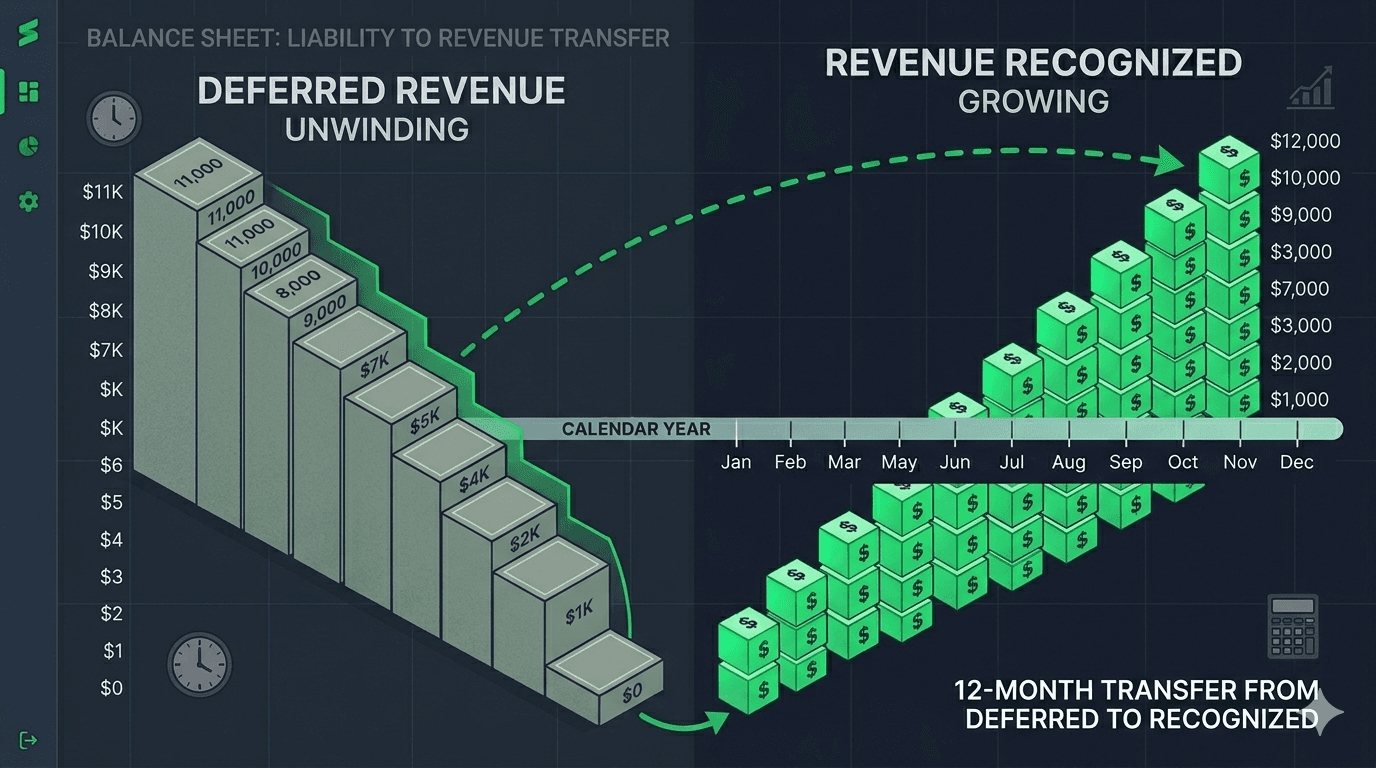
Accrual accounting becomes mandatory at the seed stage when subscription revenue creates timing differences between cash collection and revenue recognition. Founders can no longer rely on bank balance as a proxy for company performance. The books must distinguish between cash received and revenue earned.
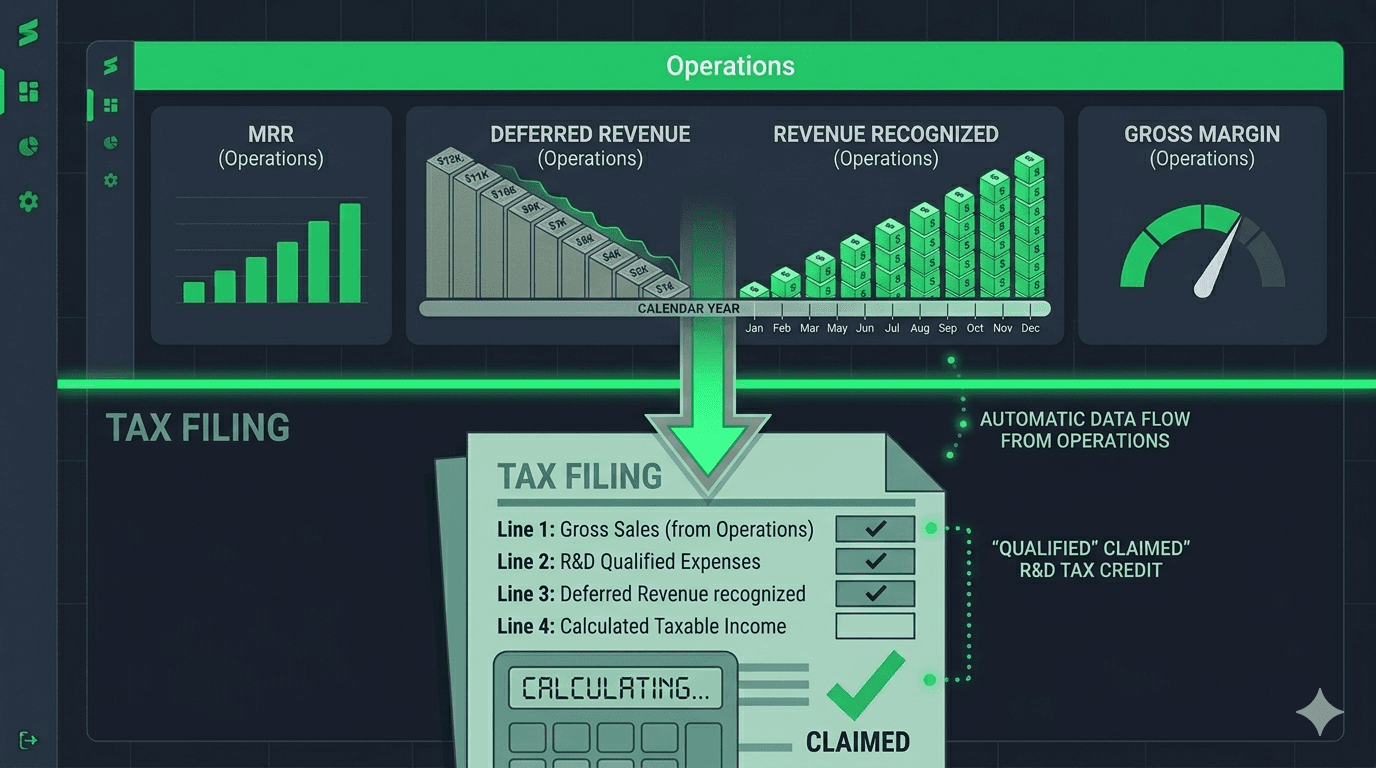
Deferred revenue tracking starts the moment a company sells its first annual subscription, locking in that ACV. That $12,000 payment creates an $11,000 liability that must be tracked and recognized monthly. Failing to implement this treatment creates financial statements that radically overstate revenue and profitability.
Department-level expense tracking, known in Futureproof as Smart Segments, enables basic budget management as teams grow beyond solo founders. Creating separate categories for sales and marketing, engineering, and general and administrative expenses reveals where capital deploys and which departments exceed budgets.
Month-end close processes should formalize by $500,000 ARR. This involves reconciling bank accounts, recording deferred revenue journal entries, categorizing transactions, and generating financial statements. The close process typically requires four to eight hours monthly for companies in this revenue range.
Automation becomes essential at 50 monthly transactions or when raising Series A within six months. Investor due diligence requires clean historical financials, and retroactively fixing six months of manual bookkeeping consumes weeks of a seed stage founder's time during the critical fundraising period.
Series A and Beyond: $1M to $10M ARR
Department and project-level expense tracking becomes mandatory as organizations grow beyond ten employees. Finance teams need visibility into which departments and initiatives consume capital to make informed budget allocation decisions.
Revenue recognition for subscriptions stops being optional at this stage. Investors and auditors expect recognition that handles complex contract terms, bundled offerings, and usage-based billing components. Companies that delayed it face expensive audit failures and potential restatements.
Integration with billing systems like Stripe, Chargebee, or Recurly eliminates manual transaction entry and ensures bookkeeping data matches billing system records. Automated reconciliation between systems catches discrepancies immediately rather than discovering them months later during month-end close.
CFO-ready reporting includes board packets, investor updates, variance analysis, and department-level P&Ls. Finance teams at this stage typically include a controller or fractional CFO as VP of Finance who relies on clean, automated bookkeeping to focus on strategic analysis rather than transaction categorization. At this stage, metrics like the rule of 40 really start telling a story that investors will keenly dive into.
Startup Accounting Software: How to Choose the Right Tool
The startup accounting software market splits into three categories: traditional accounting platforms, SaaS metrics tools, and all-in-one AI platforms. Each serves a different stage and need. Understanding the tradeoffs helps you avoid paying for tools you'll outgrow in six months or choosing platforms that can't handle subscription revenue complexity.
Traditional Accounting Software (QuickBooks, Xero)
QuickBooks and Xero dominate the small business accounting market with familiar interfaces and affordable pricing between $30 and $50 monthly. CPAs and accountants know these platforms well, making it easy to find professional help for tax preparation and year-end reporting.
However, neither platform was built for subscription revenue models. Recording deferred revenue requires manual journal entries each month. MRR and ARR calculations happen in external spreadsheets rather than flowing automatically from the books. Multi-tier pricing, usage-based billing, and mid-cycle plan changes require complex workarounds that most bookkeepers implement inconsistently.
These platforms work best for companies with existing bookkeepers or accountants experienced in SaaS-specific workarounds. The total cost includes software ($50/month) plus bookkeeper time ($500 to $1,500/month) plus separate analytics tools for metrics tracking.
SaaS Metrics Platforms (Baremetrics, ChartMogul)
Analytics platforms like Baremetrics and ChartMogul excel at metrics dashboards and revenue tracking but don't handle actual bookkeeping. These tools sit on top of Stripe or other billing systems to calculate MRR, churn, LTV, and cohort analysis.
The limitation: they require QuickBooks or Xero underneath for general ledger accounting. Companies end up paying for three systems (billing platform, bookkeeping software for startups, and analytics layer). This creates integration complexity and potential data discrepancies between systems.
These platforms serve growth-stage companies with dedicated finance teams who want executive dashboards and investor-ready metrics presentations. The cost typically ranges from $100 to $500 monthly depending on ARR, adding to the total finance stack cost.
All-in-One AI Platforms (Futureproof)
Modern AI-powered startup accounting software combines bookkeeping, forecasting, and fundraising essentials like data room and cap table modeling in unified systems built specifically for startup economics. This eliminates the fragmented tool stack that creates integration headaches and data inconsistencies.
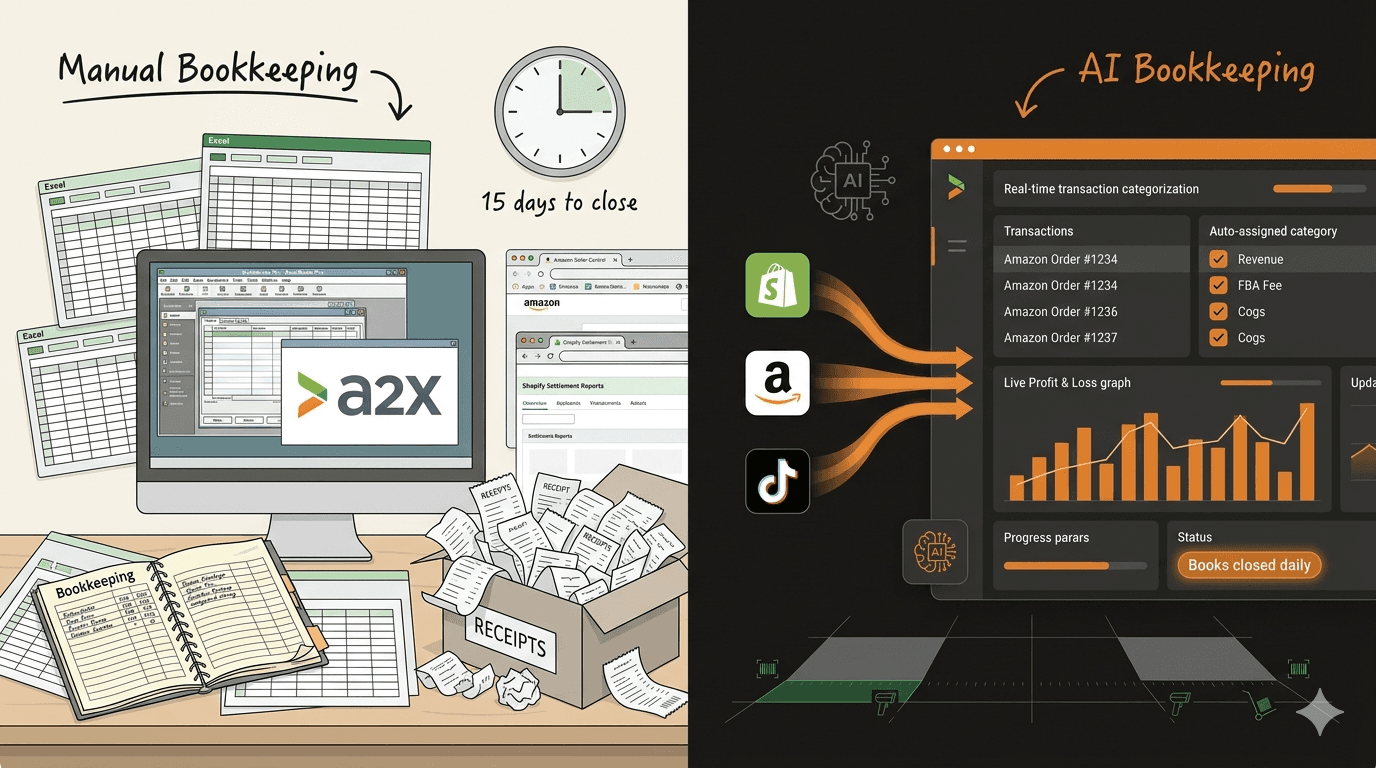
AI categorization works by learning from Stripe and payment processor metadata. The system recognizes transaction patterns, distinguishes recurring from one-time charges, auto-tags by department and project, suggests deferred revenue journal entries, and flags anomalies like duplicate charges or unusual amounts. Accuracy improves over time as the AI learns company-specific patterns. See how AI bookkeeping works for SaaS startups.
The integrated approach provides several advantages. Bookkeeping data flows automatically into forecasting models. Cap table integration eliminates reconciliation gaps between equity records and financial statements. Runway calculations update in real time as burn rate changes. Investor reports generate automatically without manual data export and reformatting.
The 5 Most Common Startup Bookkeeping Mistakes
Even founders who start bookkeeping early can undermine their financial clarity with a handful of recurring errors. These five mistakes show up in nearly every startup we work with, and each one creates problems that compound over time. The good news: they're all fixable once you know what to look for.
Mistake 1: Recognizing Revenue Too Early
The most common and damaging mistake involves recording full annual subscription value as revenue when payment occurs. A founder who sells a $12,000 annual plan and records $12,000 revenue in month one creates financial statements that overstate revenue by eleven times for that transaction.
This error cascades through every financial metric. MRR calculations become meaningless. Gross margin appears artificially high. The income statement shows profitability while cash actually burns. Investors who discover this error during due diligence question the founder's financial competency and often walk away from deals.
IRS implications compound the problem. Prematurely recognized revenue creates tax liability on money that must be refunded if the customer churns before contract completion. Companies that recognize revenue incorrectly often owe taxes on revenue they never actually earned.
Mistake 2: Miscategorizing Hosting Costs
Cloud infrastructure costs like AWS, Google Cloud, and Azure belong in Cost of Goods Sold (COGS) or Cost of Revenue (COR) or Cost of Sale (COS), different terms for the same thing, not Operating Expenses. This distinction matters enormously because gross margin, calculated as revenue minus COGS, serves as a critical metric for SaaS company health and valuation.
Investors expect SaaS gross margins between 70 and 85 percent. A company that miscategorizes $10,000 monthly AWS costs as OpEx shows 90 percent gross margins on paper but actually operates at 75 percent when properly categorized. This 15-point discrepancy affects valuation by millions of dollars because investors apply higher revenue multiples to companies with superior unit economics.
Payment processing fees similarly belong in COGS rather than OpEx. Stripe or PayPal fees scale directly with revenue and represent true cost of delivering the service to customers. Customer success team salaries also belong in COGS for companies where customer success directly drives product adoption and retention.
Mistake 3: Ignoring Multi-Currency Implications
Companies selling internationally encounter foreign exchange gains and losses that must be recognized in the financial statements. When a European customer pays €10,000 and the exchange rate changes between invoice date and payment date, the difference creates a foreign exchange gain or loss that affects net income.
Stripe and other payment processors handle currency conversion automatically, but your startup bookkeeping system must record the FX gain or loss separately from operating revenue and expenses. Mixing FX impacts with operating results obscures true business performance and makes period-over-period comparisons unreliable.
Mistake 4: Not Tracking Deferred Revenue
Ignoring deferred revenue creates a fundamental disconnect between the balance sheet and reality. A company with $100,000 cash and $80,000 deferred revenue obligations has only $20,000 of truly liquid capital, yet founders who don't track deferred revenue believe they have $100,000 available to spend.
This illusion leads to overspending based on cash balance rather than actual revenue earned. The company burns through deferred revenue, then faces a cash flow crisis when it must still deliver service to customers over the coming months without corresponding cash inflow.
Deferred revenue also affects company valuation. Acquirers subtract deferred revenue from purchase price because they inherit the obligation to deliver service without receiving additional payment. A company sold for $10 million with $2 million in deferred revenue effectively sells for $8 million.
Mistake 5: Manual Entry Errors
Typos in transaction amounts, duplicate entries from multiple data sources, and missed transactions during import create compounding errors that corrupt financial statements. A transposed digit that records $1,250 as $1,520 seems minor until that error repeats across hundreds of transactions.
Manual categorization introduces inconsistency as founders categorize similar transactions differently across months. AWS costs might be COGS in January, OpEx in February, and split between both in March. This inconsistency makes trend analysis impossible and raises red flags during investor due diligence.
AI-powered categorization eliminates 90 percent of manual entry by learning transaction patterns from payment processor metadata. The system recognizes recurring charges, identifies vendor patterns, and suggests appropriate categories based on historical treatment.
DIY vs. Hiring a Bookkeeper vs. Automation
Every founder faces this decision as the company grows: keep doing bookkeeping yourself, hire someone, or automate it. The right answer depends on your stage, transaction volume, and how soon you plan to raise. Here's how each option breaks down.
DIY Bookkeeping: When It Makes Sense
Founder-led bookkeeping works for pre-revenue companies or those under $10,000 MRR with fewer than 20 monthly transactions. Founders with accounting backgrounds can manage this workload without sacrificing product development time.
The time cost typically ranges from four to eight hours monthly for transaction categorization, bank reconciliation, and basic financial statement generation. This time investment makes sense when capital is extremely constrained and transaction complexity remains minimal.
The risk involves errors compounding as the company scales. A mistake made in month three becomes harder to fix in month eighteen when the founder finally seeks professional help. Investors who discover systematic bookkeeping errors question whether other aspects of the business receive similar inattention.
Fractional Bookkeeper: The Middle Path
Fractional bookkeepers cost $500 to $2,000 monthly (or more depending on whether or not they are taking on some of the fractional CFO role) and provide human expertise for complex transactions that require judgment calls. They handle monthly close processes, prepare financial statements, and serve as the point person for tax accountants during filing season.
Advantages: professional expertise and someone to answer finance questions as they arise. Disadvantages: monthly lag time between transaction occurrence and bookkeeping completion, communication overhead explaining company-specific categorization needs, and still requiring software subscriptions underneath.
This option works best for companies between $100,000 and $1 million ARR with complex transaction patterns that benefit from human judgment. When hiring, prioritize candidates with SaaS experience, fluency in revenue recognition for subscriptions, and comfort with metrics like MRR, CAC payback, and LTV.
AI-Powered Automation: The Modern Approach
Automation works when Stripe or similar billing integration is available, pricing models follow standard SaaS or ecommerce patterns, and founders need real-time visibility rather than month-end lag. The system handles 90 percent of routine categorization while flagging edge cases for human review.
Founders still need human expertise for strategic tax planning, year-end audit preparation, complex equity events like acquisitions or secondary sales, and non-standard revenue arrangements. The optimal model combines automation for routine transactions with fractional CFO review monthly.
How to Prepare Your Books for Fundraising
Clean books don't just keep the IRS happy. They determine whether investors say yes or walk away. The difference between a founder who closes a round in six weeks and one who stalls for six months often comes down to financial readiness. Here's what investors actually look for, and how to make sure your books pass the test.
What Investors Look For
Clean revenue recognition without lumpy prepayments showing as income demonstrates financial sophistication that increases investor confidence. Clear burn rate trending over six to twelve months shows whether the company operates efficiently or burns capital erratically.
Accurate deferred revenue balances prove the company understands subscription economics. CAC and LTV calculations supported by clean books (rather than rough estimates) enable investors to model future economics with confidence. Unit economics visible by customer segment or tier reveal which parts of the business drive profitability.
Investor Red Flags
Revenue recognition errors that inflate reported revenue, missing deferred revenue tracking suggesting financial naivety, inconsistent categorization month-to-month indicating poor processes, and manual spreadsheets for Series A raises when institutional investors expect professional systems. These are all red flags that experienced investors spot immediately and any one of them can derail a funding round.
The Due Diligence Checklist
Investors request 24 months of P&L and balance sheets during due diligence. Bank reconciliation statements prove financial statements match actual cash movements. ARR and MRR roll-forward documentation shows how monthly recurring revenue grew through new bookings, expansion, and churn.
Cap table reconciliation to books ensures equity records match ownership percentages reflected in financial statements. A list of all revenue contracts exceeding $10,000 allows investors to verify revenue recognition treatment. Deferred revenue schedules break down when revenue will be recognized from existing contracts.
Timeline matters enormously. Clean books take two to three months to prepare when starting from scratch. Founders who wait until the pitch process begins lose negotiating leverage and rush corrections that introduce new errors. If you're planning a raise, a pro forma income statement helps you build the financial projection investors expect.
How Futureproof Streamlines Due Diligence
Investor-ready reports generate automatically without manual data compilation. Every transaction includes an audit trail showing categorization logic and who made classification decisions. Integrated cap table eliminates reconciliation gaps between equity records and books. Export functionality creates clean data rooms in minutes rather than weeks. The system demonstrates financial sophistication without requiring dedicated finance team overhead, showing investors the company operates efficiently even in early stages.