


Futureproof vs Fondo
Your startup graduated YC. Your accounting software did not.
The accounting setup chosen at incorporation tends to outlast the two rounds after it. Fondo does careful work on a chosen cadence: the books closed monthly, quarterly, or annually by a dedicated accountant, the four statements delivered, the returns filed. Futureproof works on a different clock. The general ledger is the system of record, six agents work it overnight in your own account, and the figure behind a decision is posted before the decision is due.
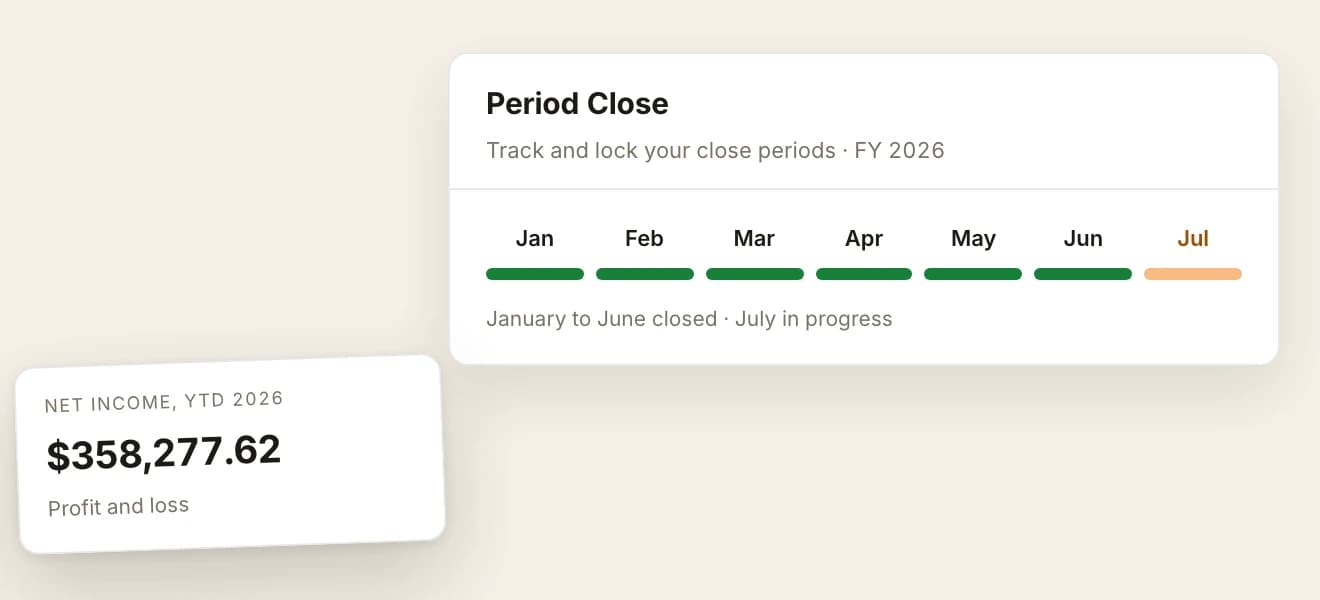
Signs the close cadenceis setting your pace.
Nobody outgrows accurate books. What companies outgrow is a rhythm set by the close, where the numbers describe a period that already finished and the work between closes belongs to a separate plan.
Numbers describe last period
Their own bookkeeping page says the dashboard updates after each close, and the close runs monthly, quarterly, or annually by plan. The hire, the renewal, and the spending call all happen inside the period being closed, and each is decided without the figure that is still being prepared.
The plan lists four statements
Every bookkeeping plan lists a runway report, a profit and loss statement, a balance sheet, and a statement of cash flows. Those describe what happened. What a hire costs across the year, what a slower quarter does to cash, and when a raise has to start are different questions, and no plan line covers them.
Books and taxes price apart
Bookkeeping is one subscription, corporate taxes another, and further filings and the R&D credit study are individually priced add-ons. Each piece is sound on its own. Together they are several renewals and several scopes to keep track of.
Two ways to run finance.Service, or system of record.
Nineteen jobs a finance function has to cover, and how each product handles them. Every Fondo cell is taken from their own site.
| Futureproof | Fondo | |
|---|---|---|
| Who does the work | Six agents, each owning a lane | A dedicated in-house accountant |
| Human review each month | A call with a financial specialist, included | A dedicated accountant reviews each close |
| When the numbers land | Posted and reconciled every night | Closed monthly, quarterly, or annually |
| Where the books live | Your own general ledger, the system of record | Dashboard updates after each close |
| Bookkeeping and reconciliation | Coded and reconciled nightly by Vic | Categorized and reconciled at each close |
| Transaction categorization | Vic codes each entry to your chart | Software for the busywork, accountants review |
| Reporting package | Statements and metrics built from the ledger | Runway report, P&L, balance sheet, cash flow |
| Burn and runway | Recomputed on posted entries every night | Cash balance, burn, and runway on a dashboard |
| Recurring revenue metrics | MRR roll-forward built from the ledger | Not listed in the bookkeeping plans |
| Revenue over time | Recognized across the contract term | Not listed in the bookkeeping plans |
| Cash forecasting and scenarios | Margo prices hires, cuts, and cash ahead | A runway report with each close |
| Getting an answer between closes | Answered from the ledger when you ask | Your accountant; Slack on the monthly plan |
| Cap table | The cap table of record, beside the ledger | Not listed in the bookkeeping plans |
| Investor data room | Documents, and which ones were opened | Not listed in the bookkeeping plans |
| Board reporting | Drafted from the closed period for your edits | Reports stated as ready for boards |
| Invoices out, bills in | Remi chases, Theo builds the pay run | Not listed in the bookkeeping plans |
| Tax filing | Not something Futureproof does | Federal, state, and Delaware franchise |
| R&D tax credits | Left to your CPA | Identified, calculated, and filed by them |
| Self-serve platform | Sign up and connect the accounts | Self-serve signup, linked in their footer |
Fondo statements checked 2026-09-20 on fondo.com, including their pricing and bookkeeping pages.
Three steps, one sitting.Then the first close.
Moving off a bookkeeping engagement means moving the books, not rebuilding them. The order below is the whole process.
Connect the accounts
Bank accounts and company cards connect through Plaid in one pass, along with the billing or payment systems the business already uses. Payroll comes in by CSV import, one file per run, which is the only way payroll enters the ledger today.
Move the history
Books kept in QuickBooks move across in a one-click migration, and other accounting systems come in by file export. Prior-year balances carry in, so the first period continues the record rather than starting a new one.
Run the first close
Vic codes and reconciles overnight and prepares the close, reporting what is still missing rather than closing around it. The monthly review call with a human financial specialist covers the first one with you.
What carries over.Taxes stay with your CPA.
Moving the books does not mean moving everything attached to them. Four things carry over exactly as they are.
- Your accountant
- Futureproof does not file taxes, does not claim R&D credits, and does not replace the person who does either one. Your CPA works from books reconciled through the year and closed each period, and every report exports to CSV whenever they ask for one.
- Your bank
- Accounts and cards connect through Plaid and stay exactly where they are. Theo captures the bills, codes them to the right period, and schedules the run against available cash, and the payment itself is released in your own bank.
- Your history
- Prior books migrate in rather than start over, and a full export of your data is available at any time. Nothing about the arrangement depends on staying.
- Your approvals
- The agents draft and recommend. You approve, adjust, or decline, and every action lands on the audit trail with the reasoning attached to it.
What companies askbefore they switch systems.
With Fondo the books are handed to an accountant who closes them monthly, quarterly, or annually, and the dashboard updates after each close. Futureproof's agents do the work themselves: they work your books nightly in your own account, answer in plain English the moment you ask, and cover the rest of the finance function, receivables, payables, forecasting, and investor reporting, in the same place.
Fondo is an accounting platform sold with a dedicated in-house accountant who closes the books, files the corporate returns, and claims R&D tax credits. Futureproof is the accounting system itself, a general ledger worked by six agents covering books and close, receivables, payables, forecasts, revenue metrics, and investor reporting, with a monthly review call with a human financial specialist included.
No. Futureproof does neither. It keeps the books clean and ready for a CPA year-round, so filing and credit work goes faster with your own tax preparer, and the financial picture around it stays visible: how a credit lands in cash, what it does to runway, and when the next raise has to start.
You can. If Fondo files the taxes, Futureproof handles the bookkeeping, the forecasting, the cap table, and the fundraising prep underneath, and the filings get easier because the books they are prepared from stay reconciled all year rather than being reconstructed at the end of it.
Fondo prices bookkeeping by close cadence and sells corporate taxes as a separate annual subscription, with further filings and the R&D credit study as individually priced add-ons, all printed on their pricing page. Futureproof starts at $1,000/month for all six agents, with a monthly review call with a human financial specialist included, no per-seat fees, and no modules. The difference to weigh is scope, not the smaller number.
Yes. Futureproof connects to bank accounts and credit cards through Plaid, and to Stripe for payment data. You own your data, a full export is available at any time, and every report exports to CSV whenever an accountant asks for one.
Your books. Your ledger. Your call.
Close the month faster.Decide inside it.
Connect the accounts and the team starts on your books tonight. The close, the cash view, and the answers in between all come from the same set of entries.
Starting at $1,000/month for all six agents, with a monthly review call with a human financial specialist included. No per-seat fees, no modules.