


The spreadsheet keeps breaking
Every month brings patched formulas, broken references, and a rebuilt tab. By the time the model runs again, the question of whether you can afford the senior engineer has lost its urgency.

A forecast is only as current as the numbers under it. Futureproof builds the plan from the actuals on the general ledger that is your system of record and re-runs it as new revenue and spend post, so the hire, the channel, or the price test is modeled against the company you are today.
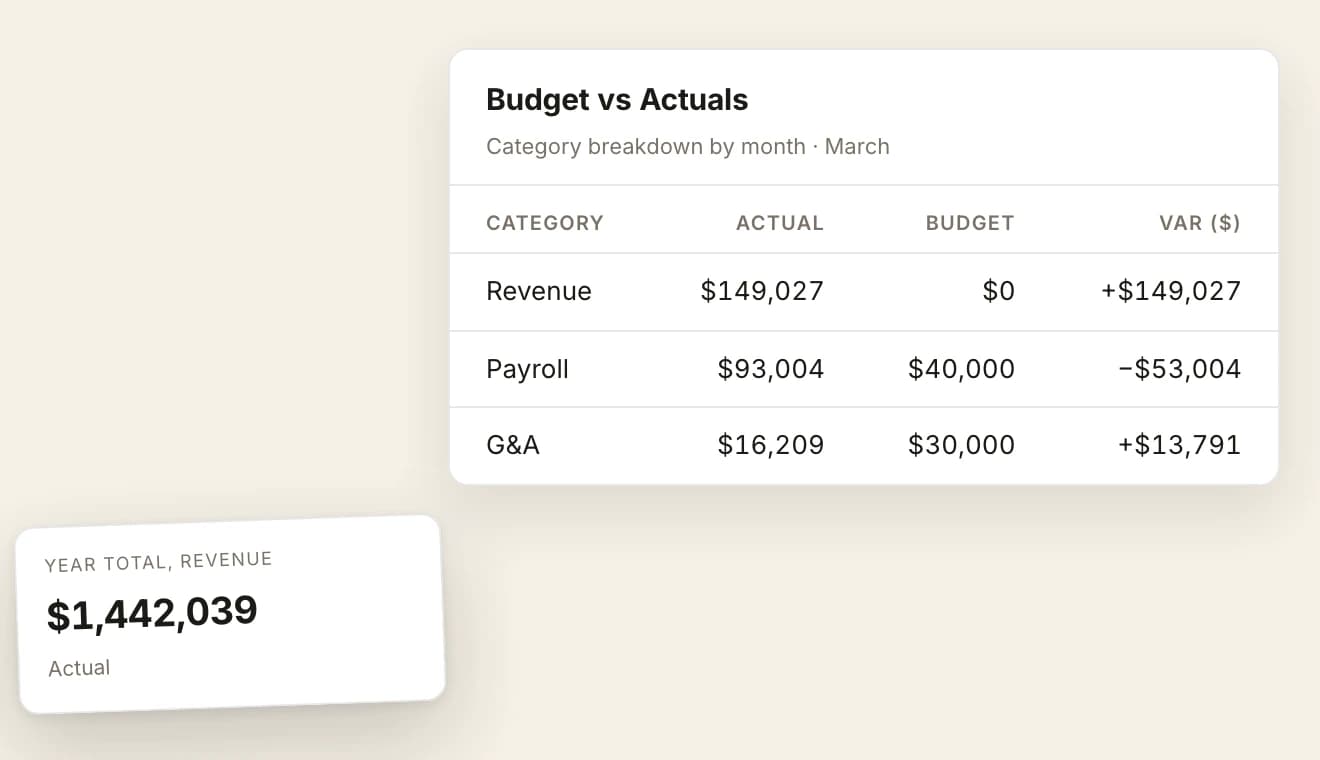
Revenue forecasting is the work of turning what already happened into something you can commit payroll to. In most startups it happens in a spreadsheet that gets patched every month and fed by hand after close, which is why the plan describes the company you were rather than the one deciding today.
Every month brings patched formulas, broken references, and a rebuilt tab. By the time the model runs again, the question of whether you can afford the senior engineer has lost its urgency.
Last month gets typed into the plan after close, so a variance is discovered weeks late and the forecast keeps describing a quarter that is already spent.
The math might say yes, but a plan built on month-old data is not something you sign an offer letter against. The hesitation costs more than the spend would have.
Setup is one sitting. After that the drivers under the forecast are your own posted revenue and spend, so the plan moves when the business moves rather than when someone opens the file.
Your bank and your billing system connect once, and your revenue and spend history imports into the ledger the forecast is built on.
Growth, churn, and cost drivers come from your trailing actuals rather than last quarter's guess, and the base case is re-run as new entries post.
Change the hiring plan, the growth rate, or the churn assumption and compare cases side by side, each carrying its own runway. Push the one you choose to the budget.
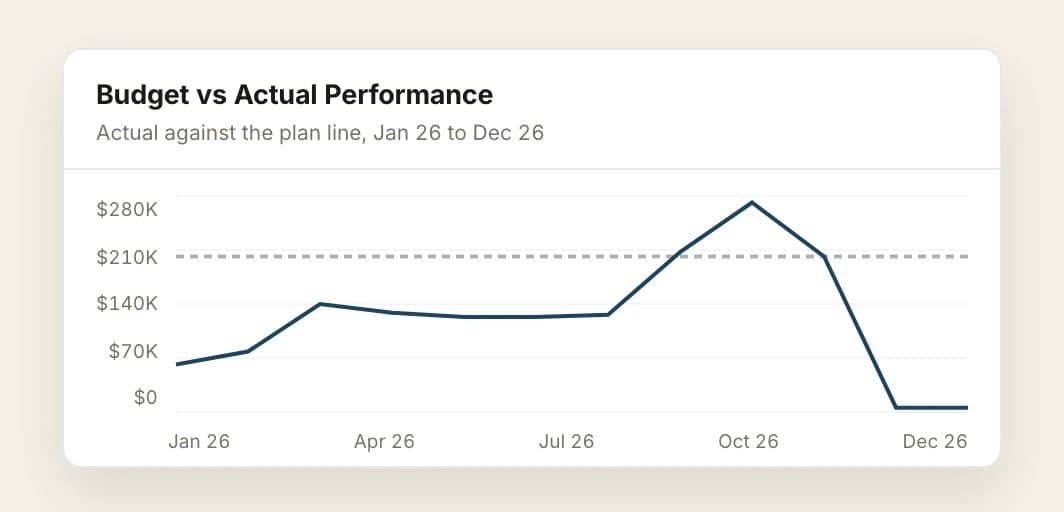
Each month lands against the plan by category with the variance in dollars, and Margo brings you the lines that moved before you go looking for them.
Three moves a founder makes inside the plan, each running on posted revenue and spend instead of an assumption typed in three months ago.
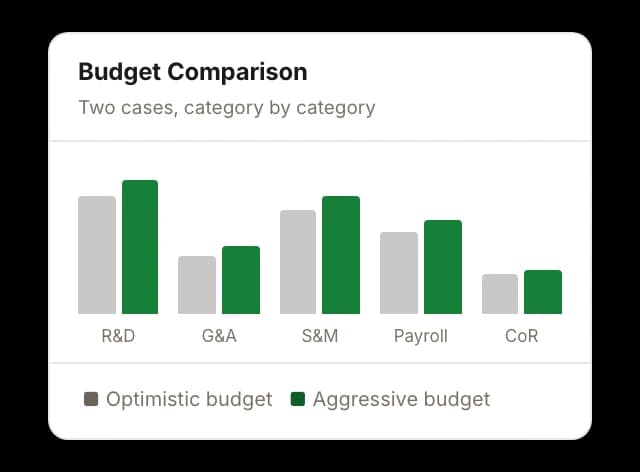
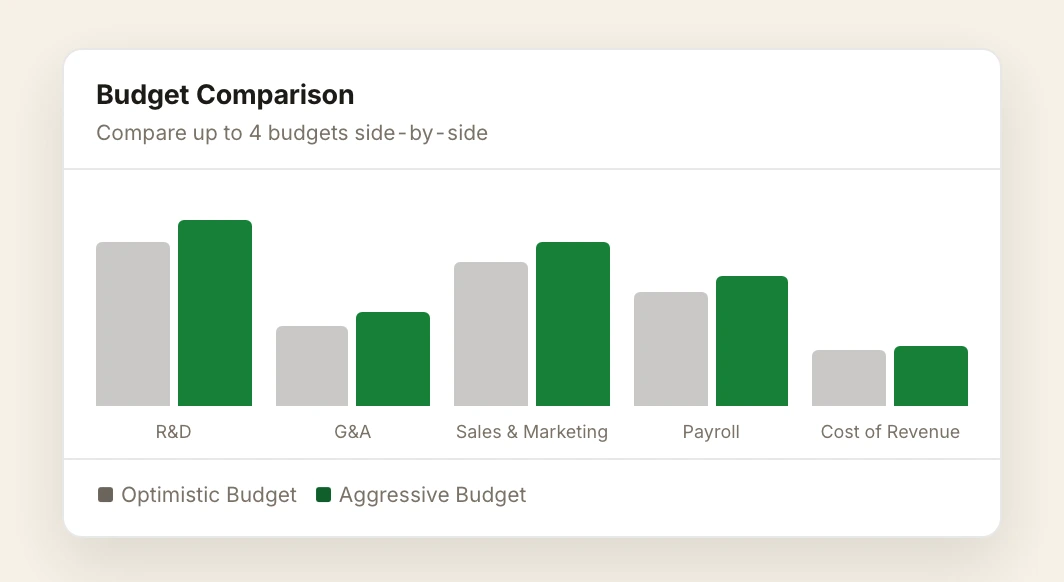
Two budget cases are compared category by category, an optimistic plan against an aggressive one across research and development, general and administrative, sales and marketing, payroll, and cost of revenue. The difference between two plans becomes a list of lines rather than a feeling about risk.
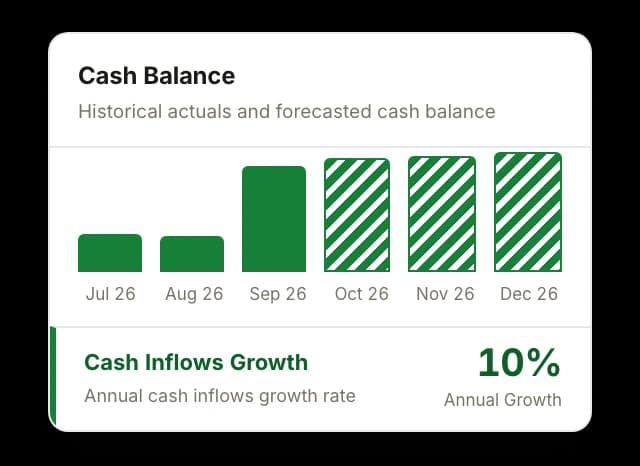
The cash balance runs with the months behind you drawn solid and the months ahead drawn as forecast, and the growth assumption underneath it is a control you set, at 10 percent annual growth in this view. Change the assumption and the curve answers.
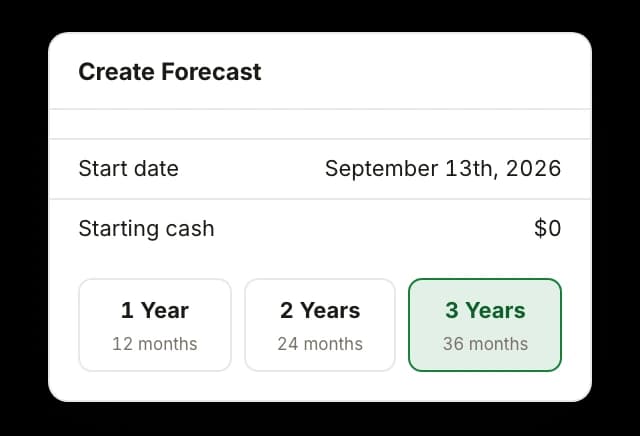
A forecast starts from a date, an opening cash position, and a horizon of one, two, or three years. Building the plan is a panel you fill in once, rather than a workbook somebody has to keep alive every month.

Margo re-runs the forecast, the runway, and the costed hiring plan from posted entries, and brings you the reforecast when a month closes far from where the plan put it.

Hugo calculates the movement under the revenue line, what was new, what expanded, what contracted, and what churned, so growth in the plan is built from how your revenue actually behaves.

Vic categorizes and reconciles daily and closes the month, so what lands against the plan is posted and final rather than assembled the night before the review.
The fan of cases, the year read against the plan, and two budgets compared line by line.
The base case is built from your trailing actuals and re-run as new entries post. The upside and the downside are that same plan with the growth, the churn, and the hiring moved, and each of the three carries its own runway underneath it.
One base case, three futures
Runway under each case
Cases compared category by category
Variance against plan once the month lands
The actual line runs across the fiscal year with the budget drawn flat behind it, crossing above the plan through the summer and falling away in the autumn. Where the two lines part is the month worth asking about.
Up to four budget cases can be selected and read together, so a choice between two plans is settled on the screen rather than in a meeting about which spreadsheet is the current one.
Connect your bank and your billing system once. Futureproof keeps your books on its own ledger and builds the forecast from the drivers in those actuals: your growth, your churn, and your cost base. As new entries post, the plan is re-run, so you are modeling against current numbers rather than month-old assumptions.
Yes. Roles are costed fully loaded and placed on the month they would start, so the runway you read already includes the hire you are weighing. Headcount and the forecast are the same plan rather than two files that have to agree.
They are already in it. Each month posts against the plan by category with the variance in dollars, and the plan you set is kept beside what actually landed, so you can see where the projection held and where it missed without copying anything across.
No. Bookkeeping and forecasting run on the same ledger. Vic categorizes and reconciles transactions as they post, and Margo builds the plan from those entries, so you can forecast from the first month you connect your accounts.
Your numbers. Your answers. Smarter moves.
Connect your accounts, and the next hire, channel, or price test is priced against the numbers you closed the month on.
Starting at $1,000/month for all six agents, with a monthly review call with a human financial specialist included. No per-seat fees, no modules.