


Reconciling eats the week
Settlement reports, store payouts, and channel transactions all arrive in different shapes. Matching them by hand takes hours every week, and one missed fee throws margin off for a month before anyone notices.

Connect your channels, your bank, and your cards once. Futureproof is one ledger that replaces your accounting software: Vic reconciles the payouts and codes the fees, Theo carries landed cost and inventory. So when you want to double ad spend, take the bulk order discount, or answer an acquirer, the numbers are already sharp.
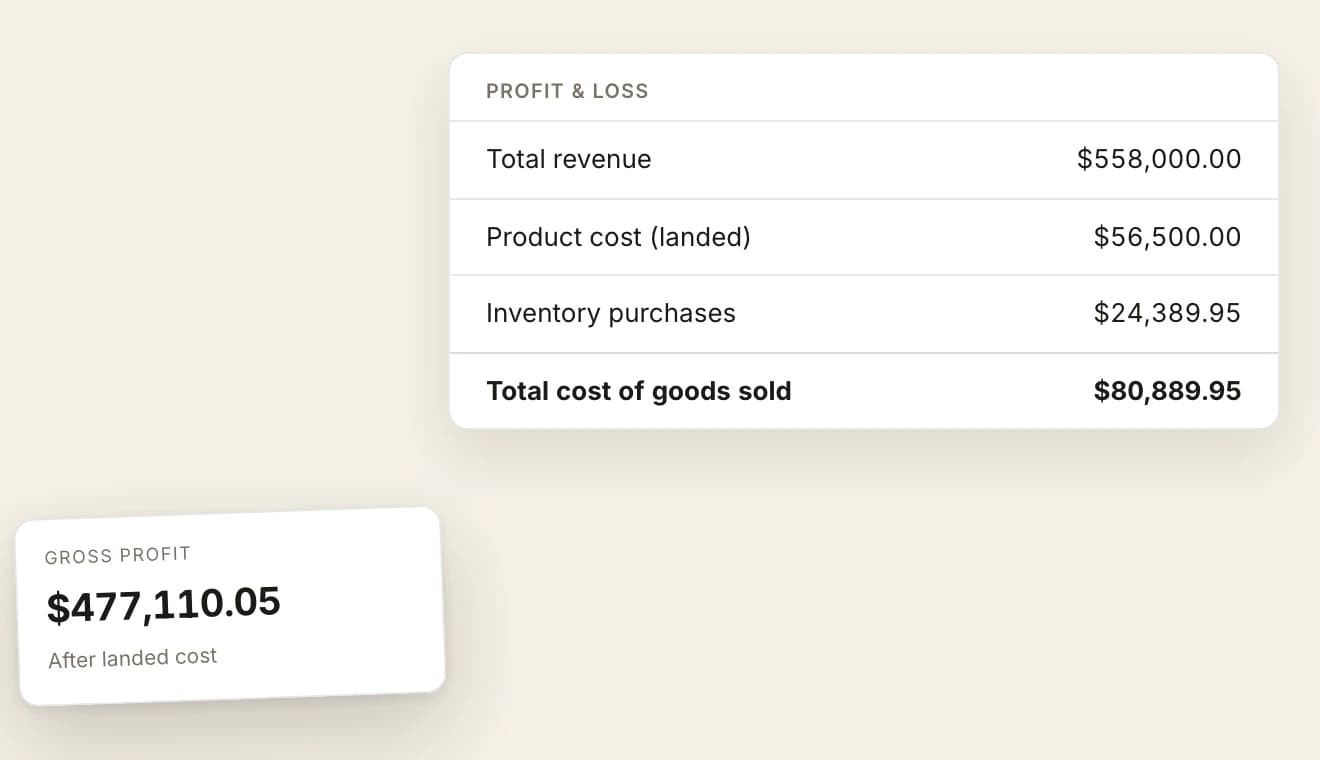
Ecommerce bookkeeping is multi-channel reconciliation: settlements, store payouts, card charges, and supplier bills coded into one ledger that produces your statements. Fee schedules differ by channel and change without notice, which is why books built for a single storefront run weeks behind the decisions they are supposed to inform.
Settlement reports, store payouts, and channel transactions all arrive in different shapes. Matching them by hand takes hours every week, and one missed fee throws margin off for a month before anyone notices.
Referral fees, fulfillment charges, storage, and ad spend sit across platforms. When you want to double a winning ad set or raise the price on a hero SKU, you cannot say what it does to margin. So you leave it alone.
A fee bump caught in week one is a price change. Caught in month three it is share you already lost. The brands moving faster are not braver, they are reading books that closed on time.
Setup is one sitting. After that the day is posted and the statements rebuilt every night, so month end is a review rather than a reconstruction.
Channels, your own store, bank accounts, and credit cards connect in one sitting. Amazon and eBay are live, Shopify is in beta, and TikTok Shop is coming soon.
Payouts split into sales, fees, refunds, and adjustments, card and bank activity coded beside them, cost of goods booked against the sale, and the day closed.
Supplier bills, freight, duty, and purchase orders are coded and matched, so inventory value and the cost basis under each sale hold up without a year-end exercise.
Corrections and anything that did not reconcile come to you with the evidence attached. Adjust a coding and it sticks going forward. Every entry lands on the audit trail.
Three questions operators put off while the books catch up, each answered from posted entries instead of from a reconstruction that takes three days.
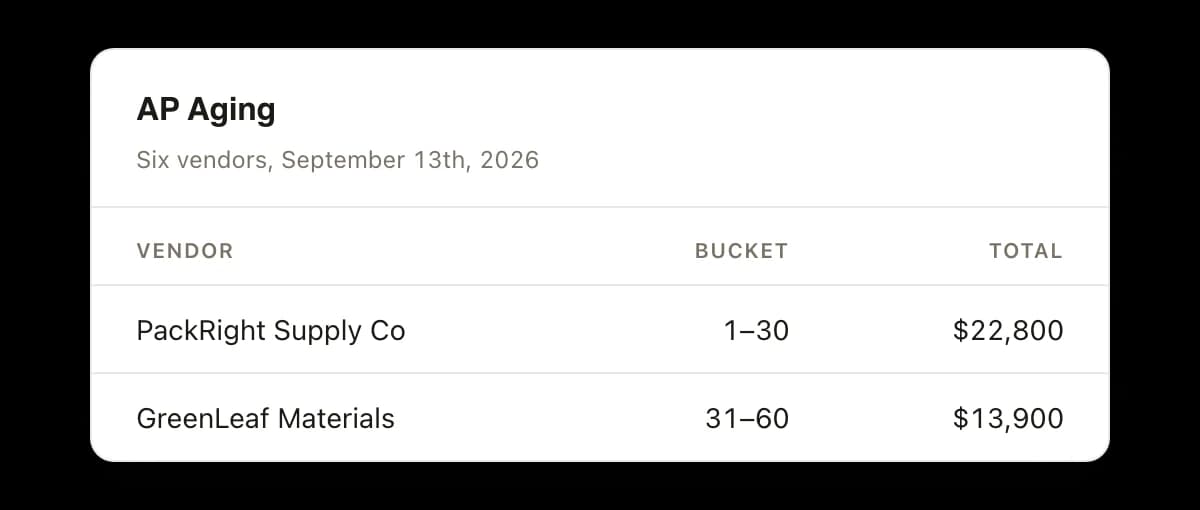
Supplier balances are aged by bucket, so PackRight Supply Co at $22,800 inside thirty days and GreenLeaf Materials at $13,900 in the bucket after it are two different decisions rather than one payables total. What is due this week separates from what can wait, before anything is scheduled.
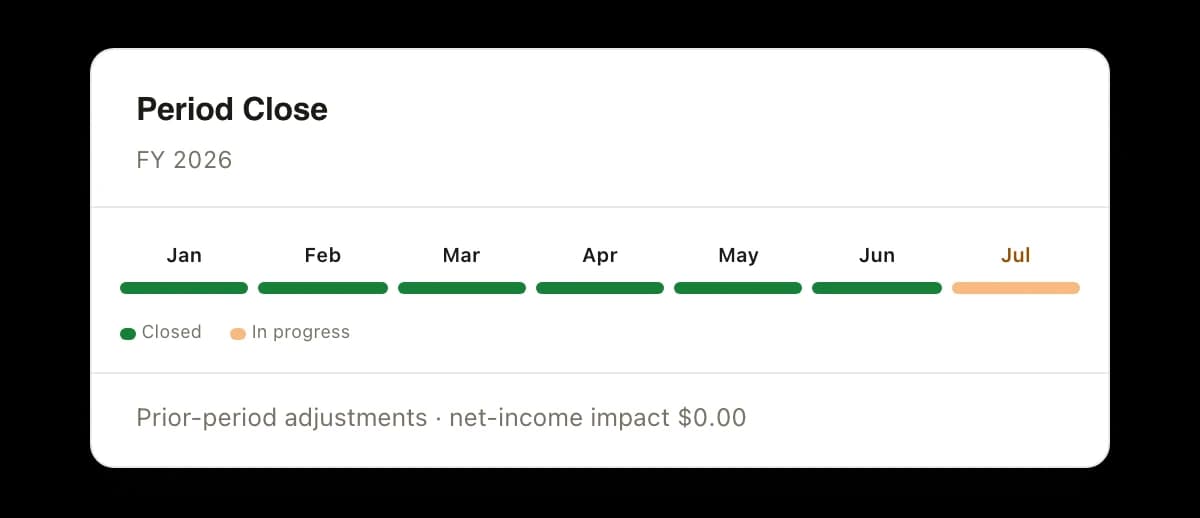
Each period carries a state of its own. January through June sit closed and July is still in progress, so the months that are settled are distinguishable from the months that are still moving. Anything that lands against a period already closed is recorded as an adjustment, carrying its effect on net income with it.
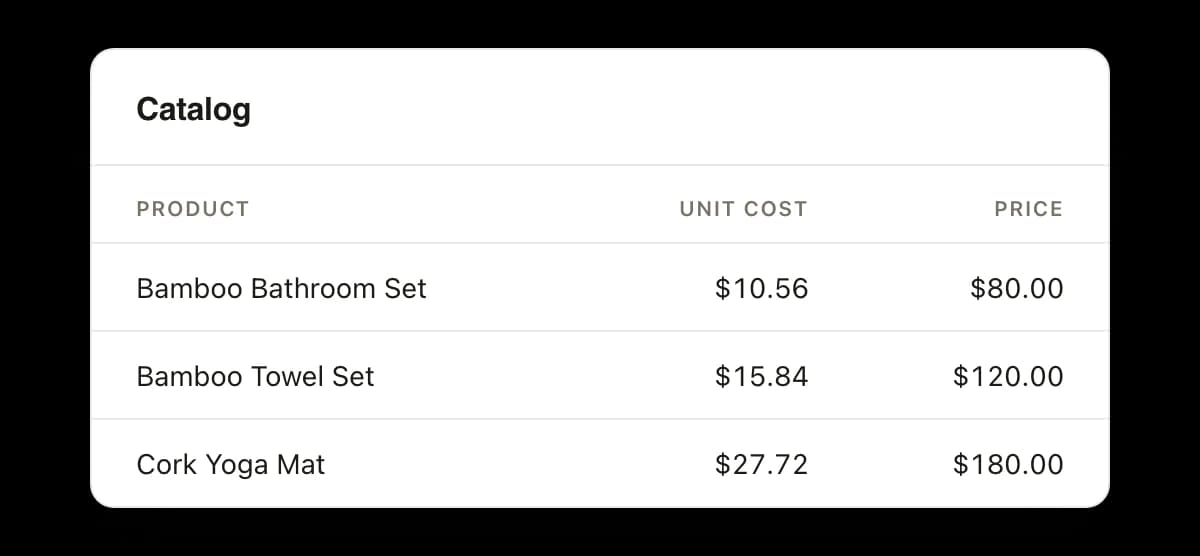
Every product holds its own unit cost beside its selling price, the Cork Yoga Mat at $27.72 against $180.00, so the cost of goods booked under a sale comes from the catalog rather than from a figure reconstructed later. That is what makes a gross margin read in March still true in December.

Vic splits settlements into their events, codes bank and card activity, books cost of goods against the sale, and closes the day. Exceptions come to you with the source row attached.

Theo captures supplier bills, codes freight and duty against the run they belong to, matches purchase orders, and schedules payments against the cash that covers them, for your approval.

Hugo reports contribution per channel and per SKU from the same posted entries and names the component behind a margin move, so the statement and the analysis never disagree.
What the posted entries produce, and the surfaces those figures are read on.
One set of posted entries answers four separate questions: what the business earned, what it owns and what it owes, where the cash went, and what each channel charged you to sell. None of the four has to be reconciled against the others first, because they are the same entries read four ways.
One ledger, four statements
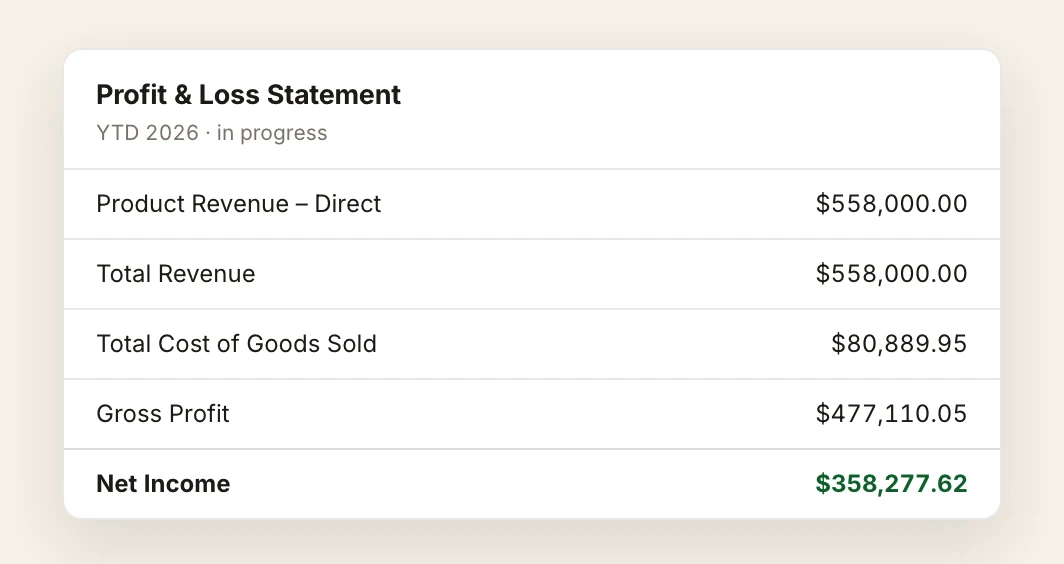
The statement is labeled year to date and in progress, because the entries under it are still arriving. It already runs down to $358,277.62 of net income for the year so far. Nothing is assembled after the fact, so the figure moves as the entries do.
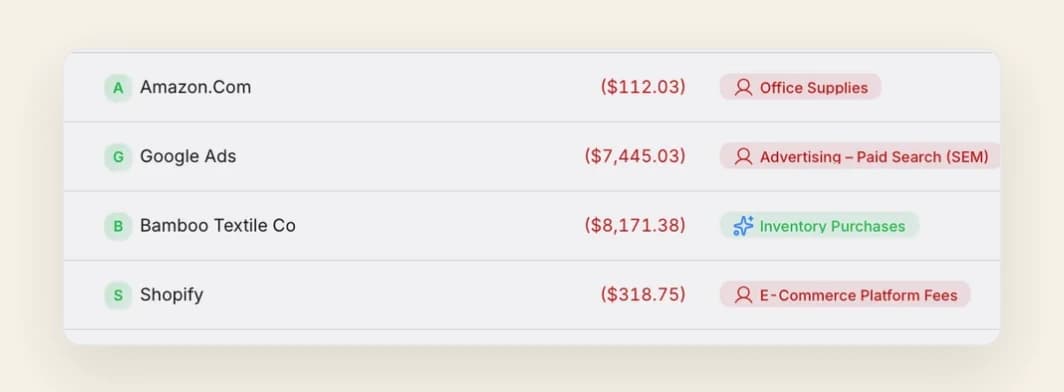
Each bank and card charge lands with the account it belongs to already attached: Google Ads at $7,445.03 to paid search, Bamboo Textile Co at $8,171.38 to inventory purchases, a platform fee at $318.75 to ecommerce platform fees. The statement above is these rows added up.
Every channel posts into one ledger that replaces your accounting software. Vic splits each settlement into sales, fees, refunds, and adjustments, codes the bank and card activity beside it, and closes the day, so the books cover every channel and contribution per SKU is rebuilt overnight.
Yes. Amazon fee structures include referral fees, FBA fulfillment and storage charges, advertising deducted at source, and reserve movements. Each of those is recognized as its own event type, coded to its own account, and balanced back to the deposit before it posts.
For most ecommerce operators and sellers, Futureproof handles the day-to-day bookkeeping. You may still want a CPA for year-end tax filing, and your books are clean and categorized when they need them. A monthly review call with a human financial specialist is included.
Amazon and eBay connect directly, Shopify is in beta, and TikTok Shop is coming soon. Your bank and card accounts connect in the same sitting, so the payouts are reconciled and the fees coded from the first week.
Your numbers. Your answers. Smarter moves.
Every channel reconciled, every fee coded, landed cost under every sale, and statements that are ready when the decision is, not three weeks after it.
Starting at $1,000/month for all six agents, with a monthly review call with a human financial specialist included. No per-seat fees, no modules.