


Weekends go into the books
Every month you tell yourself you will catch up on the books this weekend. Sunday night arrives and you are still sorting payouts. The feature you needed to ship does not ship, and the backlog is one month longer.

Connect your accounts once and Futureproof keeps your books in its own general ledger, your system of record. Vic codes each transaction as it posts, reconciles the accounts overnight, and brings you only the lines that are genuinely unclear. The weekend goes back to the roadmap.
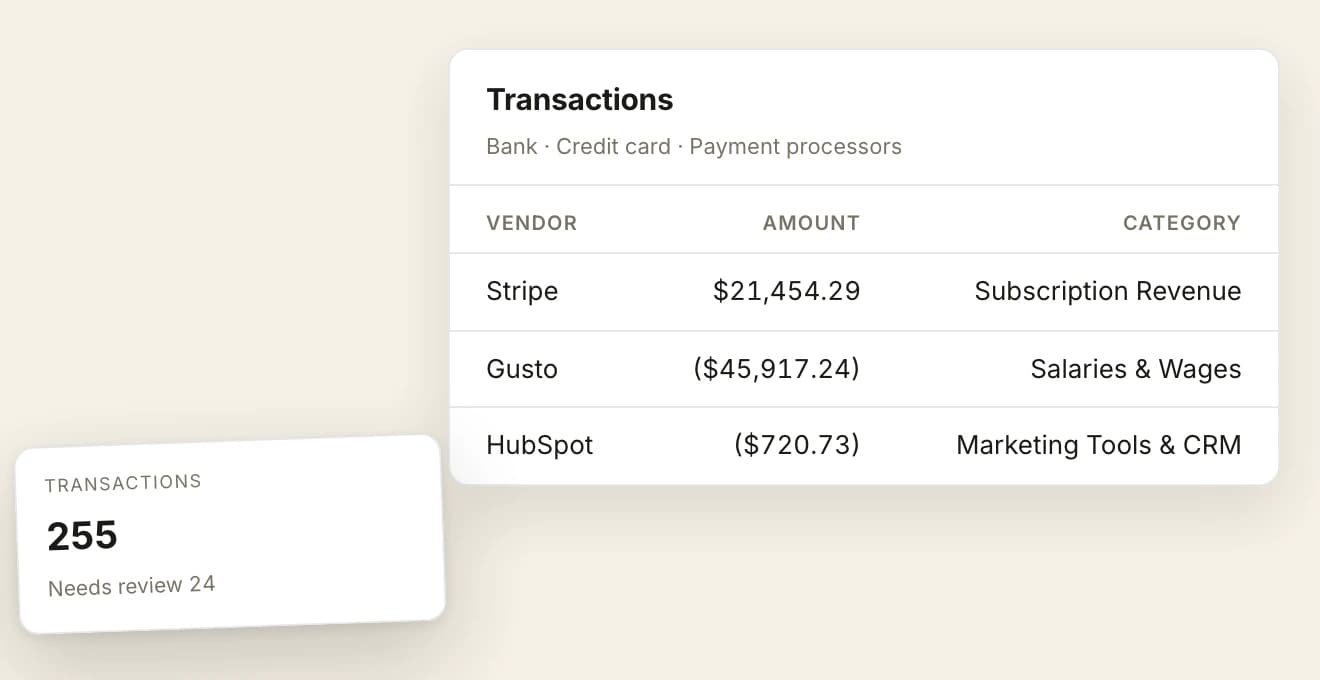
Hands-free bookkeeping means the coding, the reconciliation, and the close run on a schedule instead of on your attention. A founder still approves what lands in the books, but nobody sits down on a Sunday to sort a month of bank and card activity into categories before the numbers can be read.
Every month you tell yourself you will catch up on the books this weekend. Sunday night arrives and you are still sorting payouts. The feature you needed to ship does not ship, and the backlog is one month longer.
One miscategorized transaction moves the whole profit and loss. So you second-guess every figure, and when an investor asks for financials or the forecast says you can hire, you hesitate instead of acting.
There is always something more urgent than bookkeeping, so the backlog compounds quietly. By the time anyone asks for financials, diligence turns into three weeks of cleanup that has to happen while you are also raising.
Setup is one connection step, not a migration project. After that the work happens overnight and your part is review, which is the part that actually needs you.
Bank accounts, credit cards, and Stripe connect through Plaid in one sitting. Your transaction history imports and the books build from it in your own general ledger.
Revenue, payroll, infrastructure, and marketing are coded as they post. Vic recognizes the vendor pattern and files the line against an account on your chart.
Overnight Vic ties the ledger back to the bank and the card statements, and anything that does not tie is held out as an exception rather than buried in a total.
Fix a coding in one click and save it as a rule. Vic applies it to that vendor from then on, so the same correction is never made twice.
Not reports you go and build. Three surfaces that already carry the answer on the morning you open them.
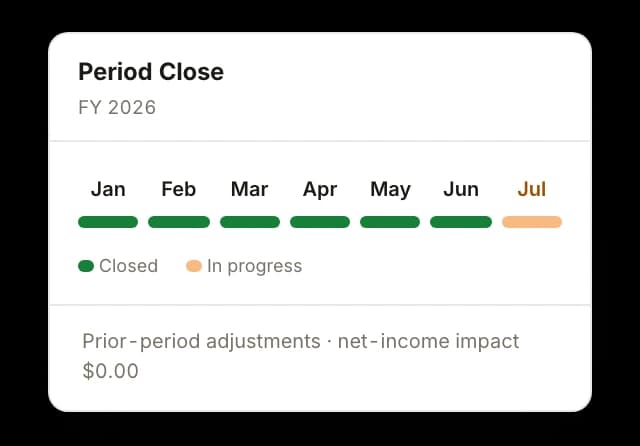
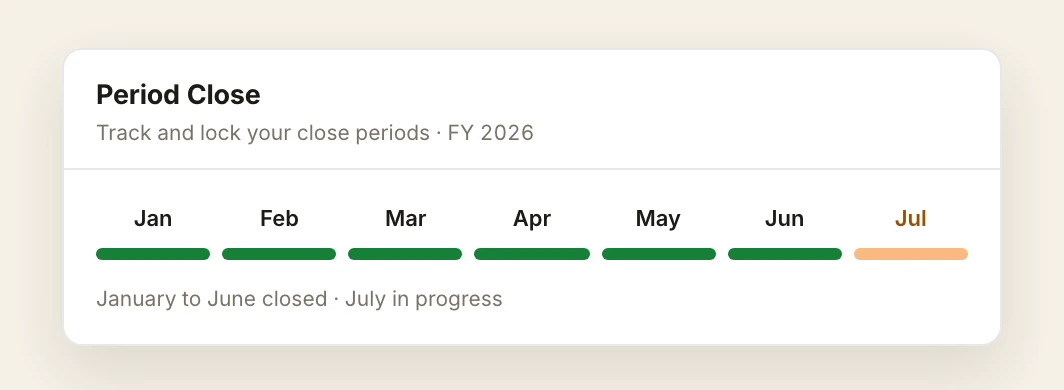
The period close timeline lays fiscal 2026 out month by month: January through June each marked closed, July marked in progress, and no net income impact from prior period adjustments. The close is a status you read rather than a week you clear.
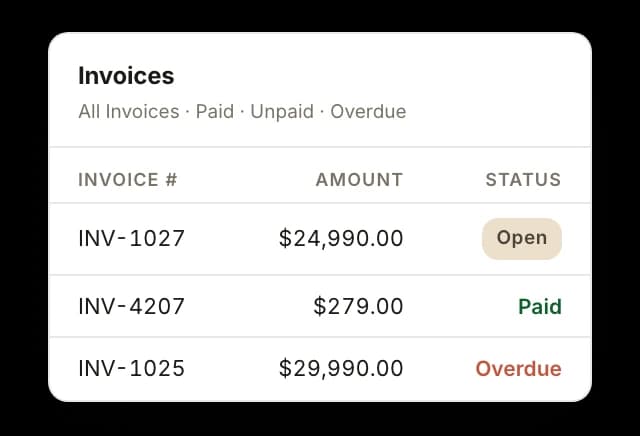
The invoice book marks each one by state: INV-1027 at $24,990.00 open, INV-4207 at $279.00 paid, INV-1025 at $29,990.00 overdue. What you are owed is a column you sort rather than a thread you go looking for.
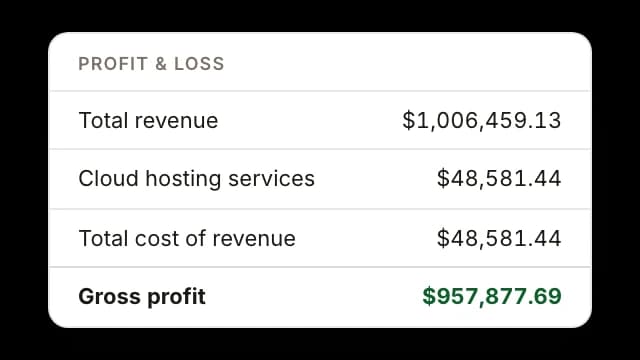
The profit and loss reads down from $1,006,459.13 of total revenue through $48,581.44 of cost of revenue to $957,877.69 of gross profit, built from the entries coded across the period rather than assembled at the end of it.

Vic codes every bank, card, and Stripe movement to your chart of accounts, reconciles the accounts overnight, and runs the period close so the statements stand on entries that tie.

Forward a bill to your Futureproof address and Theo reads it, codes it to the right account and period, and schedules it against your cash. He flags what is due; paying it stays your action.

Remi issues the invoice, ages what is outstanding as it goes unpaid, and drafts the follow-up for you to send, so receivables sit on the ledger as a current figure rather than as a memory.
The path a transaction takes, and the surfaces it turns into.
The path from a charge landing to a period closing is five steps long, and four of them run without a person in them. The fifth is the exception queue, which is the one place your judgment is genuinely needed and the one place a close can stall.
What happens between the charge and the close
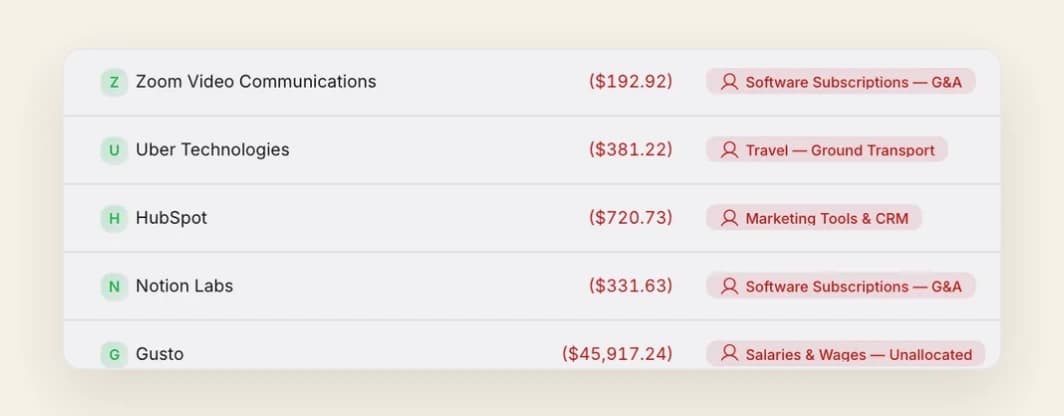
Every row carries the vendor, the amount, and the account the charge was coded to, with the group that account rolls up to sitting beside it: $192.92 to software subscriptions under general and administrative, $381.22 to travel under ground transport, $331.63 to software subscriptions again. Ask Vic about any one of them and he gives back the reason and the entry it produced.
Period Close tracks and locks the close periods of a fiscal year, laid out as one row of months rather than a checklist of tasks. A month that has been closed is locked, so the boundary between the settled part of the year and the part still moving is readable at a glance.
Yes. Connect your bank accounts, your credit cards, and Stripe once. Futureproof builds your books from that data and keeps them as your system of record, coding every transaction as it posts and reconciling the accounts overnight. Your part is reviewing the exceptions and approving them, not entering data.
Correct it in one click. Save the correction as a rule and Futureproof codes that vendor your way from then on, so the same fix is never made twice. Every posting and every correction is recorded on an audit trail you can read.
Setup is one connection step rather than a migration project. Connect your bank accounts and Stripe through Plaid and Futureproof begins building your books in its own general ledger. If you are coming from QuickBooks, a one-click migration brings your history across. Other systems migrate over with file exports.
Most founders do not. Vic codes and reconciles daily and hands you the exceptions to approve, and every plan includes a monthly review call with a human financial specialist who goes through the books with you.
The coding is a proposal until you accept it, and nothing is written into another system on your behalf. Bills are scheduled and flagged rather than paid, and every entry that lands in the books is one you approved or one that matched a rule you set.
Your numbers. Your answers. Smarter moves.
Connect your accounts and the next month closes without a weekend attached to it. You review, you approve, and the rest of the time goes where it should.
Starting at $1,000/month for all six agents, with a monthly review call with a human financial specialist included. No per-seat fees, no modules.