


Ad spend goes out evenly
Revenue climbs, and the products funding their own ads after fees, returns, and cost of goods stay invisible. So the budget is spread evenly, even though a few SKUs carry the whole line.

Top line keeps climbing, and you still cannot say which products fund their own ads after referral fees, fulfillment charges, shipping, returns, landed cost, and spend. So the budget gets spread evenly while three SKUs do the work. Futureproof is one ledger that replaces your accounting software, and Hugo reports true profit per SKU and per channel from it.
One unit, priced all the way out
True profit is what a unit keeps after everything variable comes out: landed cost, referral and fulfillment fees, storage, returns, ad spend, and payment processing. Gross margin stops at cost of goods, which is why the SKU ranked first on revenue is so often mid-table on the money it actually keeps.
Revenue climbs, and the products funding their own ads after fees, returns, and cost of goods stay invisible. So the budget is spread evenly, even though a few SKUs carry the whole line.
Referral fees, fulfillment charges, storage, and transaction costs change often and stack up fast. Without a clean read on what a sale costs, the SKU quietly compressing looks the same as the one expanding.
Fee schedules change, new costs appear, formulas break every quarter. By the time the tab is updated the number in it describes a month that is already over.
Setup is one sitting. After that the ledger is posted and margin recalculated every night, so the per-SKU ranking is current the morning you go to move budget against it.
Vic codes referral fees, fulfillment and storage charges, and payment processing the day the channel reports them, so a fee tier change shows up in your numbers that week.
Theo allocates freight, duty, tariffs, and insurance per unit on every purchase order and codes supplier bills against the SKU they belong to, so profit starts from the right baseline.
Hugo recalculates contribution per SKU and per channel on the posted ledger and ranks it, then decomposes any move into price, discount, refund, unit cost, fee, and volume.
Margo prices the reorder and the ad budget behind the new ranking against supplier terms and cash on hand. You approve, adjust, or decline. Nothing is committed for you.
Three questions an operator asks before putting more money behind a product, each answered from posted entries rather than from a margin sheet rebuilt every quarter.
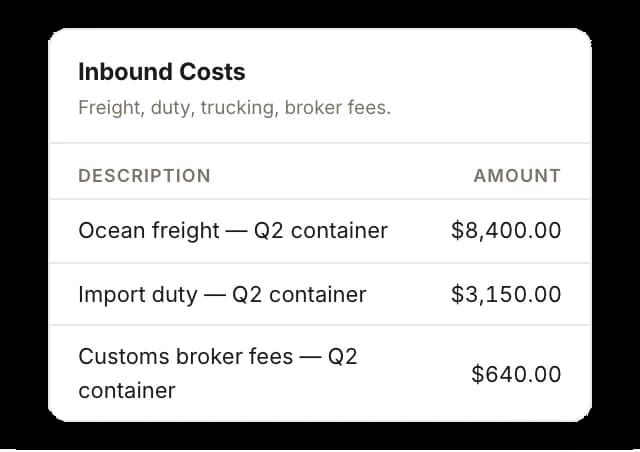
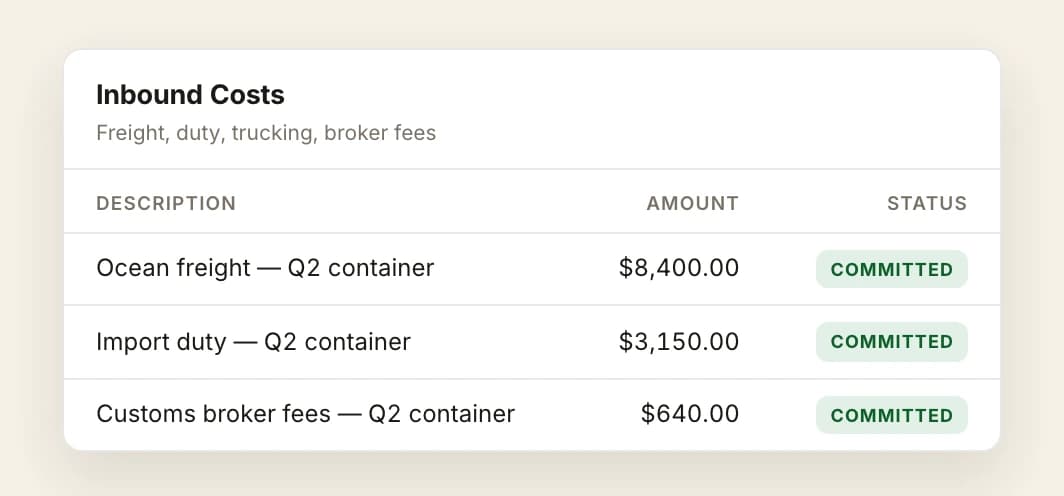
A factory quote is not a cost. Ocean freight, import duty, and customs broker fees arrive weeks after the units do, and until they sit against the order the price on the listing is covering a number that was never true. Those costs are held against the container and come down to the unit, which is where a pricing decision has to start.
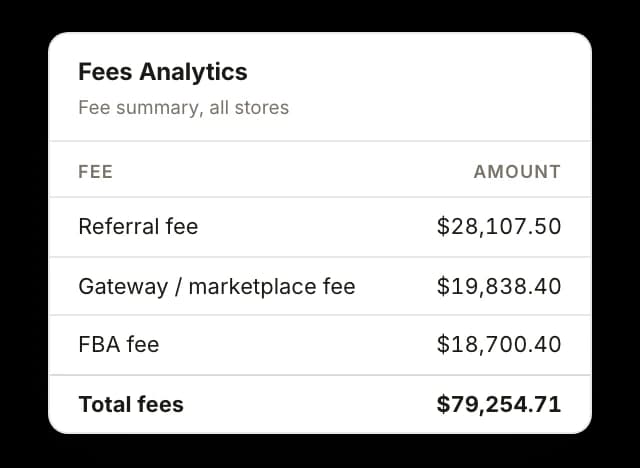
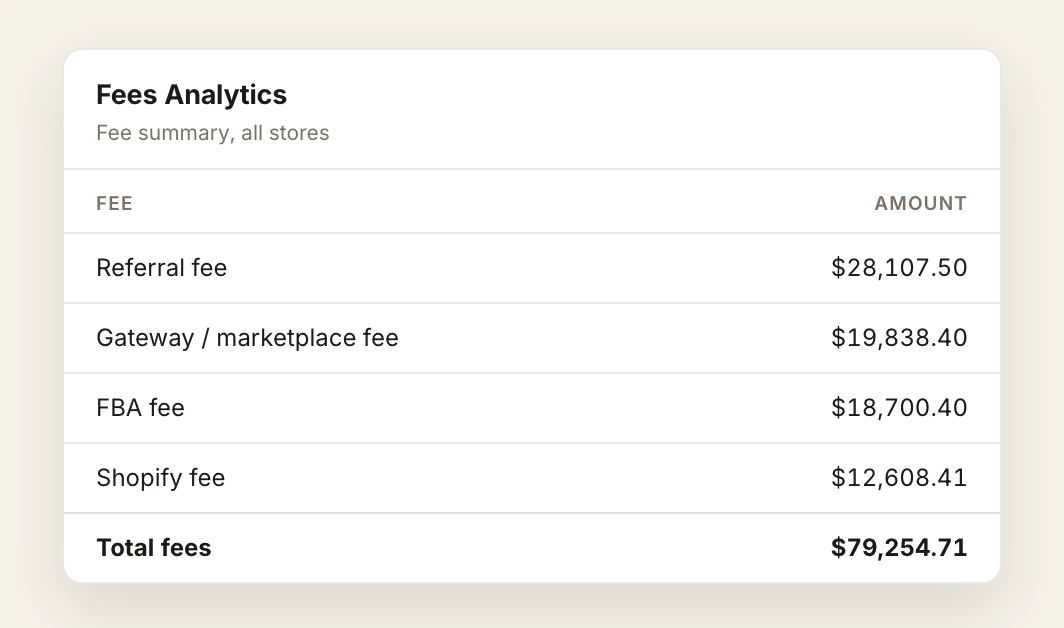
Referral, gateway and marketplace, and fulfillment charges are each held in their own account instead of netted into one deduction. Added together they behave like a second cost of goods, and pricing a product without that total in front of you is how a SKU ends up selling well and earning nothing.
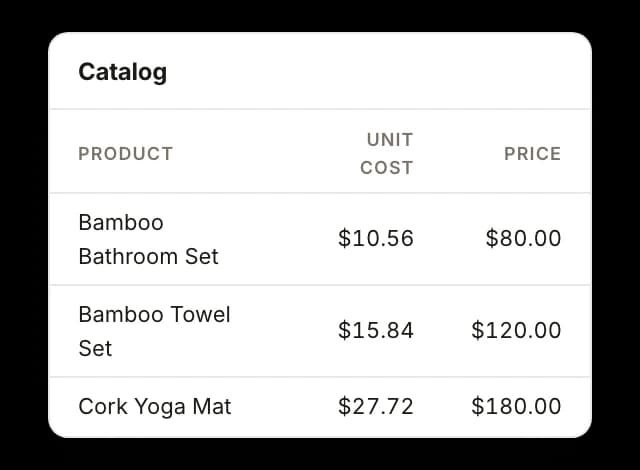
Every SKU carries its own unit cost against its own selling price, so a ranking can be built on what a product keeps rather than on what it books. The Bamboo Towel Set sits at $15.84 against $120.00 before fees, fulfillment, and returns come out, and it is the figure after those that decides where the next dollar of spend goes.

Vic splits each settlement into its events and codes referral fees, fulfillment, storage, advertising taken at source, and payment processing, so the cost side of a sale is never a rounding line.

Theo codes supplier invoices, freight, duty, and insurance against the order they belong to and allocates them per unit, so the cost basis under each SKU is landed cost rather than a factory quote.

Hugo rebuilds contribution per SKU and per channel overnight, ranks it, and raises the movers with the component that drove them. The components sum exactly to the change rather than approximately, so a compressing margin is a flagged line and not a surprise.
Unit cost beside selling price, the fee stack read by type, and the freight and duty that land on a container.
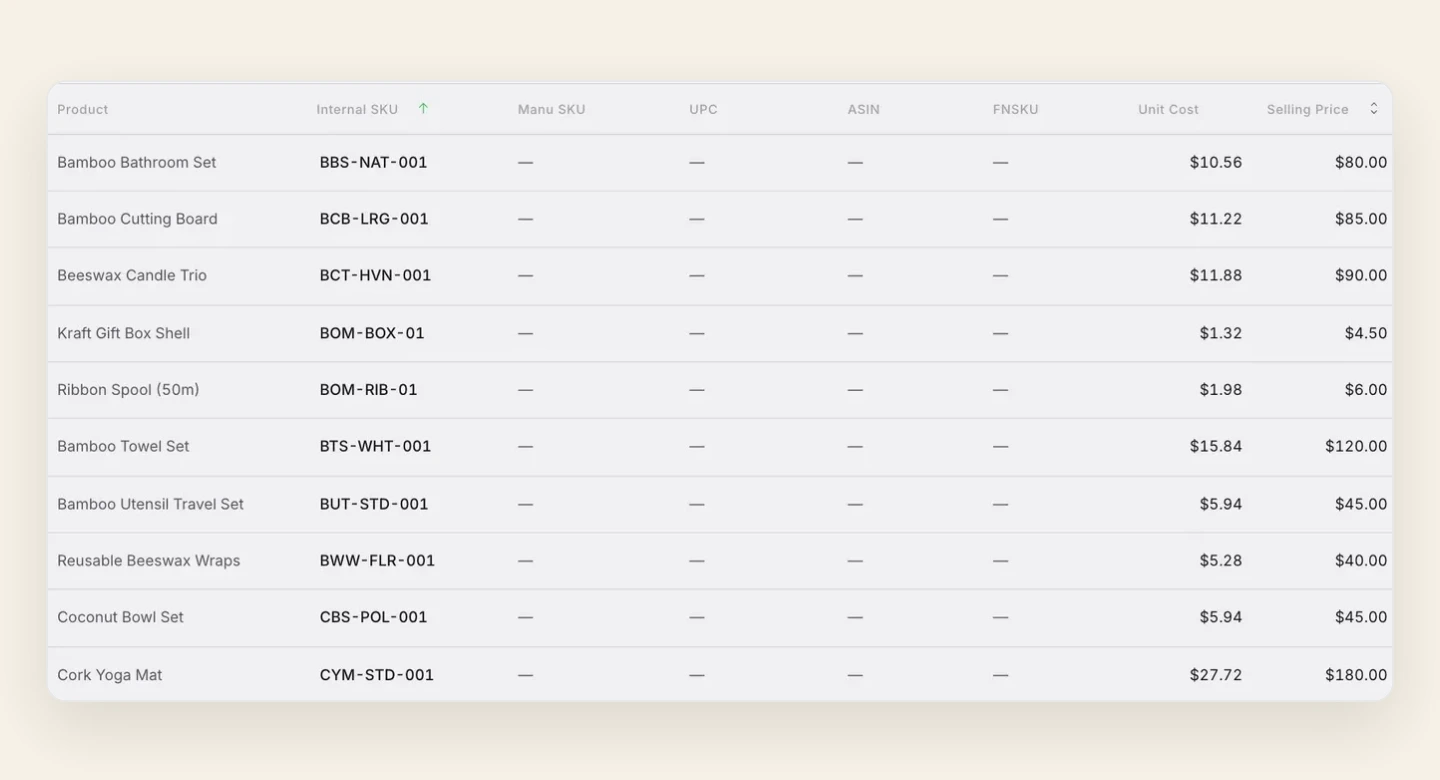
The catalog carries a unit cost against the selling price on all 36 SKUs, so contribution starts from a cost that is kept rather than one typed into a sheet. The Bamboo Cutting Board sits at $11.22 against $85.00, the Eco Soap Bar Set at $7.92 against $60.00, and rows not yet tied to a listing are marked as such.
The summary tiles carry the total and the split behind it, and a daily trend runs underneath them with each fee type as its own band. A rate schedule that changed shows as a band that grew, on the day it grew.
Inbound costs sit as their own rows against the container that carried them: ocean freight, duty, trucking, and broker fees, each with the date it was incurred. A container still in transit sits in draft at $9,100.00 until it is committed, so an estimate is never mistaken for a cost you have taken.
Channel fees such as referral, fulfillment, storage and transaction costs, shipping and fulfillment, returns and refunds, landed cost of goods, ad spend, and payment processing. What is left is a profit figure per SKU and per channel that comes from posted entries rather than an estimate.
Gross margin subtracts cost of goods from revenue and stops. True profit keeps going and takes out channel fees, shipping, returns, ad spend, and payment processing. The gap matters: a top SKU by revenue is often a middling one by margin, and the real ranking changes which products you scale.
Yes. Profit is reported channel by channel and SKU by SKU from the same ledger, so you can compare the same product across the places you sell it and put more spend behind the channel and SKU combinations that pay back.
Amazon and eBay connect directly. Shopify is in beta, and TikTok Shop is coming soon. You can start on a 14-day trial and connect your channels in the first sitting.
Your numbers. Your answers. Smarter moves.
True profit per SKU and per channel, after every fee and every cost, so you know which products deserve more capital and which have been quietly taking it.
Starting at $1,000/month for all six agents, with a monthly review call with a human financial specialist included. No per-seat fees, no modules.