


Deploy your runway where it compounds.
Futureproof is the general ledger your startup runs on, the system of record behind every number you report. Six agents work that ledger every night, so books, metrics, and forecast stop being four separate jobs and the answer behind a decision is ready before the decision is.

Your numbers live in five tools.Stitching them takes a weekend.The hiring decision was due Monday.So you bet smaller than you should.
Five tools, one question
Books in one place, revenue metrics in another, the forecast in a spreadsheet, ownership in a fourth. Asking which channel grew ARR this month means reconciling three exports by hand before the answer appears.
Even spend, uneven return
The new role, the paid test, the tool renewal. They leave the bank account looking identical. Two of them compound and the rest do not, and without knowing which, you spread the budget evenly or hold it back entirely.
Lag should not set your pace
The companies reaching the next hire first are not shipping better product. They can see which moves pay back, and they can see it on a Tuesday. That visibility has been priced like a finance department, and it should not be.
Connect the accounts once.The agents take it from there.
Connecting takes one pass through the list. Everything below posts into the same general ledger, so there is no second system to check and nothing to reconcile between them.
A week on one startup's ledger.None of it waited for you.
The order an ordinary week runs in. Each row is work an agent completes on its own overnight. Anything that needs a judgment call arrives as a decision for you rather than an entry you have to find.
- Monday
 Vic
VicCoded the weekend's bank and card activity to your chart of accounts and reconciled the accounts before you opened the laptop.
- Monday
 Remi
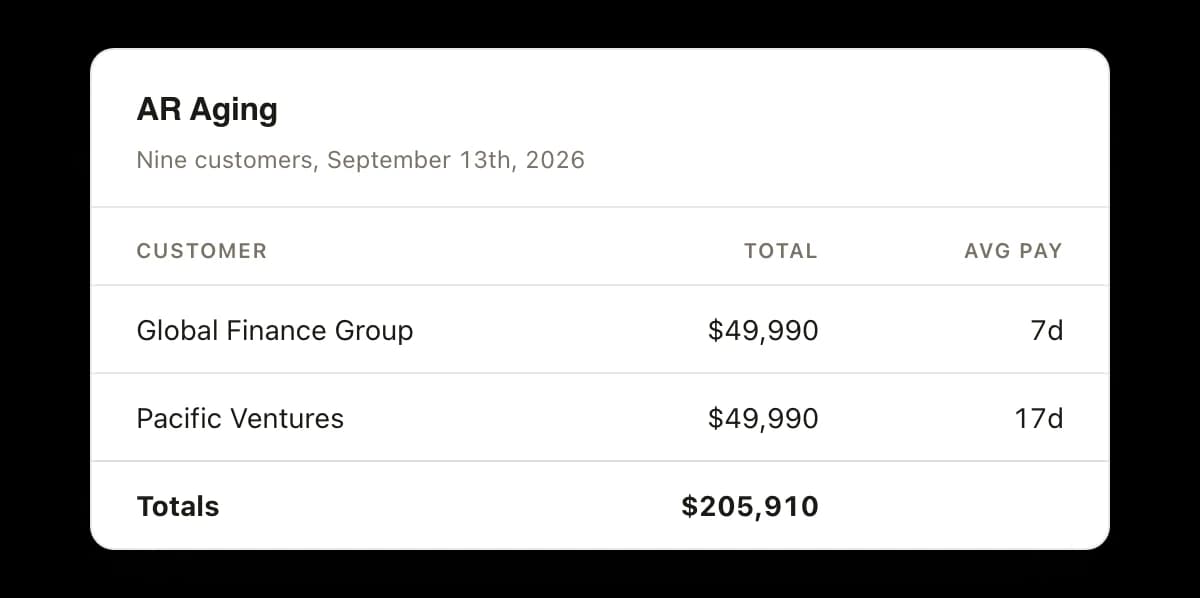
RemiSent the week's follow-ups on overdue invoices and applied the payments that landed against the right customers.
- Tuesday
 Theo
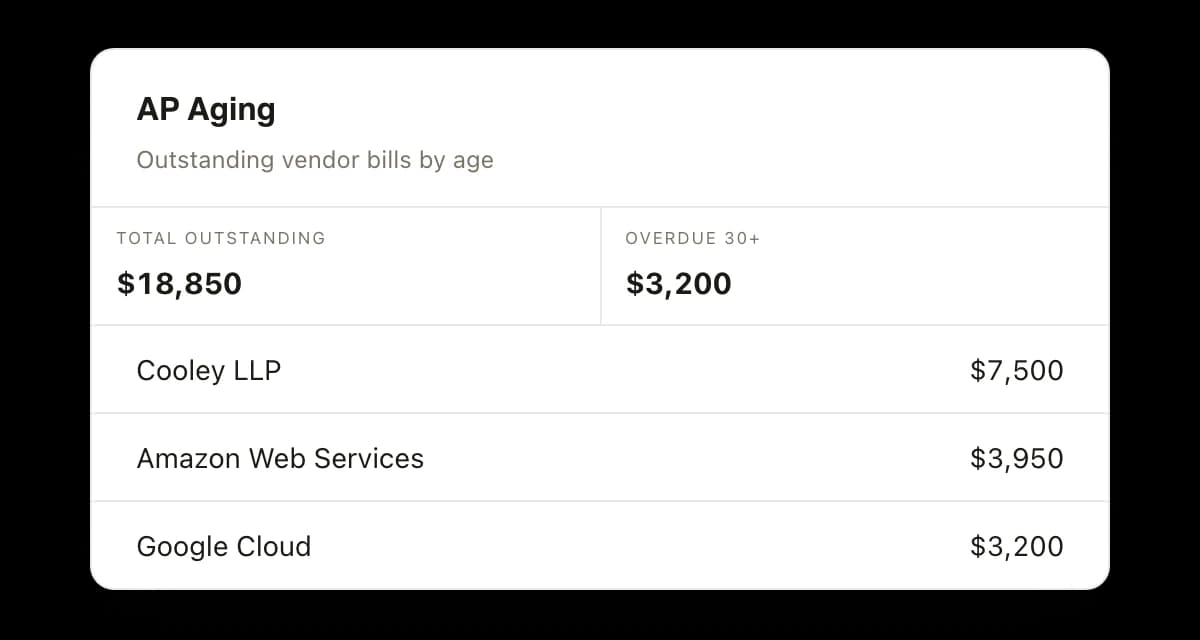
TheoCaptured the vendor bills that arrived, coded them to the period they belong to, and built the pay run for your approval.
- Tuesday
 Hugo
HugoRanked the customers at risk of churning by confidence and told you which accounts moved up the list since yesterday.
- Wednesday
 Margo
MargoReran burn and runway on the posted entries and reforecast the months ahead from what the week actually changed.
- ThursdayMargo
Priced the roles still open on the hiring plan against your cash, and against the minimum runway you said you would hold.
- Thursday
 Nia
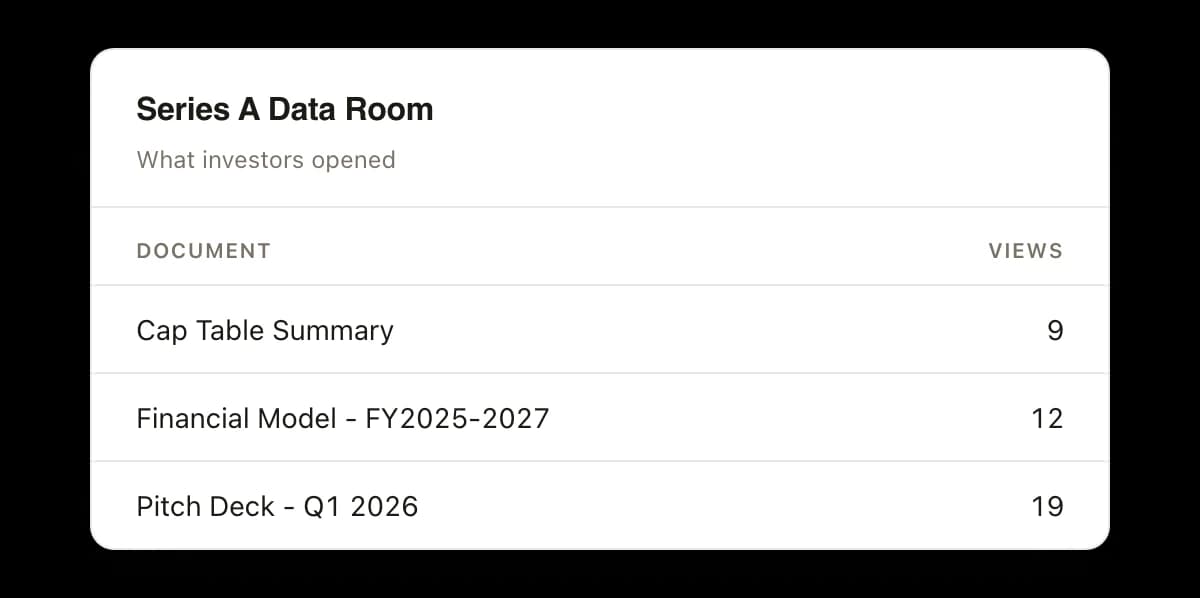
NiaPut the closed period's financials into the Series A data room and reported which documents the investors opened.
- FridayVic
Posted the accruals that reverse next month and reported exactly what the close is still missing.
Six specialists.One ledger between them.
Each agent owns a lane and works it without being asked. They recommend and draft. You approve, adjust, or decline, and every action lands on the audit trail.

Vic
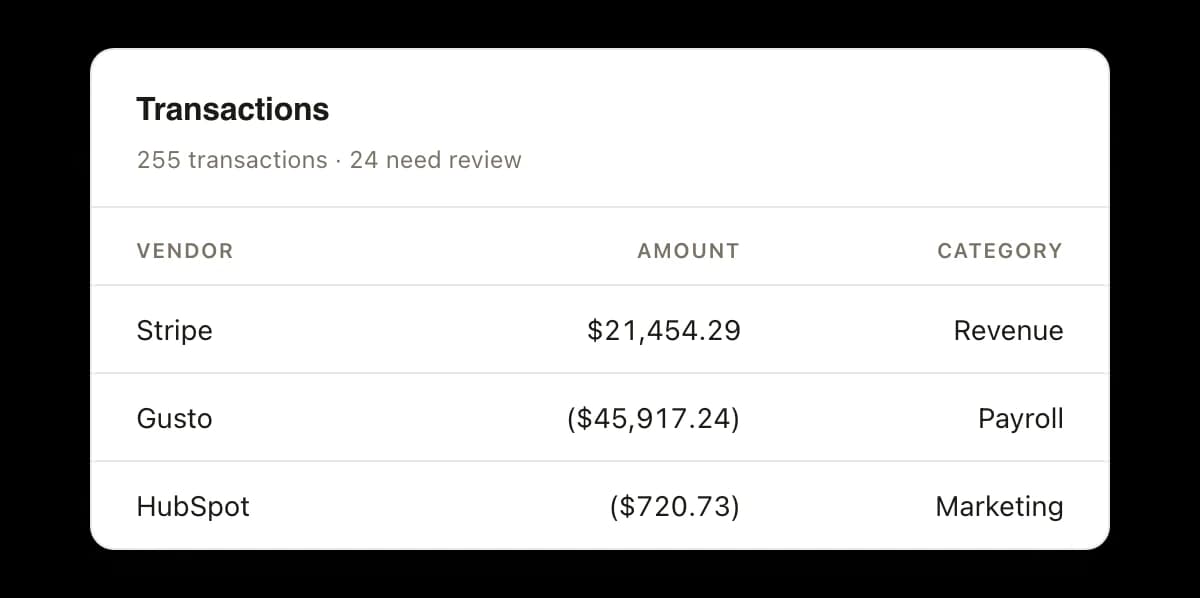
Owns the ledger itself: the chart of accounts, the journal entries behind every figure, and the monthly close.

Remi
Owns the money owed to you: invoices out, follow-ups on what is late, and cash matched to the invoice it settles.

Theo
Owns the money you owe: bills, approvals, and payment timing set against the cash available to fund it.

Margo
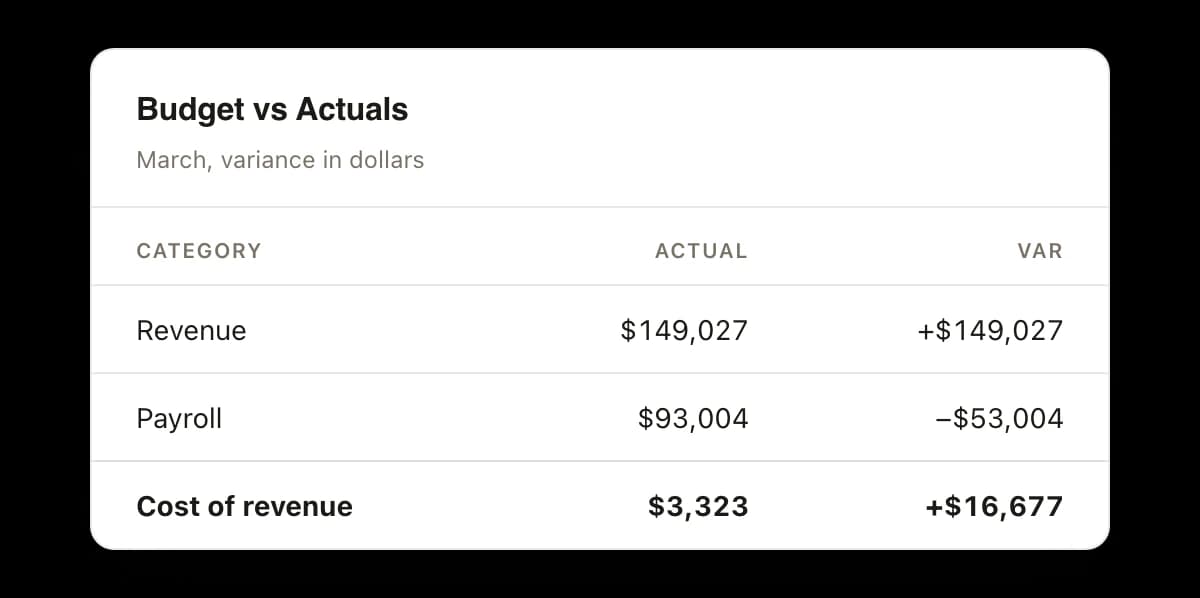
Owns the view forward: the cash forecast, the hiring plan, and every month measured back against the budget it was set.

Hugo
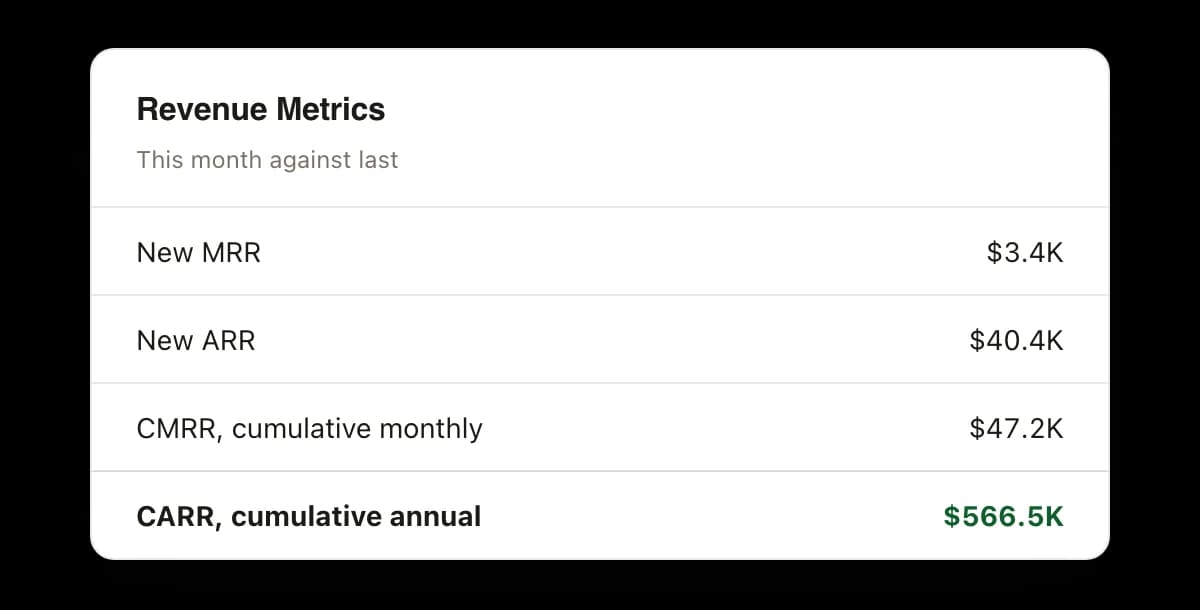
Owns the growth numbers: new MRR and ARR each month, the cumulative recurring totals under them, and payback by channel and cohort.

Nia
Owns what investors see: the cap table, the data room, the monthly update, and the board deck.
The screens behind the numbers.All of them on one ledger.
Four of the surfaces a SaaS founder opens most, each reading from the same entries rather than from an export.

MRR roll-forward
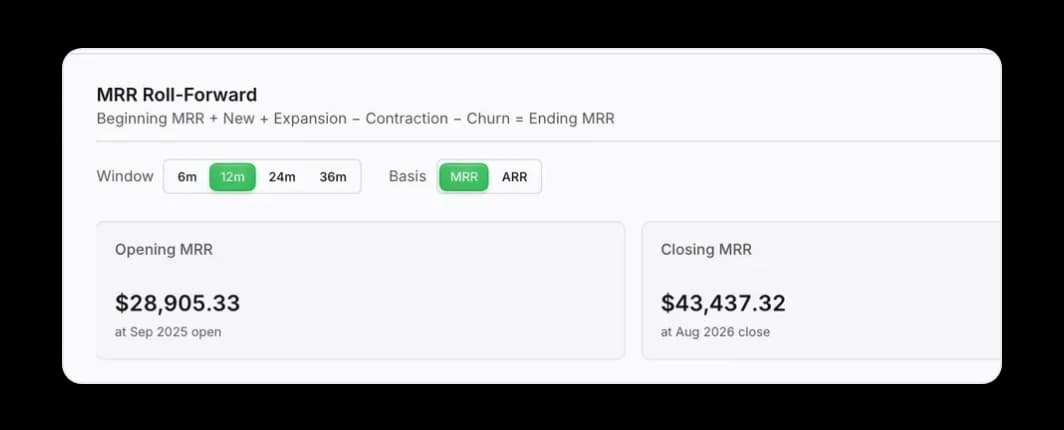
Opening MRR, new, expansion, contraction, and churn, closing MRR. Built from recognized revenue on the ledger, so it agrees with the income statement instead of arguing with it.
Runway and burn
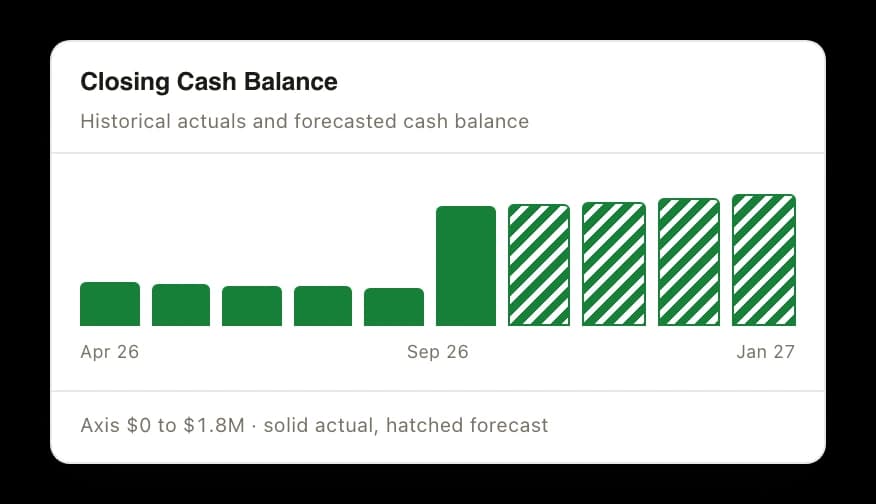
Cash today, net burn on the trailing month, and the months the balance covers at that rate, recomputed after the night's entries post. The months ahead sit on the same chart as the months behind.
The cap table of record
Ownership as issued rather than as remembered: 12,842,491 fully diluted shares, $8,500,000.00 raised, and $7,000.00 of founder capital, split between common and preferred. The number you quote in diligence is the number on your own books.
The investor update
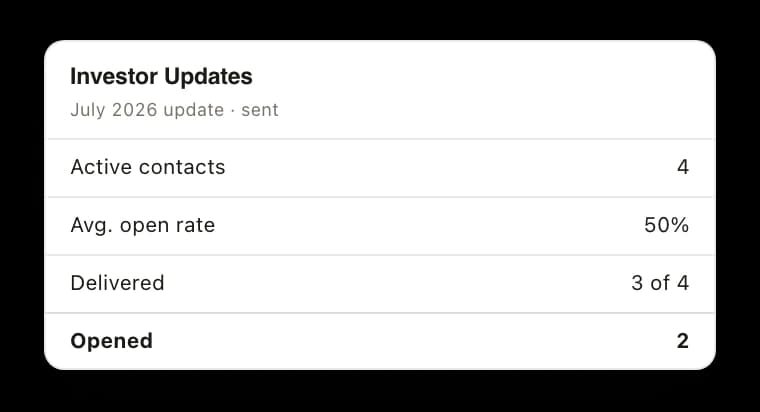
Nia drafts the monthly update from the closed period and waits on your edits. The July 2026 update shows what happened after you sent it: 4 recipients, 3 delivered, 2 opened, and no drafts left sitting in review.
Every job, in detail.Start with the one you have.
Eight pages, each taking one question a founder brings to finance and showing the work behind the answer.
Priced against the alternatives.The work, not the leader.
Futureproof replaces the finance work you would otherwise hire out piece by piece. When you do hire a finance leader, they inherit clean books and a working forecast rather than a cleanup project.
| Futureproof | A bookkeeper | A fractional CFO | Spreadsheets | |
|---|---|---|---|---|
| Keeping the books | Coded and reconciled nightly, closed every month | Coded in batches, usually weeks behind | Reviews the books, does not keep them | You keep them, on whatever evening is free |
| Runway and burn | Recomputed on posted entries after every night | Outside the engagement | Rebuilt when you book the session | Rebuilt by hand, stale by Friday |
| Subscription revenue | Recognized across the contract term as it is billed | Often cash in, cash out | Sets the policy, someone else applies it | A tab of formulas nobody wants to inherit |
| Chasing what is owed | Remi drafts the follow-ups and applies the cash | Records the payment once it arrives | Not their work | A reminder you set and then move |
| Board and investor reporting | Assembled from the closed period, waiting on your sign-off | No | Builds the deck at a senior rate, when booked | A weekend of copy and paste before each board meeting |
| What it costs you | One monthly fee, no per-seat charges, no modules | A monthly fee covering one lane of the work | A senior day rate for part of one week | The hours you would rather spend shipping |
The questions founders askin the first conversation.
The finance stack and the first finance hires: bookkeeping software, the MRR spreadsheet, collections follow-up, bill pay, and board prep. It does not replace your finance leader. It gives you, or your first Head of Finance, a team.
Yes. Futureproof is the general ledger, the system of record your startup runs on. Every metric, from burn multiple to NRR, traces back to a journal entry you can open.
Pricing starts at $1,000 per month for all six agents, with a monthly review call with a human financial specialist included. A seed-stage bookkeeper or bookkeeping firm typically runs $2,500 to $4,000 per month, before anyone touches your forecast or board deck.
Setup is one sitting: connect your banks and billing, and the agents start building your books the same day, with runway and burn on screen from the first session.
That is the ideal time. The agents cover the work a first finance hire would otherwise drown in, and when you do hire a finance leader, they inherit clean books and a working forecast instead of a cleanup project.
Your ledger. Your numbers. Your call.
Put your next dollarwhere it pays back.
Connect your accounts and the team starts on your books tonight. The next hire, the next channel, and the next round all get decided on numbers that were current this morning.
The 14-day trial runs all six agents. No per-seat fees, no modules, and a monthly review call with a human financial specialist is included.