


The books run weeks behind
Subscriptions, refunds, and payouts are coded by hand, so the profit and loss lags the business. When you want to price a hire or send numbers to an investor, you are reading a picture of a month that has already ended.

Connect your bank and Stripe once. Futureproof builds your books from that data and keeps them as your system of record, with subscription revenue recognized across the months it is earned in. So when you want to raise ad spend, make the next hire, or answer an investor, the numbers are already sharp.
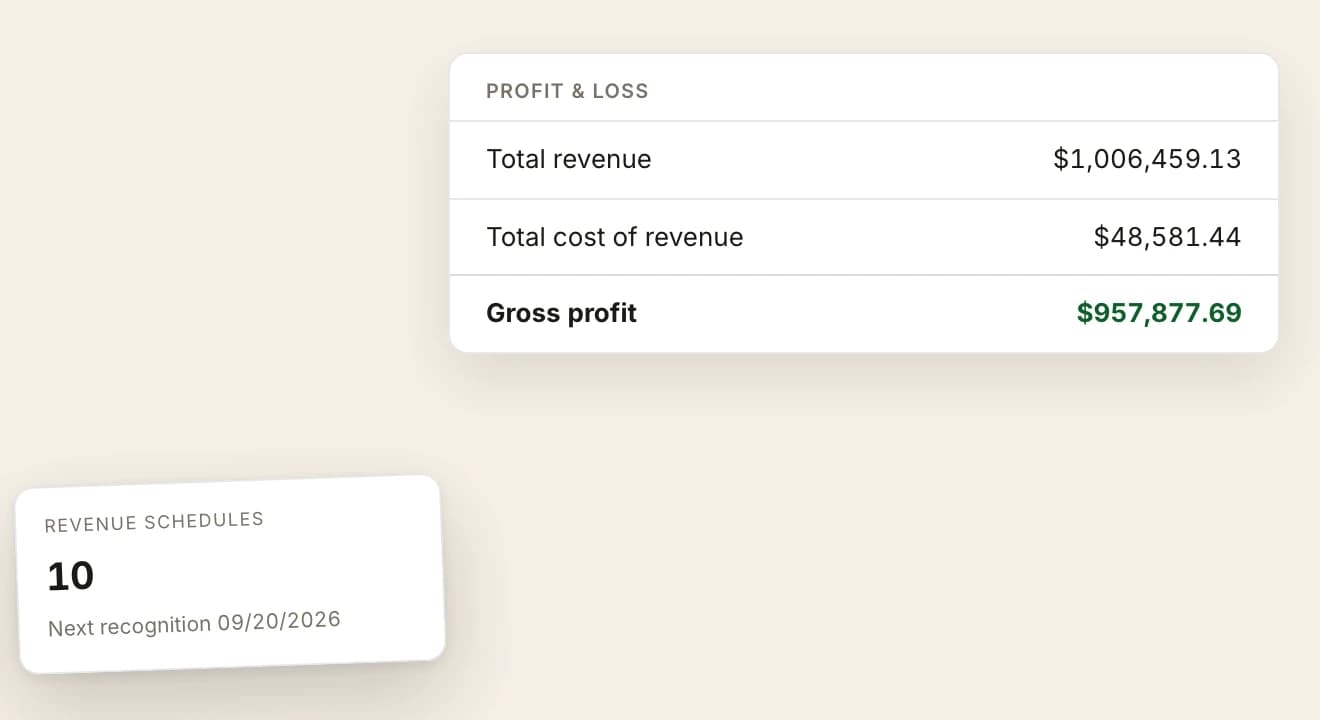
Bookkeeping for a subscription business has a wrinkle a shop does not have. An annual plan collects twelve months of cash on one day and earns it over twelve months, so revenue and cash tell different stories. Books that cannot hold both are books you check twice and still do not trust enough to move on.
Subscriptions, refunds, and payouts are coded by hand, so the profit and loss lags the business. When you want to price a hire or send numbers to an investor, you are reading a picture of a month that has already ended.
An annual plan lands as one payment and is earned across a year. Kept in a side spreadsheet, deferred revenue drifts from the ledger, and the first person to notice is usually a diligence analyst rather than you.
A seed-stage bookkeeping firm runs $2,500 to $4,000 a month and still hands the numbers back weeks later. You pay for the work and keep the delay, which is the part that was actually costing you.
Nothing here is a month-end project. Each step runs on the ledger as entries post, which is why the statements are readable on any day of the month rather than only after a close.
Bank accounts, credit cards, and Stripe connect through Plaid in one sitting, and your history imports into your own general ledger.
Revenue, payroll, infrastructure, and marketing are filed against accounts on your chart, and the accounts are reconciled against the statements overnight.
Each subscription longer than a month gets a schedule, so the cash sits on the balance sheet as deferred revenue and moves into income month by month as it is earned.
The coding is a proposal until you accept it. Once you do, the profit and loss, balance sheet, and cash flow statement build from those entries and are yours to send.
Three things a founder should be able to check without scheduling anything, each read straight off a surface the ledger already keeps current.
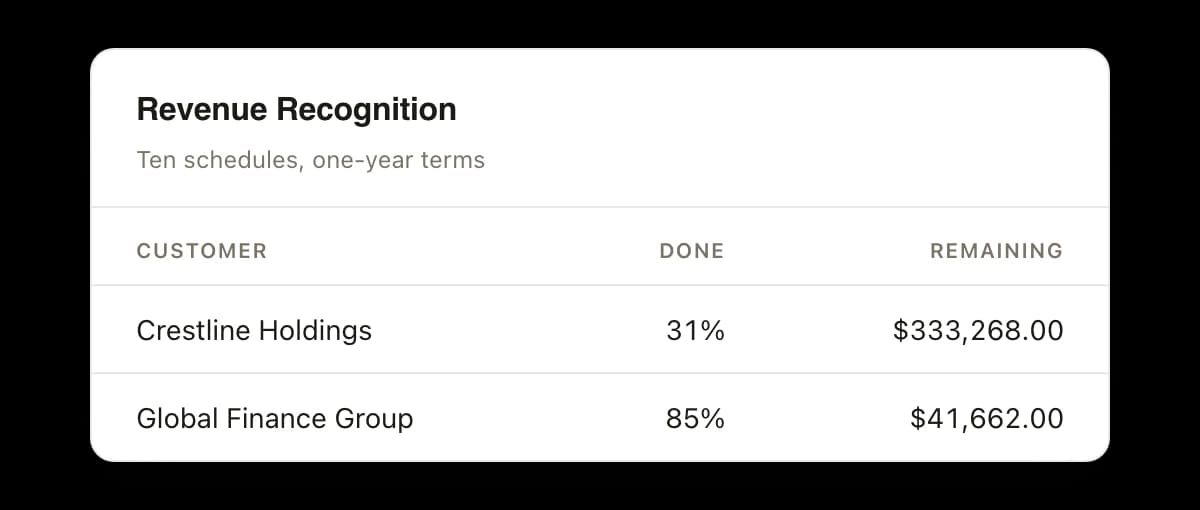
Each schedule shows how far into its one year term a customer has been served and how much is left to recognize: Crestline Holdings at 31 percent with $333,268.00 remaining, Global Finance Group at 85 percent with $41,662.00. Ten schedules run at once, each moving on its own clock.
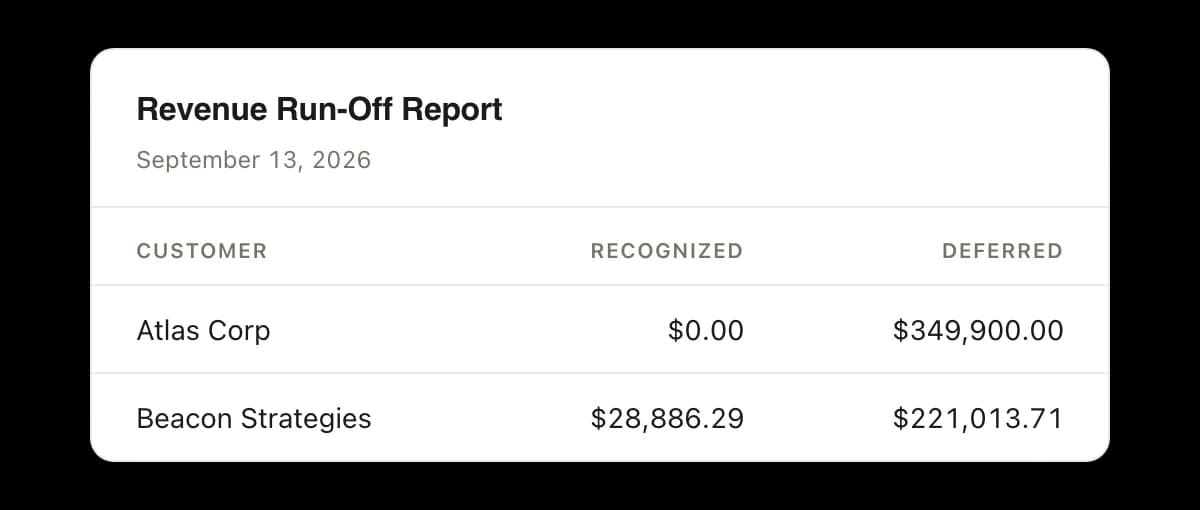
The run-off report lists the deferred balance contract by contract: Atlas Corp with nothing recognized yet and $349,900.00 deferred, Beacon Strategies with $28,886.29 recognized and $221,013.71 still deferred. The obligation is a report you open, not a workbook you keep alive.
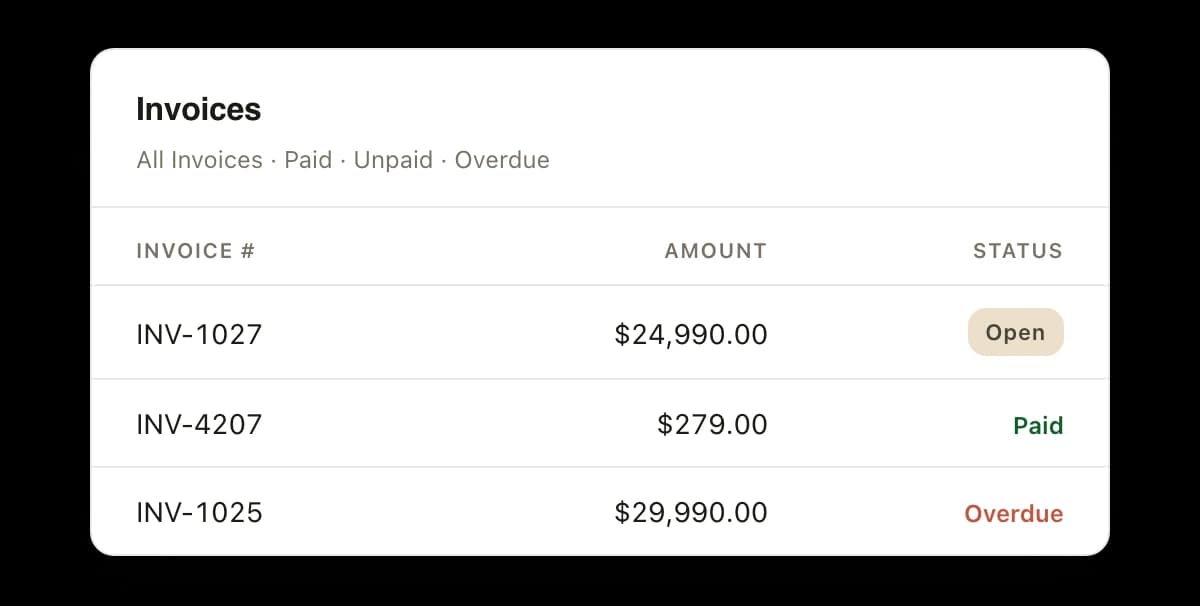
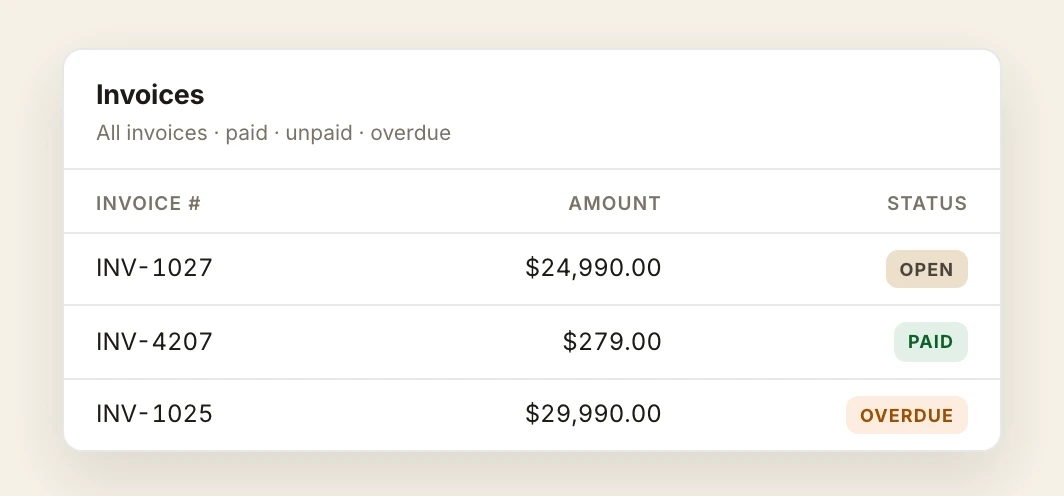
Billed is not collected. The invoice book marks each one: INV-1027 at $24,990.00 open, INV-4207 at $279.00 paid, INV-1025 at $29,990.00 overdue. Revenue earned and cash held stay two separate figures, both of them visible.

Vic codes each transaction to your chart of accounts, reconciles the accounts against the statements, keeps the recognition schedules current, and runs the period close so the statements stand on entries that tie.

Remi issues the invoices, matches each settlement against the one it pays, and ages whatever is still open, so collected revenue on the books is the money that arrived rather than the money that was billed.

Hugo builds recurring revenue, churn, and cohort figures from the same ledger the statements come from, so the metric in an update and the line in the accounts are the same number twice.
One subscription drawn end to end, then the two surfaces where that shape shows up in full.
One annual plan drawn end to end: invoiced once, collected once, parked as an obligation, then moved into revenue across the months the customer is served until nothing is left owed. That shape is what a recognition schedule is.
A year of service, billed on one day
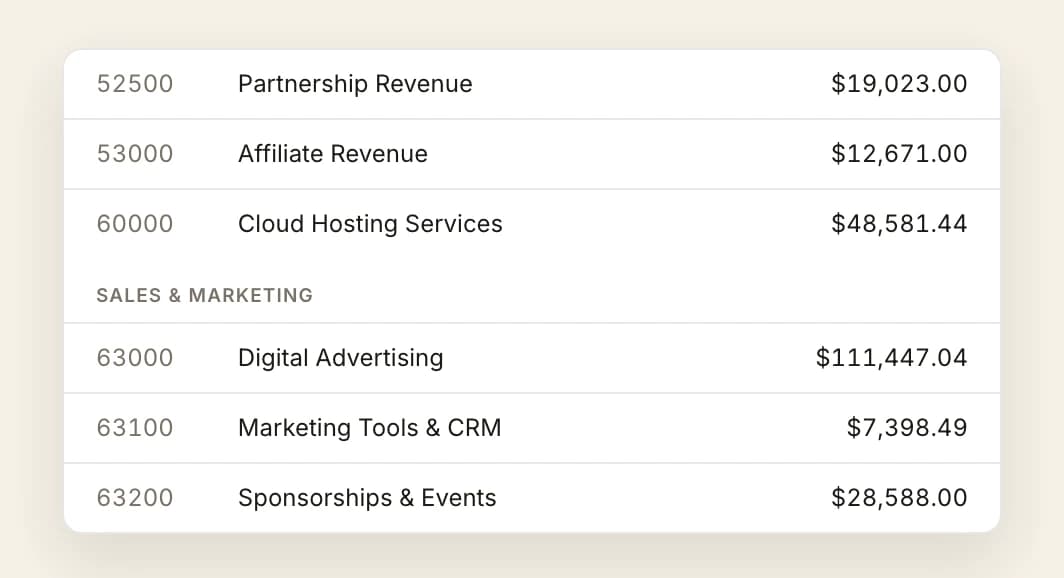
Every line carries the account it posts to, from partnership revenue at 52500 and affiliate revenue at 53000 through cloud hosting services at 60000, and the statement keeps reading down into sales and marketing at 63000, 63100 and 63200. A figure you can question is a figure with an account behind it.
Thirty-seven invoices under tabs for all, paid, unpaid, overdue, draft and upcoming, each row carrying the customer, the amount, the status, the invoice date, the due date and the balance still outstanding. Recurring invoices are marked as recurring.
Connect your bank accounts, your credit cards, and Stripe through Plaid. Futureproof builds your books from that data and keeps them as your system of record, coding each transaction to your chart of accounts and reconciling the accounts against the statements. Subscription revenue is recognized across the months it is earned in rather than on the day it is collected.
Yes. Every subscription longer than one month gets its own recognition schedule, whether it bills monthly, annually, or on a custom cycle. Cancellations and plan changes move the schedule with them, so deferred revenue sits on the balance sheet instead of in a spreadsheet nobody wants to own.
Yes. Futureproof is the general ledger, not a layer on top of one. Coding, reconciliation, the period close, and the profit and loss, balance sheet, and cash flow statement all live in it. Coming from QuickBooks, a one-click migration brings your history across.
Review and adjust any coding. Save the adjustment as a rule and that vendor is coded your way from then on. Every posting and every correction is recorded on an audit trail, so the change is visible rather than silent.
The profit and loss, balance sheet, and cash flow statement build from the ledger itself, so a CPA reads the entries behind each line rather than a report assembled separately. Every plan also includes a monthly review call with a human financial specialist who goes through the books with you.
Your numbers. Your answers. Smarter moves.
Connect your accounts and month-end stops being the thing that decides how fast you can move. The books are current, they tie, and they are ready whenever someone asks.
Starting at $1,000/month for all six agents, with a monthly review call with a human financial specialist included. No per-seat fees, no modules.