


 Bookkeeper
I post the day, then I close the month.
Every bank and card movement, every Stripe charge, refund, fee, and payout gets coded to an account on your chart and reconciled overnight. The general ledger underneath is your system of record, so month end becomes a review of prepared work instead of a reconstruction from exports.
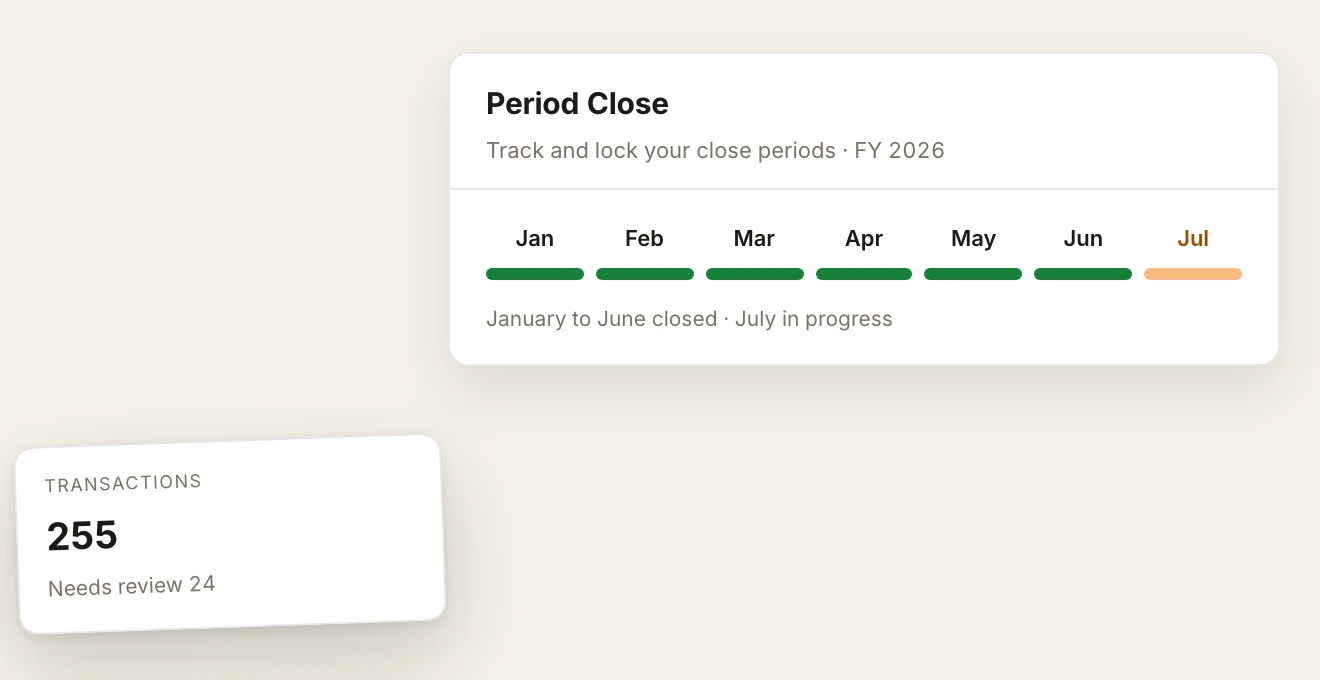
Three things I owe youevery morning.
What comes in, what I write down, and what is waiting for you when you open the laptop.
Your bank accounts and credit cards through Plaid. Your Stripe charges, refunds, fees, and payouts. The vendor bills and contracts you upload, and the payroll runs you import as a file. Your QuickBooks history moves across in a one-click migration, so the first month continues rather than restarts.
Journal entries, and nothing that is not one. Each transaction coded to an account on your chart, each Stripe payout split back into the charges, refunds, and fees inside it, accruals posted with the reversals that undo them, and a recognition schedule behind every annual contract so deferred revenue stays current as it is earned.
A short review queue and a month that is ready to close. Lines I could not settle cleanly arrive with the source document and the account I propose, and the close arrives with whatever it is still missing named item by item.
Five jobs I runbefore the laptop opens.
This work is scheduled, not requested. Each job runs on its own clock, and anything I cannot settle without you becomes a decision waiting in your queue rather than an entry you have to go find.
- Nightly, 2:00 am
I reconcile the accounts
I match what cleared in your bank and credit card accounts against the entries on the ledger, settle the ones that agree, and set aside the ones that do not so the balance every other number starts from is a posted balance.
- Nightly
I prepare the close
I walk the open period end to end, post what is missing, and mark what is still outstanding. By the time you look at the month, the assembly is already done.
- Daily
I scan for anomalies
I read the day's entries for duplicates, amounts outside their usual pattern, and postings that landed somewhere they do not belong, and I bring you the ones worth a look.
- Every Monday
I check close readiness
I report what still stands between you and a closed month: accounts not yet reconciled, entries not yet posted, and the handful of questions only you can answer.
- Monthly
I summarize the month
Once the period closes I write up what changed in the books, where the movement came from, and which balances behaved differently from the month before.
Every line of the day,coded and traceable.
The ledger I keep is the one you read. Every line carries the account it landed in and the connected account it came from, so there is no separate copy to reconcile back.
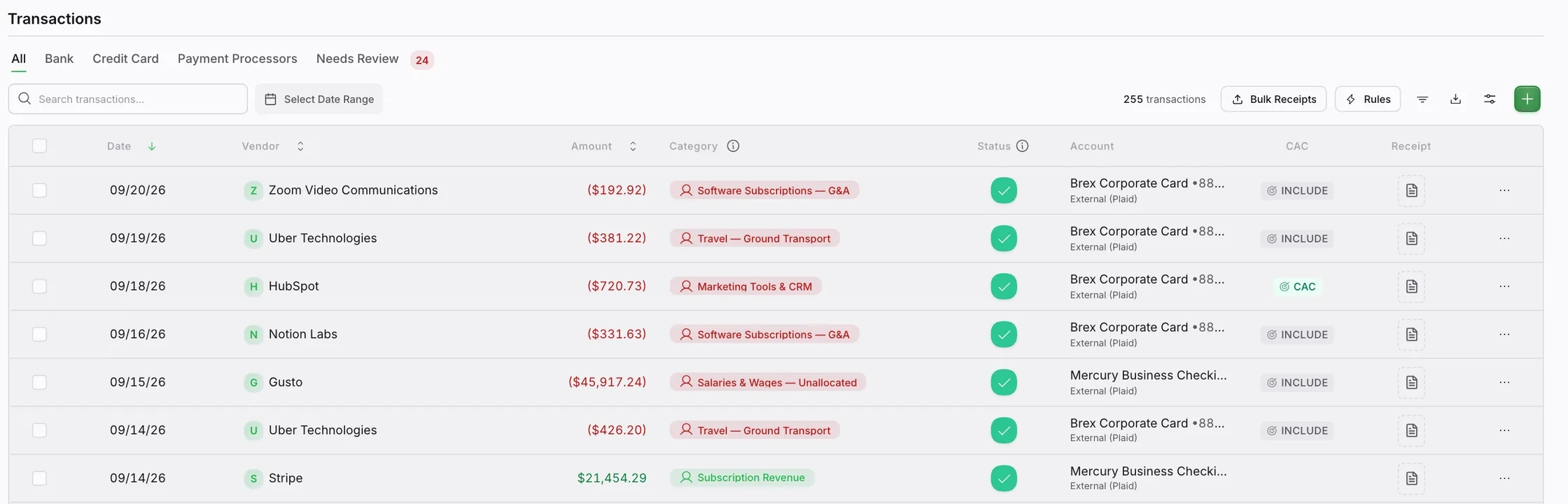
The transactions surface: every bank and card line with the amount, the account on your chart it was coded to, the connected account it came from, and the ones still flagged for review.
I do the work.The judgment is yours.
I run my lane without being asked, and I stop at the line where a judgment call is yours to make.
- Ask me about any entryAsk what a transaction was, why a balance moved, or where a figure on a statement came from. I answer from the entries themselves and can show the audit trail behind any one of them.
- I flag what looks wrongDuplicates, amounts out of pattern, and lines I cannot settle cleanly come to you with the evidence attached and the account I propose. I never force a match to make a number look tidy.
- You approve before it postsNothing I propose reaches your general ledger until you accept it. I do not file your taxes and I do not stand in for your accountant. What I leave behind is a set of books with an audit trail they can work from directly.

Where my work goesonce the month closes.
Three of the five read from the books I keep, which is why their numbers and mine do not disagree.


What founders ask meabout month end.
Vic is the bookkeeping agent on the Futureproof finance team. Vic codes every bank, credit card, and Stripe movement to an account on your chart, reconciles those accounts nightly, posts accruals and revenue recognition schedules, and prepares the monthly close on your general ledger, which is your system of record.
For most pre-seed through Series A companies, yes. Vic does the coding, the reconciliation, and the close preparation that a bookkeeper is hired for, and does it nightly rather than in monthly batches. A monthly review call with a human financial specialist is included in the plan, so the judgment calls still have a person behind them.
Stripe batches charges, refunds, fees, and disputes into a single bank deposit. Vic splits each payout back into its component transactions and codes each one to the right account, so revenue, processor fees, and refunds sit on separate lines rather than arriving as one lump sum.
Yes. Vic builds a recognition schedule for every annual and multi-year contract, posts the monthly recognition entry, and keeps the deferred revenue balance current. Subscription revenue recognition is handled from the first month rather than corrected at year end.
Yes. Every figure traces to a journal entry, every journal entry carries its source document and its audit trail, and the chart of accounts is standard. An accountant or CPA can review the books directly instead of rebuilding them first.

Start with the books
Stop closing the month,start reading it.
Connect your bank accounts, your credit cards, and Stripe, and I will work a full month for you. Fourteen days is long enough to judge the result.
Starting at $1,000/month for all six agents, with a monthly review call with a human financial specialist included. No per-seat fees, no modules.