


Caught early
When a buyer slips past its terms, you hear about it the day it happens, matched to the invoice behind it.

 Receivables Accountant
Every morning you know which buyer is late and by how much, with the invoice, the days past terms, and what else that account still owes. Buyers pay late; marketplaces pay on a cycle, after fees, reserves, and holds. I invoice, age, and follow up on one side, tie out settlements on the other, and match every deposit to the invoice it clears for your approval. Futureproof gives your brand an AI finance team, and receivables are my part of it.
Money owed to you arrives from two directions, and both of them need chasing. This is what comes in, what I record, and what lands on your desk.
Wholesale invoices and the terms on them, settlements and reserves from Amazon, eBay and Shopify, and every bank account and credit card you connect, so a deposit can be matched to what it settles.
Payments matched to the invoices they clear, settlements split into the revenue, fees, refunds, and reserves inside them, and receivables aged by channel in one ledger.
Who owes you what and for how long, the reminder going to each late account on the schedule you set, and the deposits I could not place.
Overnight I age every open invoice, match the deposits that landed, tie out the week's settlements, and accounts past their terms get the reminder you set up, so the chasing is under way before you start the day.
Every open invoice moves into its aging bucket by channel and by buyer, and the accounts that crossed their terms overnight get the reminder you set up, in your words.
Payments that landed in your bank accounts are matched to the invoices they clear, and a cleared account stops appearing on the list to chase.
The week of settlements is tied to the orders, fees, refunds, and reserves inside them and to the books, and anything that does not tie out is raised with the difference beside it.
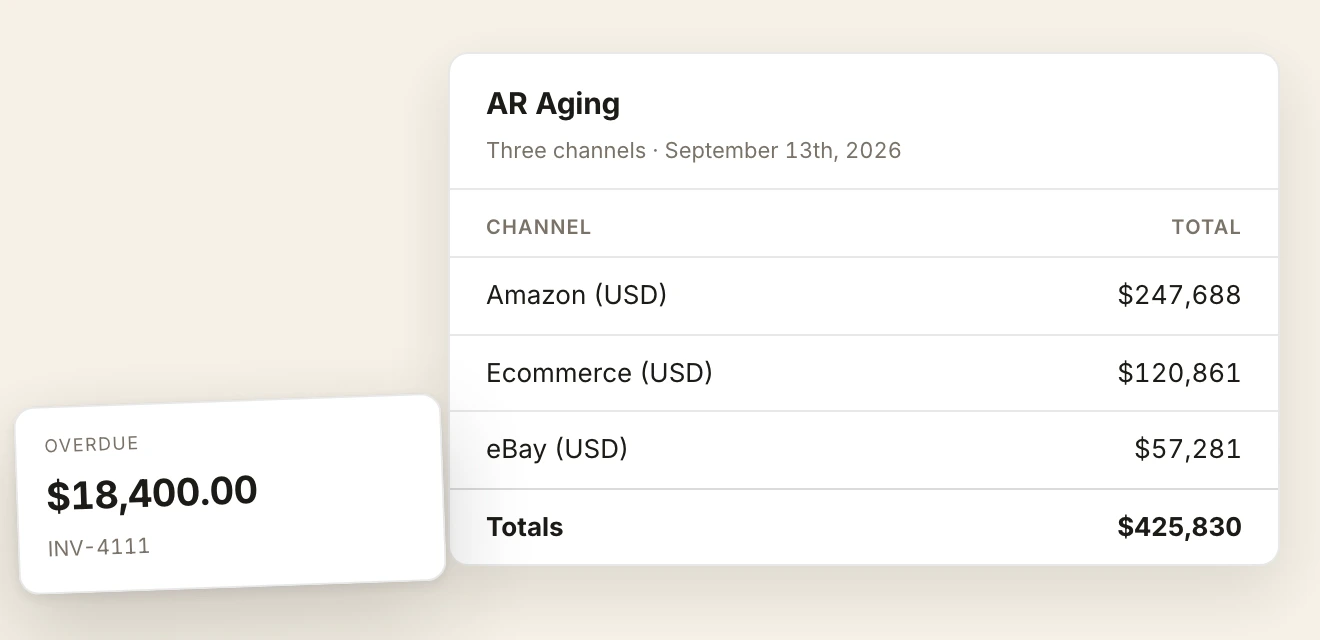
One table for the money outstanding, split by the channel it is owed on and by how long it has been sitting there. It is the receivables figure you give a lender or a buyer, tied to the books each month.
| Buyer | Terms | Status | Amount |
|---|---|---|---|
| Regional housewares chain, opening order | Net 60 | Current | $22,480.00 |
| Specialty gift chain, reorder | Net 30 | 1 to 30 days past due | $8,150.00 |
| Boutique group, spring order | Net 30 | 31 to 60 days past due | $5,640.00 |
| Total open | $36,270.00 | ||
I keep every buyer's invoices aged and followed up, and you hear the day one slips. You set the timing and tone once.

When a buyer slips past its terms, you hear about it the day it happens, matched to the invoice behind it.
Ask who owes you and how late, and you get each buyer's open invoices with how far each one sits past its terms.
You approve the timing and tone of reminders once, and they go out on it; I never take a payment or decide who gets terms.
What I match and what I am still waiting on feed the close, the cash plan, and the record a buyer eventually tests.


They behave differently, so Remi runs both. Wholesale is invoice based, with Net 30 to Net 60 terms and a payment that arrives on the buyer's schedule, not the invoice date. Marketplace money arrives on a settlement cycle with fees and reserves taken out first. Remi ages both in one view, so what a brand is owed is a single number.
You set the cadence and the wording once, and reminders go out on that schedule. You can pause reminders on any invoice, so a strategic account can be handled by hand while the rest run on the schedule you approved.
Each settlement is tied to the orders, fees, refunds, and reserves inside it and to the books, and anything that does not tie out is raised with the difference beside it. Because the reserve is recorded on each settlement, the money being held is visible instead of missing.
No. Remi matches deposits to the invoices they clear and settlements to the payouts behind them. The money itself moves through your own bank and payment providers, never through an agent, and credit terms stay your decision.

Your receivables, current every day
A walkthrough of the whole platform, then a talk about how you run your month.