


 Exit Readiness
I keep the record a buyer asks for. Ready all year.
Diligence is not a project you start when the offer arrives. Every month closes into a record that holds together: the books behind the margin, the documents behind the claims, and a room you can open on the day you decide to.
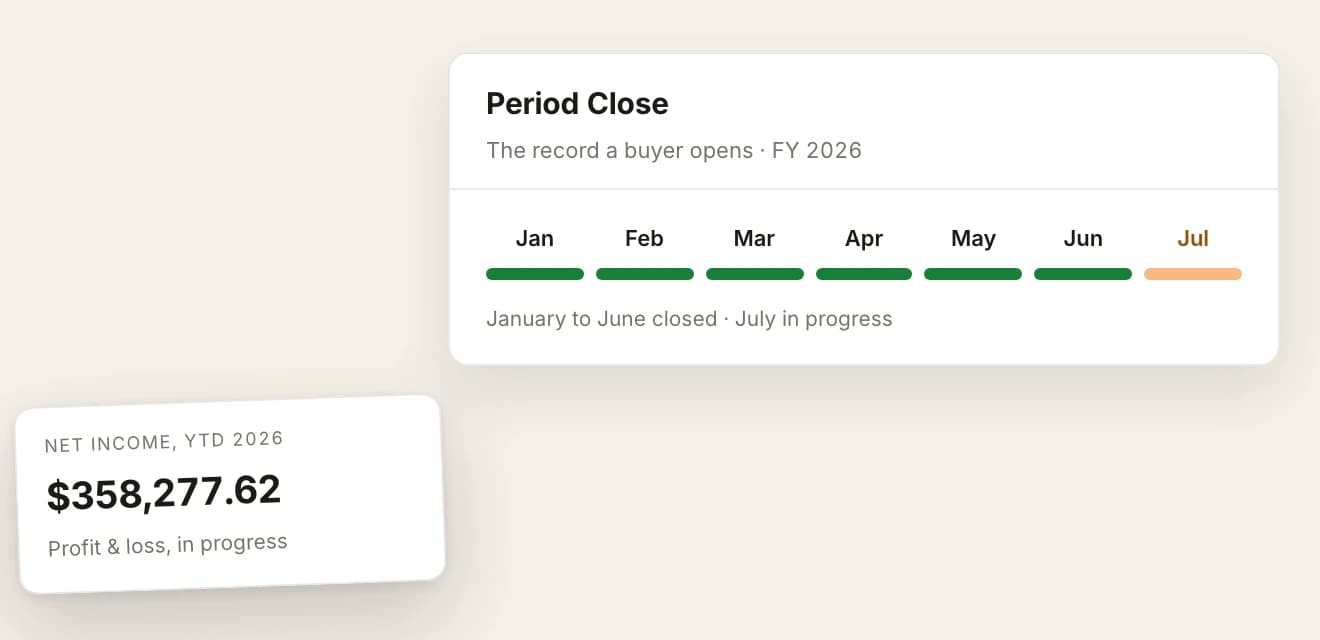
I read the closed months.Then I file them.
A buyer tests the record rather than the story. This is what comes in, what I keep, and what I bring you.
Each month as it closes, the margin history behind it, the documents and agreements you upload, and the bank accounts and credit cards the balances are built on.
A standing record in one ledger: closed periods that stay closed, figures defined the same way every month, and documents held in a room where access is granted rather than emailed.
What is missing or stale before anyone asks for it, who opened which document and for how long, and a draft of the month for your approval.
Diligence gets builta month at a time.
The work that makes diligence short is done in the eleven months before it. Every night the closed day joins the record, the room reports on who read what, and once a month the period is written up and put in front of you in draft, unsent until you say so.
- Every five minutes
Who opened what
When a visitor finishes in the room, you learn who they were, which documents they opened, and how long they spent on each, rather than hearing about it after the call.
- Every day
The day in the room
The last day of activity comes back as one summary, so interest in the room is something you can read rather than something you have to go looking for.
- Every Monday
The week in the room
The week is reported as a whole: the busiest days, the visits, and the documents that were opened most, which tells you what the other side is actually weighing.
- First of the month
The month, drafted
The month just closed is written up from the books and left in your inbox as a draft. Nothing is sent on your behalf; you approve it, edit it, or leave it.
- Daily
The closed day lands
Vic posts the day to the ledger, and I take it into the record, so the trailing numbers a buyer will test never lag the books by a quarter.
The statement a buyer opens first,built from closed months.
The months behind you are closed and the statement reads from them, so a diligence question is answered out of the record rather than out of a rebuild.
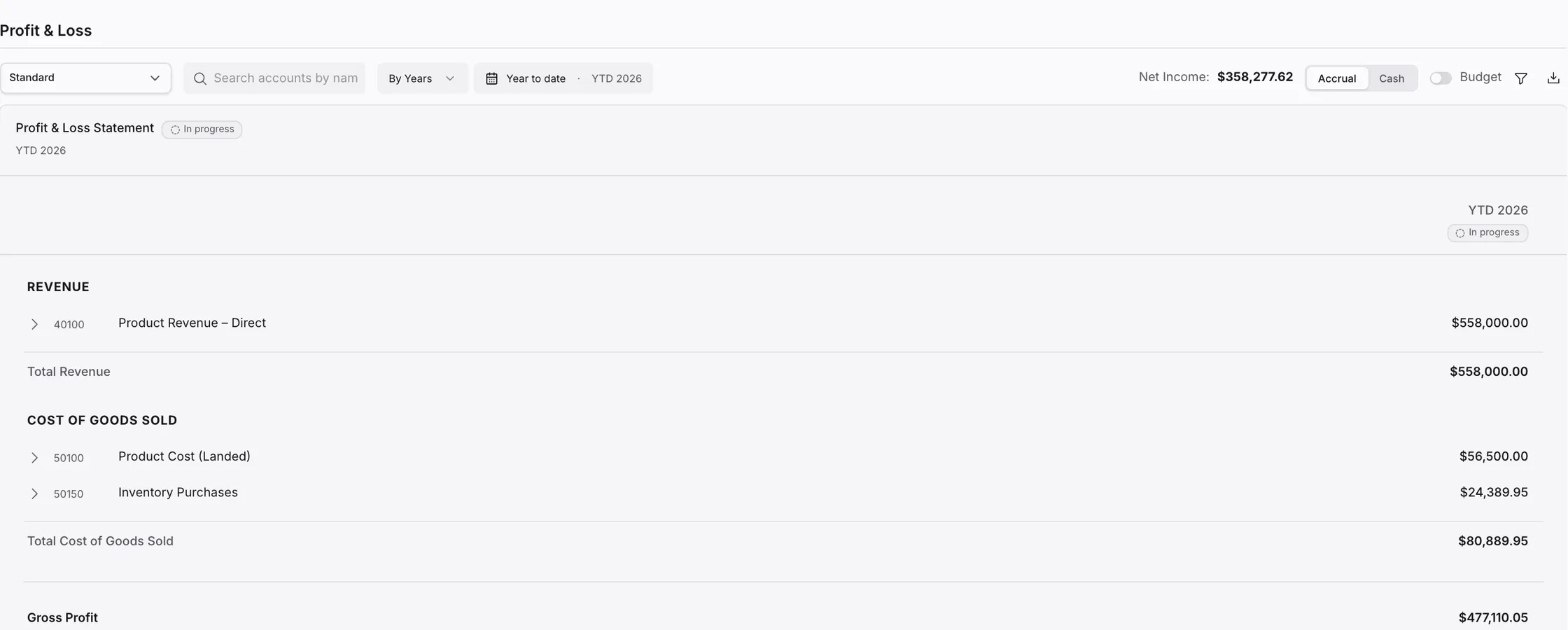
The profit and loss a buyer opens: revenue, landed product cost, and the gross profit underneath, each line on its own account.
I keep the record.You run the deal.
My side is evidence: current, consistent, and traceable. The negotiation, the price, and the people you take it to are yours.
- Ask meAsk what a buyer would find in your numbers, and I show the closed months, the margin history by channel, and the places where a definition changed or a period was reopened.
- I flagA document that is out of date, an agreement the room is missing, or a month that has not closed cleanly, raised while it is still a small piece of housekeeping.
- You approveNothing leaves the room without your approval, and every draft waits for you. I do not run your sale, I do not price your brand, and I do not give legal or tax advice.

The record is not mine alone.Three agents keep it current.
Everything a buyer tests was posted by someone on this team, which is why the answer to a diligence question is a file rather than a fortnight.


Everything else operators askabout being ready.
Nia keeps the brand ready for a buyer. Months close and stay closed, margin history keeps the same definitions, documents live in a data room where access is granted per person, and the month just closed is drafted for the owner to approve. The result is that diligence reads an existing record rather than triggering a rebuild.
It holds the documents a buyer or a lender asks for behind access granted per person, including a signature step where one is required. Office documents are converted so they open in the browser, and the owner can see who opened which file and how long they spent on it, as a summary each day and a fuller report each week.
No. Nia drafts the monthly write-up and leaves it in the inbox, and access to the room is granted by the owner. Sending and sharing stay human actions. An agent never emails an outside party on the brand's behalf.
No. A banker or broker runs the process, and the multiple comes from the market. Nia keeps the evidence side: closed books, consistent margin history, and a room that is current, so the process moves quickly and the questions get answered from the record.
We never sell your data, and we share it only with the vetted service providers that run the platform, never with other customers and never with advertisers. Access inside your account is limited to the people you invite.

Your record, standing
Be ready before the call.Not after it.
Connect your channels, your bank accounts, and your credit cards, and the record starts building from the first close.
Starting at $1,000/month for all six agents, with a monthly review call with a human financial specialist included. No per-seat fees, no modules.