


 Channel Analyst
I rebuild your margin daily. Down to the unit.
A big seller and a good seller are rarely the same product. I take an order apart into the fees, the discount, the returns, the landed cost, and the ad spend behind it, then put the channel and the product back together, so what you actually keep is a column you can sort.
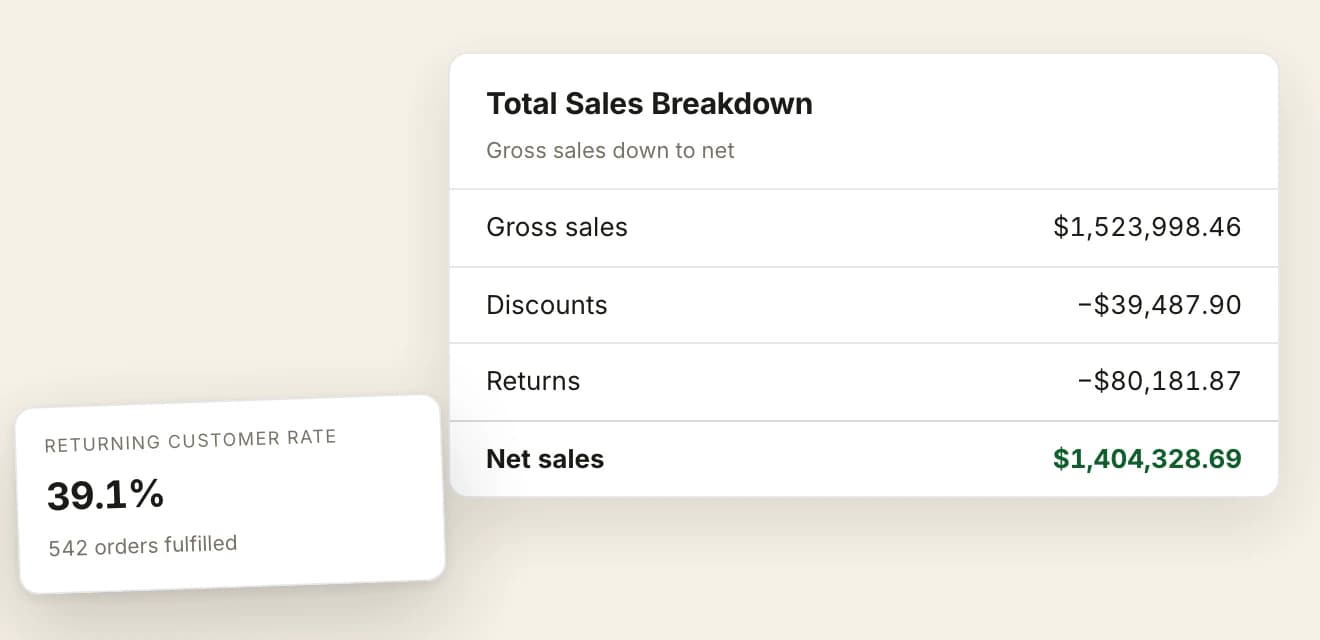
I read every costthat touches an order.
Margin is the last number to arrive, because it waits on all the others. This is what comes in, what I record, and what I bring you.
Orders, fees, refunds, and discounts from Amazon and eBay and from Shopify in beta, campaign spend from the ad platforms, the landed cost Theo produced, and the bank accounts and credit cards the rest of it clears through.
Margin rebuilt daily per product and per channel in one ledger, with the discount given, the returns taken back, the platform fees charged, and the ad spend allocated to the channel it supported.
A ranking of what your channels and products actually keep, the fee or the return rate behind anything that moved, and a route from any figure down to the orders underneath it.
I put the day back together.Cost by cost.
Margin work is subtraction done carefully. Through the night the orders and fees arrive from each channel, campaign spend lands beside them, and before morning I rebuild what every product and every channel kept once the discounts, the returns, the fees, and the landed cost come off.
- Every hour
Channel activity arrives
Orders, fees, and refunds come in from each marketplace and store connection, so the day is being assembled while it is still happening rather than exported later.
- Every four hours
Campaign spend lands
Spend arrives by platform and by campaign and sits against the channel revenue it supported, which is what lets a channel carry its own cost of acquisition.
- Every day
Margin rebuilt
Every product and every channel is rebuilt after discounts, returns, platform fees, and the landed cost behind the units, so what you kept is current rather than quarterly.
- Each day
Fee rates checked
The rate each marketplace charged is compared against the rate it should have charged, line by line, so a quiet fee change shows up as a finding instead of as thinner margin.
- Every Monday
Fee estimates refreshed
The fee assumptions a product is priced against are refreshed from the marketplace itself, so the margin you plan with and the margin you get do not drift apart.
What the selling actually made,gross down to net.
Before margin there is the subtraction everyone skips: what came in, what was given away, and what came back.
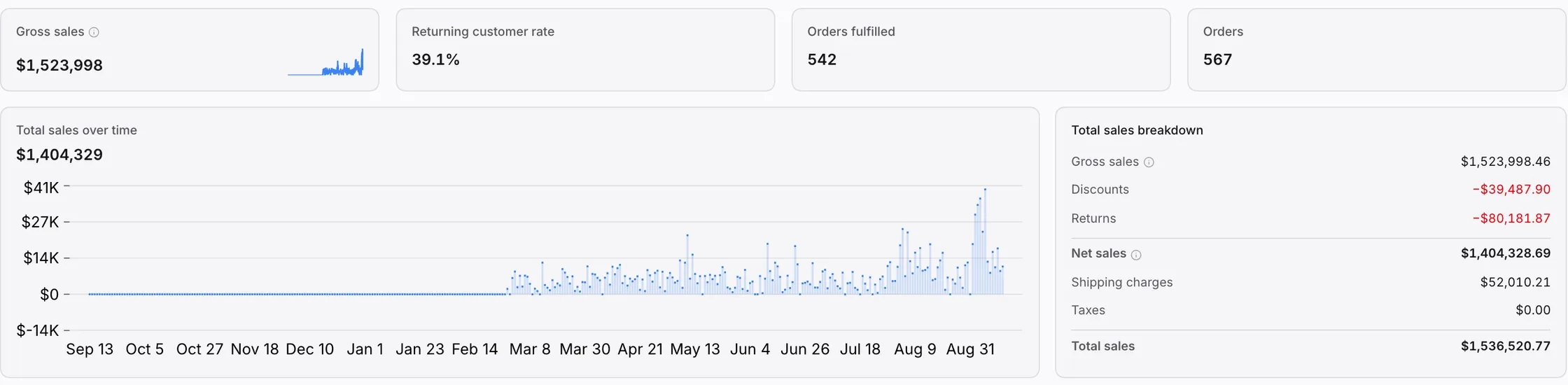
Gross sales stepped down through discounts and returns to net sales, charted day by day beside the breakdown that produced it.
I rank the money.You move the budget.
I make the comparison honest. Where the next dollar goes is a decision I can inform and never make.
- Ask meAsk which channel is actually profitable rather than which one is biggest, and I rank them by what is left after fees, discounts, returns, landed cost, and the spend behind the orders.
- I flagA product that looks like a winner on revenue and loses money once the fees and returns come off, a fee rate that moved against you, or a discount that cost more than the orders it brought.
- You approveI never change a price and I never spend your budget. I do not write into Amazon, eBay, or your store; I tell you what a change would be worth and you make it in the channel.

Margin is a shared number.Three agents supply it.
I do not invent the cost side. Every input I subtract was posted by someone else on the team, which is why a margin figure opens rather than ends the conversation.


Everything else operators askabout what is left.
Everything that varies with the order: the landed cost of the units, marketplace referral and fulfillment fees, shipping, discounts given, refunds and returns taken back, payment costs, and the campaign spend allocated to the channel. What is left is the contribution the channel or the product made toward fixed costs.
Yes. Referral fees, fulfillment fees, storage fees, advertising fees, and return processing are posted on separate lines rather than netted into the deposit. That is what makes it possible to say why the same product earns less on one channel than another, and which fee is doing the damage.
Campaign spend arrives from each connected ad platform and is allocated to the channel revenue it supported, so a channel carries its own acquisition cost inside the profit and loss rather than sitting beside it in a second report. The spend is posted by platform and by campaign, in the same period as the orders it ran against.
Channel orders and fees arrive through the day, campaign spend lands on its own cycle, and margin is rebuilt every day from posted entries. A fee change, a heavy return week, or a discount that ran too deep shows up in the next rebuild rather than at the next quarterly review.
We never sell your data, and we share it only with the vetted service providers that run the platform, never with other customers and never with advertisers. Access inside your account is limited to the people you invite.

Your margin, every morning
Fund what actually earns.Starve what does not.
Connect your channels, your ad platforms, your bank accounts, and your credit cards, and the first margin rebuild runs the same night.
Starting at $1,000/month for all six agents, with a monthly review call with a human financial specialist included. No per-seat fees, no modules.