Why Accounting Matters More Than You Think
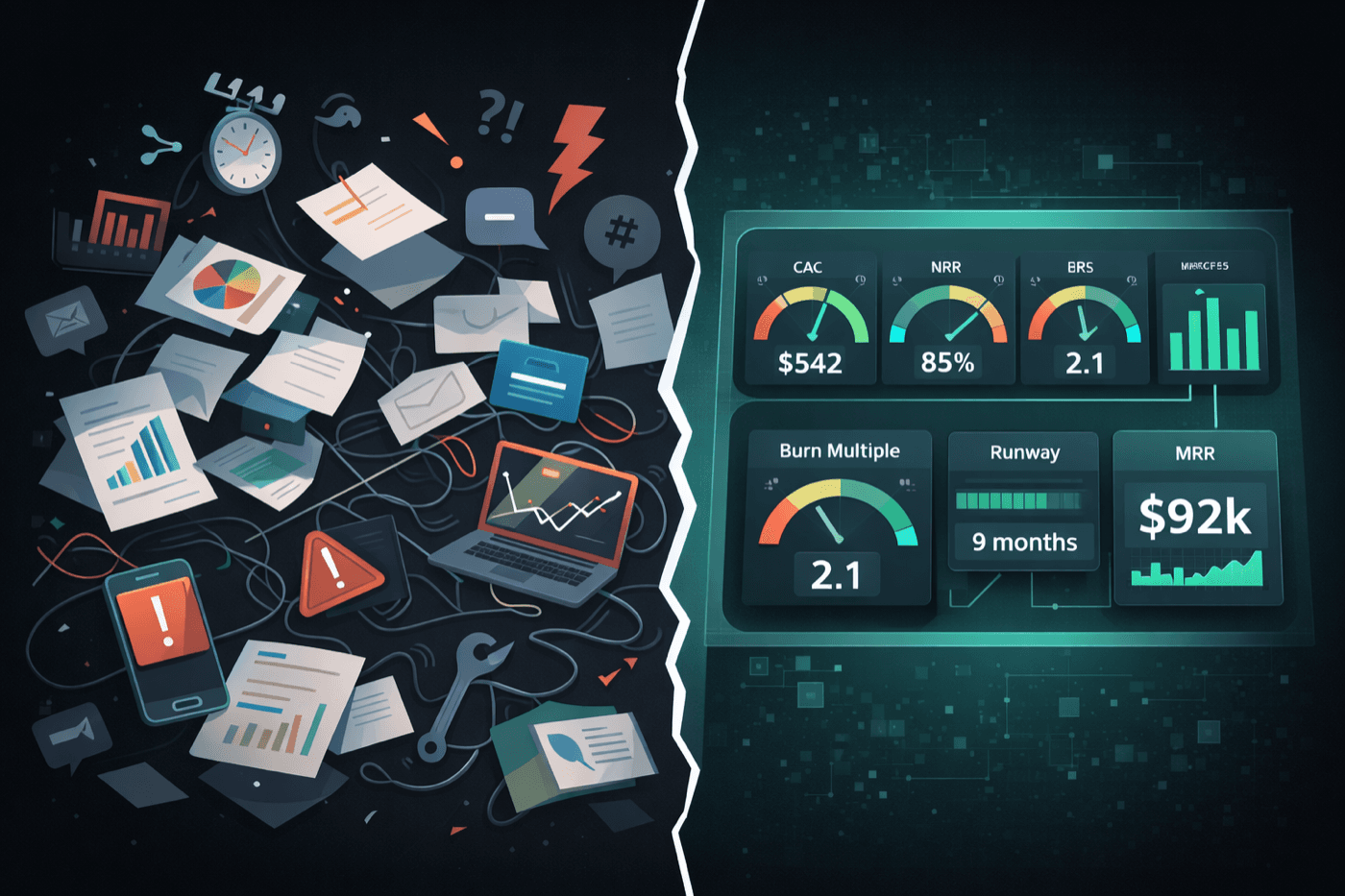
Most founders treat accounting as a compliance chore, something to deal with at tax time. That mindset costs real money. Bad accounting leads to wrong decisions: you overhire because you think you have more runway than you do, you miss tax deductions because expenses were categorized wrong, and you scramble to clean up books when investors want to see financials.
Good accounting is not about debits and credits. It is about having accurate, real-time visibility into your business so you can make better decisions faster.
Cash Basis vs Accrual Accounting
This is the first real decision you will make, and it matters more than most founders realize.
Cash basis accounting records revenue when cash hits your bank account and expenses when cash leaves. Simple. Intuitive. Most pre-revenue startups start here.
Accrual accounting records revenue when it is earned and expenses when they are incurred, regardless of when cash moves. This is what investors expect and what GAAP requires. The IRS spells out both methods, and which businesses are allowed to use each, in Publication 538.
When to Switch to Accrual
If any of these apply, you need accrual accounting:
- You have deferred revenue (annual subscriptions paid upfront)
- You are preparing for a fundraise (Series A investors expect GAAP-compliant books)
- Your revenue exceeds $1M ARR
- You have inventory or significant prepaid expenses
The transition from cash to accrual is painful if you wait too long. Ideally, switch before your seed round so your books are clean when investors start due diligence.
The Three Financial Statements Every Founder Must Understand
1. Income Statement (P&L)
Shows revenue, expenses, and profit over a period. This is where you see if your business model works. Key things to track:
- Gross margin: Revenue minus cost of goods sold. SaaS should target 70-85%. Ecommerce varies by model.
- Operating expenses: Broken out by department (engineering, sales, G&A) so you know where money goes.
- Net income: The bottom line. Negative is expected early; the question is whether the trajectory improves.
2. Balance Sheet
A snapshot of what you own (assets), what you owe (liabilities), and what is left (equity) at a specific point in time. Investors scrutinize this for:
- Cash position and runway
- Accounts receivable aging (are customers actually paying?)
- Deferred revenue (future obligations you have already been paid for)
3. Cash Flow Statement
Shows where cash actually came from and where it went. This is the statement that saves startups because it reveals the truth that the P&L sometimes hides. A profitable company can run out of cash if customers pay slowly or inventory ties up capital.
Read more: Cash Flow vs. Profitability: The Startup Founder's Survival Guide
Setting Up Your Chart of Accounts
Your chart of accounts is the organizational structure for every transaction. Get this right from day one, and reporting becomes easy. Get it wrong, and you will spend thousands cleaning it up later.
Essential categories for startups:
- Revenue: Product revenue, service revenue, other income. Keep these separate.
- COGS: Hosting, infrastructure, direct labor, payment processing fees.
- Sales & Marketing: Ads, tools, events, content, sales salaries.
- R&D: Engineering salaries, dev tools, QA.
- G&A: Rent, insurance, legal, accounting, admin salaries.
Do not over-engineer it. You can always add sub-accounts later. The mistake most founders make is having too few categories, making it impossible to analyze where money is going.
Startup Accounting Mistakes That Cost Real Money
1. Mixing Personal and Business Expenses
Open a business bank account and business credit card on day one. Commingling funds makes tax time a nightmare and raises red flags during due diligence.
2. Ignoring Revenue Recognition
If a customer pays $12,000 for an annual subscription, you did not earn $12,000 this month. You earned $1,000. The other $11,000 is deferred revenue, a liability on your balance sheet. Getting this wrong overstates revenue and can create legal problems.
3. Misclassifying Expenses
Putting engineering salaries under G&A instead of R&D, or lumping all software subscriptions into one account. This makes it impossible to calculate accurate unit economics or burn rate by department.
4. Not Reconciling Monthly
Bank reconciliation should happen monthly, not quarterly or annually. Every transaction in your accounting system should match your bank statement. Discrepancies caught at 30 days are easy to fix. Discrepancies caught at 12 months are expensive.
5. DIY-ing Too Long
Founders who insist on doing their own books past $500K in annual revenue are penny-wise and pound-foolish. The cost of errors, missed deductions, and time spent on bookkeeping far exceeds the cost of professional help.
When to Hire What
Day 1: Use accounting software (QuickBooks, Xero) or an AI-powered platform that handles categorization automatically.
Pre-seed to Seed ($0-$1M ARR): A bookkeeper or automated bookkeeping service. You need clean books and basic financial statements. Budget $200-$500/month.
Seed to Series A ($1M-$5M ARR): A fractional CFO or finance-as-a-service platform. You need financial modeling, investor reporting, and strategic guidance. Budget $3,000-$10,000/month depending on scope.
Series A+ ($5M+ ARR): A full-time controller or VP of Finance. At this scale, financial operations are complex enough to warrant a dedicated hire.
Accounting for SaaS vs Ecommerce
SaaS-Specific Challenges
- Revenue recognition: ASC 606 compliance for subscription revenue. Multi-element arrangements (if you bundle implementation with SaaS) require allocation.
- Deferred revenue management: Tracking and recognizing revenue monthly from annual and multi-year contracts.
- Capitalized development costs: Some R&D costs can be capitalized under ASC 350-40, reducing current-period expenses and improving reported margins. Use this carefully: early-stage investors commonly discount capitalized software costs when evaluating your P&L, and book capitalization is separate from the Section 174 tax treatment of R&D costs.
- SaaS metrics: Your accounting system should feed MRR, churn, and CAC calculations directly.
Ecommerce-Specific Challenges
- Inventory accounting: FIFO vs LIFO vs weighted average. This choice affects reported COGS and taxes.
- Sales tax compliance: Nexus rules, marketplace facilitator laws, and multi-state collection requirements.
- Returns and refunds: Proper accounting for returns reserve and refund liabilities.
- Shipping and fulfillment: Tracking landed costs accurately across SKUs.
Tax Essentials for Startup Founders
Quarterly Estimated Taxes
Most startups are C corporations, which must make quarterly estimated payments once expected federal tax liability reaches $500 (the more commonly cited $1,000 threshold applies to individuals, not corporations). Missing these triggers penalties.
R&D Tax Credits
Most SaaS startups qualify for R&D tax credits under Section 41. For tax years beginning after 2022, this can offset up to $500,000 in payroll taxes per year for early-stage companies: the first $250,000 against employer Social Security taxes and the next $250,000 against employer Medicare taxes. If you are not claiming this, you are leaving money on the table.
Section 174 R&D Expensing
Do not confuse the R&D credit with Section 174 treatment of R&D expenses. From 2022 through 2024, companies were required to capitalize domestic R&D costs and amortize them over five years, which created taxable income for startups that were losing money on a cash basis. Legislation in 2025 restored immediate expensing for domestic R&D, though foreign R&D still amortizes over 15 years. If you filed returns during the capitalization era, ask your CPA how prior-year capitalized amounts unwind.
State Tax Obligations
Economic nexus rules mean you may owe taxes in states where you have customers, not just where you operate. This is especially relevant for ecommerce companies with national customer bases.
Two smaller obligations catch founders off guard. If you are a Delaware C corporation, do not panic at the default franchise tax notice: recalculating under the assumed par value capital method usually reduces a scary five-figure bill to a few hundred or few thousand dollars. And every January, you must file 1099 forms (typically 1099-NEC) for US contractors paid $600 or more in the prior year.
Building Investor-Ready Financials
When investors say "send us your financials," they expect:
- Monthly P&L for the last 12-24 months
- Balance sheet as of the most recent month-end
- Cash flow statement showing actual cash movement
- Cap table with all outstanding equity, options, SAFEs, and convertible notes
- Financial model projecting 18-36 months forward
Companies that can produce these within 24 hours of an investor request signal operational maturity. Companies that need two weeks to clean up their books signal the opposite.
An AI-powered financial operating system can maintain these reports in real-time, eliminating the scramble that happens every time an investor asks for an update.
The Bottom Line
Startup accounting is not optional and it is not just for tax compliance. It is the foundation of every financial decision you make, from hiring to fundraising to knowing whether your business model actually works.
Start with clean books from day one. Switch to accrual accounting before your seed round. Invest in professional help before the cost of errors exceeds the cost of hiring. And treat your financial data as what it is: the most important operating intelligence your company produces.