

Moving 30 percent of a best-selling camp chair to a second factory costs about $62,400 a year at an 8 percent higher unit price, plus about $25,000 once to qualify the factory. In a worked example, an outdoor gear brand, that pays for itself in year one if the main factory's chairs would otherwise be out of stock for about seven and a half weeks. Nobody knows how often a factory will stop, so that is a comparison under stated assumptions, not a forecast; an extra 10 points of duty on China turns the premium into a saving.
Supply chain resilience is a brand's ability to keep selling, and keep its margin, when a factory stops, a tariff changes or a warehouse loses stock. For a consumer brand it is measured with figures the brand already records: where purchases go, how much is prepaid, and what one country of origin does to margin.
What is supply chain resilience for a consumer brand?
The usual advice (map every supplier, build a control tower, model the network with a digital twin) was written for companies with a sourcing team and a software budget.
A brand with two or three factories, a warehouse or two and a few sales channels can fit its exposure on one page, filled from bills in accounts payable, the open purchase order list and, where the brand records it, profit by SKU. Those figures cannot make the supply chain stronger; sourcing, operations and the customs broker do that. What they can do is put a dollar amount on each exposure, so the CEO can weigh one against another.
The outdoor gear brand behind the numbers
The brand in this example sells camp chairs, folding tables and coolers, and every figure is invented to show the arithmetic, not a benchmark. It does $15 million a year: half on Amazon, 30 percent on its Shopify store, and 20 percent wholesale to outdoor specialty stores and one sporting goods distributor. It buys $5.0 million of goods a year at FOB prices, plus about $0.7 million of freight and duty, for $5.7 million all-in, 38 percent of revenue. With inventory roughly flat over the year, cost of goods sold matches purchases, so the brand runs at a 62 percent gross margin before channel fees and advertising.
Two factories make everything:
- Factory A, in China, makes the chairs and tables: $3.5 million a year, 70 percent of purchases. Chairs account for $2.6 million of that and tables for $0.9 million.
- Factory B, in Vietnam, makes the coolers: $1.5 million, the other 30 percent.
Chairs are the hero: 45 percent of revenue, $6.75 million a year, or about $130,000 a week. Tables add 15 percent and coolers 40 percent.
| What the records show | Where it comes from | Figure |
|---|---|---|
| Purchases from Factory A | Bills and PO history, last 12 months | $3.5M FOB, 70% of purchases |
| Gross profit from Factory A's products | Profit by SKU, grouped by factory | $5.0M, 54% of gross profit |
| Gross profit from chairs alone | Profit by SKU | $3.8M, 41% of gross profit |
| Deposits paid on open purchase orders | Open PO list | $360,000 ($270,000 at Factory A) |
| Balances still due on those orders | Open PO list | $840,000 |
| Cost of an extra 10 points of duty on Factory A's goods | Landed cost by origin | $350,000 a year, 2.3 points of gross margin |
| Chair contribution lost per week out of stock | Profit by SKU, after fees and ads | about $39,000 |
| Inventory held at the 3PL | Inventory value by location, including goods in transit | $1.3M of $2.4M, 54% |
| Amazon balance not yet paid out, on a typical day | Settlement reports | about $180,000 |
Four questions a brand's own figures answer
How concentrated are purchases?
Group the last twelve months of supplier bills by factory and by country. Here, 70 percent of purchases go to one factory in one country, and that factory makes the products behind 60 percent of revenue.
Gross profit by factory is the more useful cut. Factory A's chairs and tables bring in $9.0 million of revenue and cost about $4.0 million all-in, leaving $5.0 million of gross profit, 54 percent of the total. Every product this brand sells comes from exactly one factory, so all of its gross profit depends on a single source, and the source it could least afford to lose is Factory A.
How much cash is sitting with suppliers?
A factory deposit is cash paid for goods the brand does not yet own. The open purchase order list shows $1.2 million of orders in production, each with a 30 percent deposit: $360,000 prepaid, of which $270,000 sits with Factory A.
If the factory delivers, the deposit becomes inventory. If it fails, or ships goods that fail inspection, the deposit is the first money at risk, and recovering it from overseas is slow at best. The same list shows $840,000 of balances still to pay before those goods ship, cash needed in the next few months whatever happens, and the starting point for how much working capital a second factory's deposits would add. The guide to the cash between a factory deposit and the payout follows one production run through each of those dates.
What would a duty change on one country do to margin?
Duty is charged on the customs value of the goods, which is usually the FOB price paid to the factory. So the exposure to one country of origin is that country's purchases multiplied by the change in rate. An extra 10 percentage points of duty on goods from China, a figure chosen only to show the method, would cost this brand 10 percent of $3.5 million: $350,000 a year. On $15 million of revenue, gross margin falls from 62 percent to about 59.7 percent, a loss of 2.3 points, before any price increase. Duty is part of inventory cost, so a rate change reaches cost of goods sold as the stock it was paid on sells.
Rates have moved in both directions since 2025. As of November 2026, U.S. Customs and Border Protection lists Section 301 duties on goods from China and Section 232 duties on steel, aluminum and copper among the trade remedies it enforces, and it is taking refund claims for duties collected under the International Emergency Economic Powers Act (IEEPA). A filed refund claim is not booked on filing; when it can be, and how it splits between stock on hand and goods already sold, is for the brand's CPA. The base rate for each product sits in the USITC Harmonized Tariff Schedule.
Which layers apply to a given product and origin is a question for a licensed customs broker. Metal-framed seating is one of the furniture codes the Commerce Department added to the steel and aluminum derivative list in August 2025, with that duty charged on the metal content. It is not limited to goods from China, so a chair with a steel or aluminum frame can carry it whichever country it ships from, and a move to Vietnam may not take that layer away. Carrying the rate on each container into landed cost keeps the margin on each SKU tied to the duty the brand paid.
How much gross profit depends on one product from one source?
Chairs earn about $3.8 million of gross profit, 41 percent of the total, and all of it comes from Factory A.
Gross profit overstates what a stockout loses, because fees and advertising are not spent on chairs that are not sold. The better measure is contribution margin, the price after those variable costs. If chairs keep about 30 percent of revenue after fees, fulfillment and ads (from a 56 percent gross margin), each week they are out of stock costs about $39,000 ($130,000 × 30 percent). The guide to what running out costs a brand covers the losses that outlast the week, such as lost ranking and wholesale buyers who cut their next order.
A factory stop does not empty the shelves the same day. Stock on hand and stock already on the water carry the brand for a while, so the weeks that matter are the weeks after that runs out.
The selling side is part of the supply chain
Three large concentrations sit past the factory gate, on the selling side.
The first is where the inventory lives. This brand holds $2.4 million of stock at landed cost, including goods in transit: $1.1 million in Amazon's fulfillment network and $1.3 million at a single 3PL that ships every Shopify and wholesale order. If that 3PL loses track of inventory or puts the account at the bottom of its list, more than half the stock is out of reach. One operator described losing access to most of its inventory for months after a 3PL change.
The second is the money a marketplace is holding. On a typical day, about $180,000 of this brand's Amazon sales sits in its seller balance waiting to be paid out, and Amazon can also hold part of a balance back as a reserve. The money is still owed to the brand, a receivable on the balance sheet, but the brand does not control when it arrives.
The third is the listing. If most chair sales run through one Amazon listing, a suspension or a cheaper copy can stop more profit than a factory problem would.
What a second source costs, and when it pays
Diversifying has a price. The second factory usually quotes a higher unit price, needs its own samples and tooling, splits the volume so neither factory earns its best price break, and adds inspection trips.
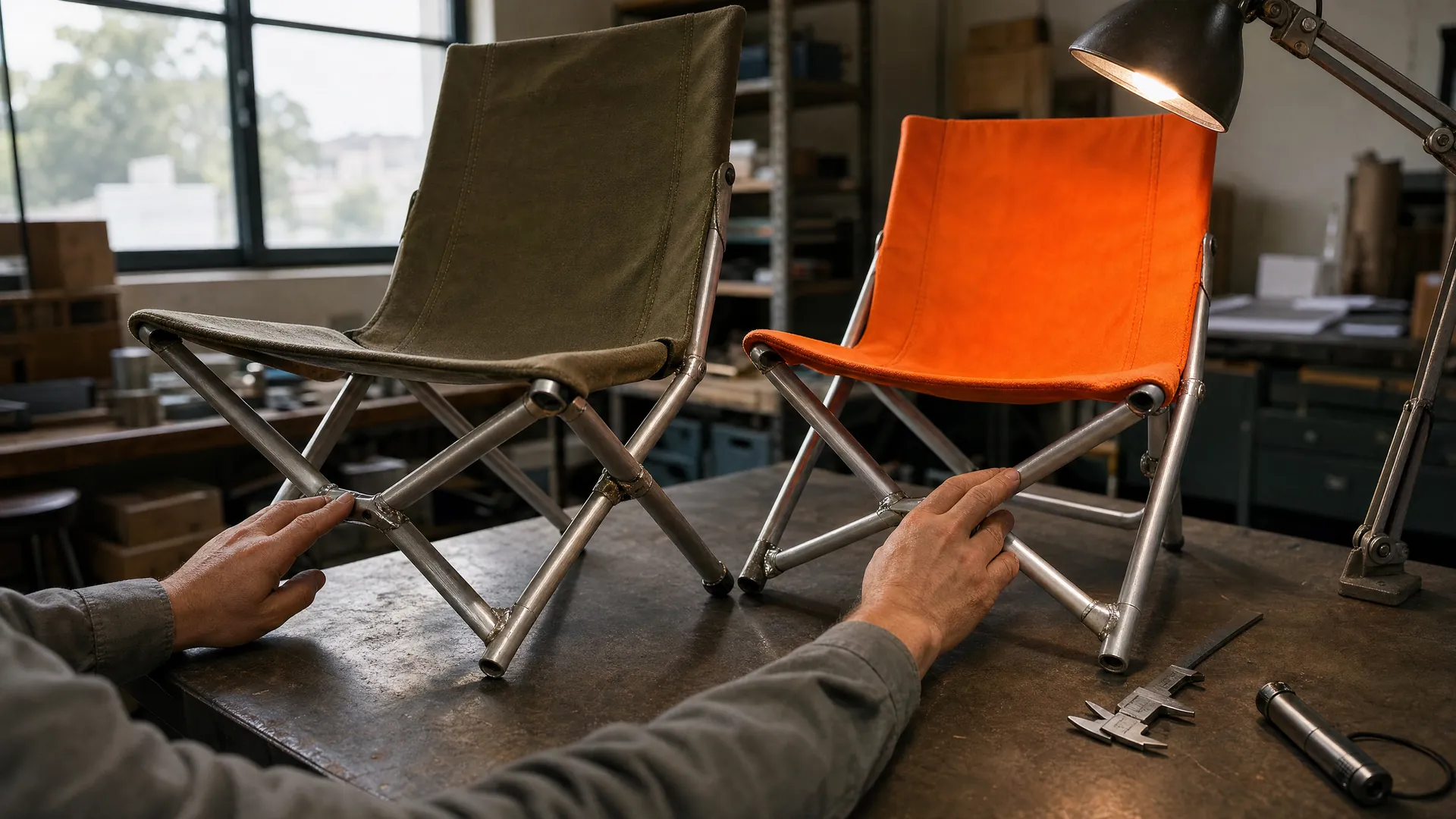
Start with chairs, the product with the most profit from one source, and compare each origin's all-in cost per unit:
- Factory A, China: $20.00 FOB plus $2.80 of freight and regular duty, $22.80 a chair.
- A Vietnam quote: 8 percent higher at $21.60 FOB, plus the same $2.80, $24.40 a chair.
The example uses the same $2.80 of freight and duty from both countries to keep the arithmetic plain. In practice the duty often differs by origin, which is why the broker's quote comes before the order. The brand buys 130,000 chairs a year ($2.6 million at $20.00). Moving 30 percent of them, 39,000 chairs, to Vietnam costs $1.60 more per chair: about $62,400 a year. Qualifying the factory (samples, tooling, testing and the extra cost of a first small run) adds a one-time cost, $25,000 in this example.
Now set that against the profit at risk. If Factory A stops and shelves empty for eight weeks, a brand with no backup loses about $312,000 of chair contribution (eight weeks at $39,000). With 30 percent of chairs flowing from Vietnam, the loss falls to about $218,000 before the second factory takes on any extra volume, a saving of about $94,000. Each empty week with the backup in place saves about $11,700. In year one, the premium plus the $25,000 pays for itself if Factory A's chairs would otherwise be out of stock for about seven and a half weeks; after that, the premium alone needs a little over five weeks a year, about one eight-week stop every eighteen months. How often a factory stops cannot be known in advance, so these are break-even points under the example's assumptions, not forecasts.
Then rerun the comparison with the extra 10 points of duty on China. The China chair rises to $24.80, and the Vietnam chair at $24.40 is now 40 cents cheaper. The premium turns into a saving of about $15,600 a year on the 30 percent split, which repays the $25,000 in about 19 months, before counting any of the cover.
A second quote also helps in negotiating with suppliers: a live alternative moves price and terms at the first factory, even when the order stays put.
Supplier diversification in three stages
It works best as a sequence, on the hero product family first.
- A qualified backup. Find the factory, visit or audit it, get samples approved against the same specification, and get a quote on the same all-in basis as the current factory. The cost is samples, tooling and travel, and the result is a factory that could take an order within weeks.
- A small live order. Place one order large enough to test the factory's quality, packaging and timing at production scale, such as one container of one model. Inspect it, sell it, and compare the landed cost per unit and the return rate with the original factory's.
- A split. Once the second factory has shipped clean runs, move an agreed share of volume, here 30 percent of chairs, and keep both factories busy enough that each still treats the brand as a real customer.
Keep the one-time costs on their own lines, apart from the cost of the goods, so the backup's price can be checked against the plan.
Moving everything after a tariff headline
The most expensive version of diversification is the fastest. After a tariff announcement, a brand moves all production to a new country in one season. The new factory's first runs have quality problems, the old factory moves the brand's last orders to the back of the line, and the season's stock arrives late or wrong. A tariff cost the brand could measure becomes a lost season it cannot.
A slower sequence holds up better: one product family a year, with the original factory kept on the best seller until the new one has shipped three clean runs.
A quarterly supply chain risk management review
One page, reviewed once a quarter by the CEO, the COO and whoever keeps the accounts, ties each figure to a decision and an owner:
| Question | Figure | Who acts on it |
|---|---|---|
| Which factory carries the most gross profit? | Gross profit by factory, from profit by SKU | Sourcing: is a backup qualified for its top product? |
| How much is prepaid to suppliers today? | Deposits on open purchase orders | COO and finance: is any factory holding more than the brand could afford to lose? |
| What does a 10-point duty change on each origin cost? | Purchases by country × 10% | CEO: price, absorb or move volume, with the broker's view of current rates |
| How many weeks of contribution does the hero lose if it stocks out? | Contribution per week by SKU | Operations: how many weeks of cover sit on hand and on the water |
| How much stock and cash sit with one warehouse or marketplace? | Inventory by location, unpaid marketplace balance | COO: is a second warehouse or channel worth its cost? |
Each line needs cost of goods sold recorded by SKU at the landed cost the brand paid, supplier bills tagged by factory and country, and inventory valued by location. Of the five lines, the second-factory comparison is the one to rerun whenever a duty rate moves.
Frequently asked questions
Is a second factory worth a higher unit price?
A second factory is worth a higher unit price when the premium paid each year is smaller than the contribution it protects in a likely stoppage. Compare both factories on product, freight and duty per unit, multiply the difference by the volume moved, add the one-time cost of qualifying the factory, and set that against the weekly contribution of the products involved. A duty change on one origin can turn the premium into a saving.
Should a brand move all production when tariffs rise?
Usually not in one step. Moving everything at once tends to bring quality problems at the new factory, lower priority at the old one and late stock, which can cost a season. A slower sequence moves one product family at a time and keeps the original factory on the best seller until the new one has shipped several clean runs.