

A founder is three weeks from starting Series A conversations. They sit down on a Saturday morning to pull their metrics together.
MRR is in Stripe. Burn rate is somewhere in QuickBooks. CAC requires dividing a marketing spend number they haven't totaled by a new customer count sitting in the CRM. NRR requires comparing two months of revenue data from different exports. Burn multiple requires two of those numbers divided against each other, and they haven't calculated either one yet.
Four hours later they have a spreadsheet that answers the questions an investor will ask. It took four hours because they hadn't looked at most of these numbers since the last time someone asked.
That's not a data problem. The data exists. It's scattered across five tools, but it exists. That's a habit problem. The founder only assembles the full picture when external pressure demands it. The rest of the time, they're running the business on MRR and gut feel.
That gap between what they know day to day and what they present in a pitch meeting is more expensive than most founders realize.
What Investors Actually Hear When You Don't Know Your Numbers
Investors don't expect founders to recite 15 metrics from memory. They expect you to know the ones that drive your business without needing to check a spreadsheet.
When a founder hesitates on burn multiple, it signals they haven't been tracking it. When they say "roughly" before giving a churn rate, it signals the number hasn't been part of their operating rhythm. When they need to look up their NRR, it signals they don't have a pulse on whether their existing customer base is healthy or eroding.
None of these are disqualifying on their own. But they form a pattern. And investors read patterns.
The founder who knows their burn multiple, their NRR, and their CAC payback without looking them up has been running the business with those numbers. They've been making hiring decisions, pricing adjustments, and channel investments based on what the metrics are telling them. That founder has operational discipline. The investor can see it.
The founder who assembles those numbers the week before a meeting has been running on instinct. Maybe their instincts are excellent. Maybe they've been making the right calls without the data. But the investor doesn't know that. What they know is that the founder doesn't have a real-time relationship with the numbers that will determine whether their investment compounds or evaporates.
Both founders can build great products. Only one makes a Series A bet feel safe.
This isn't about memorizing numbers for a performance. Investors have seen enough founders to distinguish between someone who studied their metrics last night and someone who lives with them. The tells are subtle. The founder who knows their numbers from habit answers follow-up questions without recalculating. They can contextualize the number ("that's up from where we were in Q2 because we cut our lowest-performing paid channel"). The founder who prepared for the meeting gives the number and then pauses when the follow-up goes one level deeper.
There's a second-order effect here that matters. The founder who knows their numbers cold answers investor questions faster. The conversation moves from interrogation to collaboration. Instead of spending 30 minutes verifying that the business is healthy, the investor spends that time exploring growth strategy. That shift in conversation quality changes outcomes. It's the difference between an investor who's still evaluating risk and one who's already thinking about how to help.
The Metrics That Reveal How You Run the Business
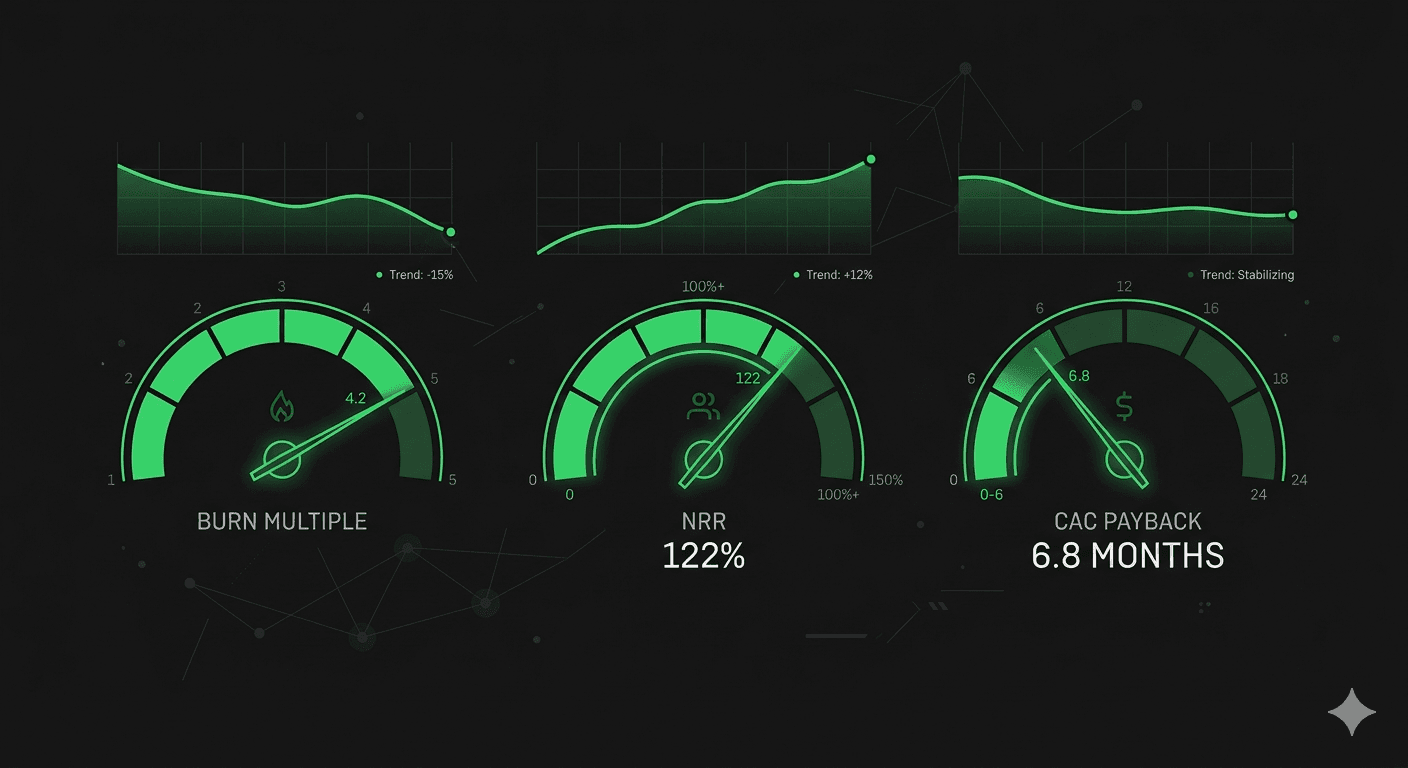
Three numbers separate founders who track metrics episodically from those who track them continuously. Investors know which ones to probe because the answers reveal the pattern immediately.
Burn Multiple
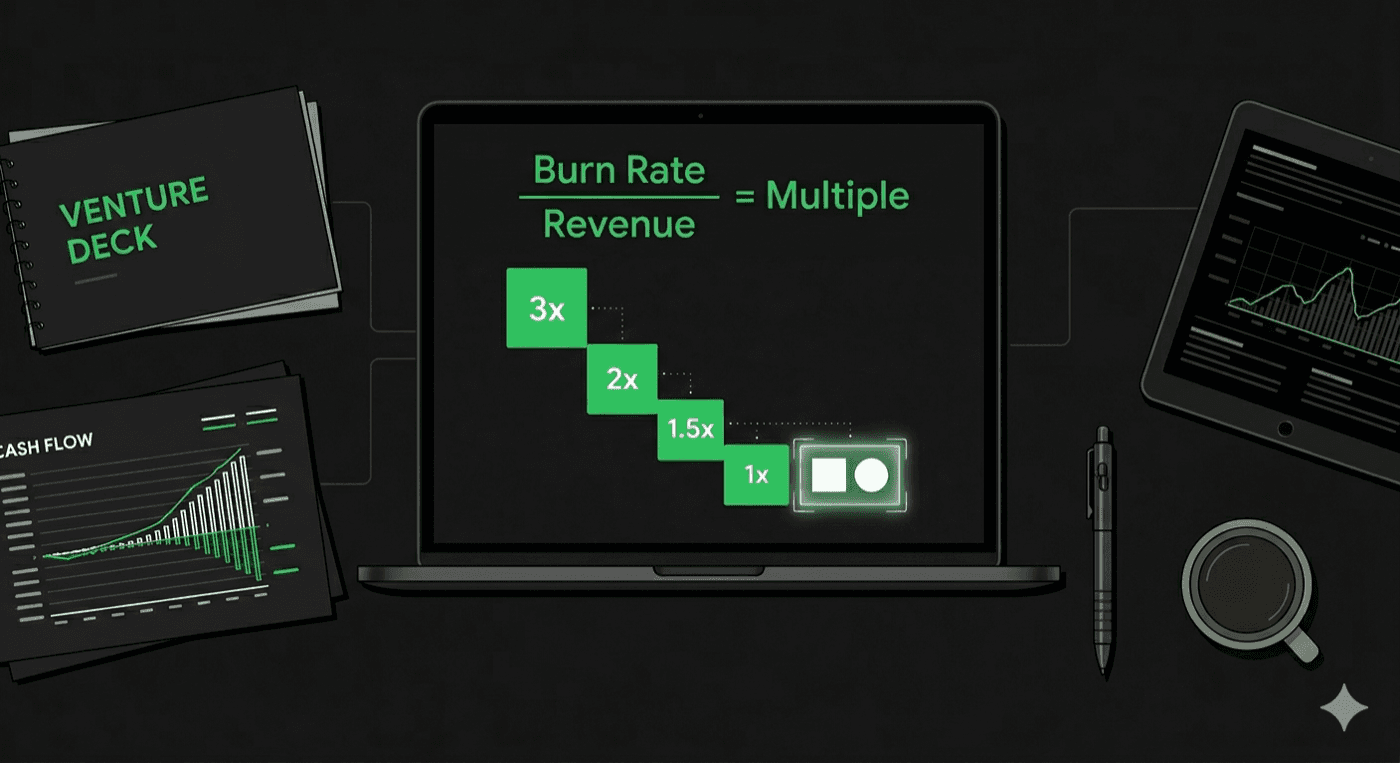
Burn multiple is net burn divided by net new ARR. If you have to calculate it fresh every time someone asks, you haven't been tracking it.
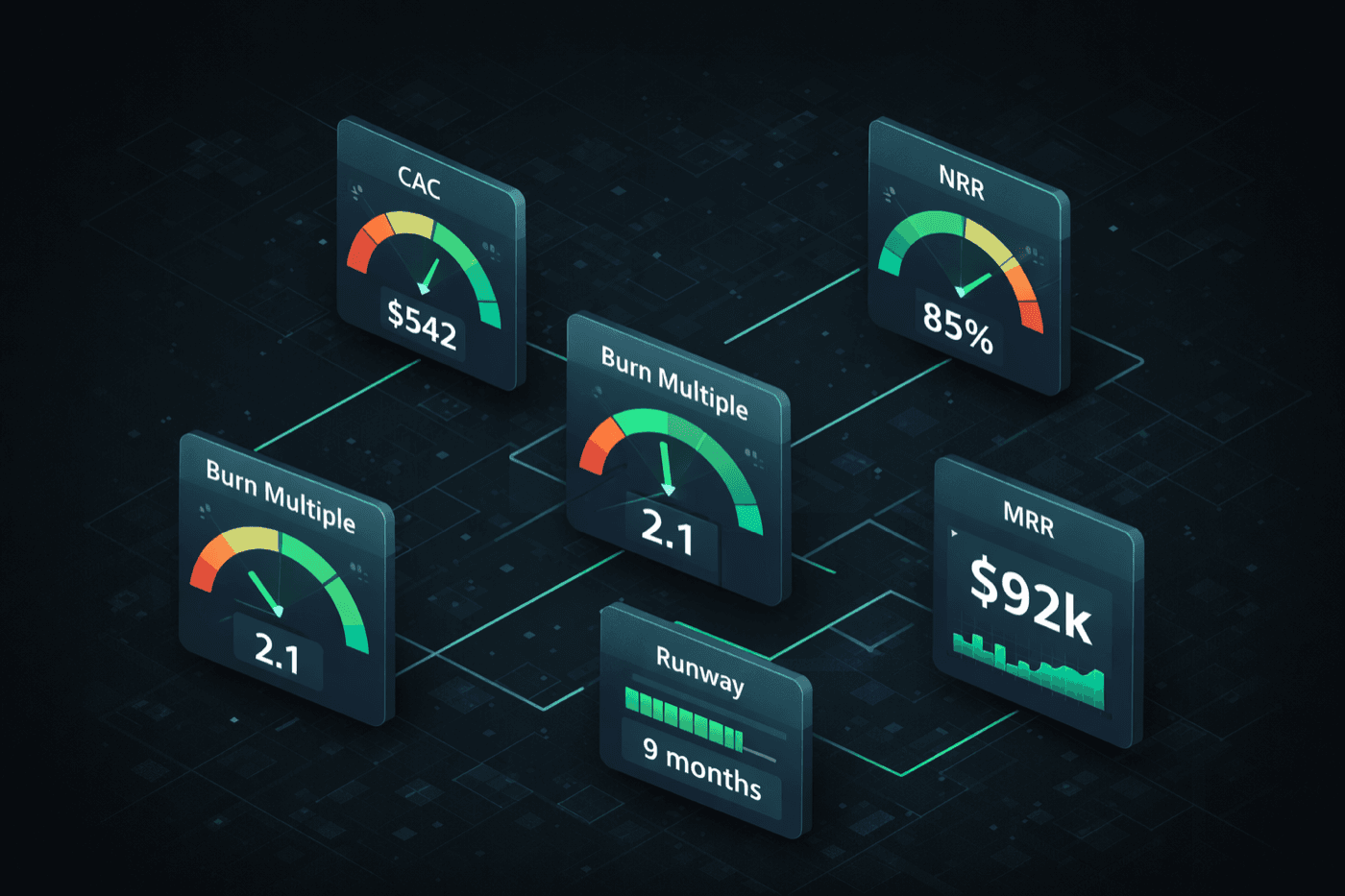
Founders who track burn multiple monthly can tell you the trend, not just the current number. They can say, for example, "it was 2.8x in Q3, came down to 2.1x in Q4, and we're on pace for 1.6x this quarter." That trajectory tells an investor more than the spot number. It shows whether the business is becoming more or less efficient, and whether the founder knows why.
Founders who calculate it for the first time in a pitch meeting can give you a number. They can't give you direction. And direction is what investors underwrite.
There's a practical consequence too. A founder tracking burn multiple monthly catches the quarter where it spikes from 1.8x to 2.6x because a new hire ramp or a marketing experiment didn't produce the expected net new ARR. They adjust mid-quarter. The founder who calculates it before a raise discovers the spike when it's already baked into three months of financials. By then, the number is the story.
Net Revenue Retention
NRR tells you whether your existing customers are growing or shrinking after you account for churn, contraction, and expansion. An NRR above 110% means your installed base is compounding on its own, without a single new customer. Below 100% means you're refilling a leaking bucket.
If you don't know this number without looking it up, you don't have a pulse on the health of your existing customer base. You might be adding new logos while your core is quietly eroding. That's a pattern investors have seen before, and it doesn't end well.
Founders who track NRR monthly spot retention problems early. They catch a product issue that's driving downgrades before it shows up in MRR. They notice that a specific customer segment is expanding faster than others and double down on it. Those are operating decisions that happen because the metric is visible, not because someone asked for it.
CAC Payback Period
CAC payback measures how many months of revenue it takes to recover the cost of acquiring a customer. If payback is 18 months and your average customer churns at 14 months, you're losing money on every acquisition. If payback is 6 months, you have 12+ months of gross margin flowing back into the business before the first renewal decision.
Founders who know this number have thought carefully about their growth economics. They've connected the cost side of their business (sales, marketing, onboarding) to the revenue side in a way that tells them whether growth is sustainable. Founders who don't know it are spending on acquisition without knowing if it compounds.
The LTV:CAC ratio gets more attention, but CAC payback is the sharper operational number. LTV requires assumptions about long-term retention. CAC payback uses actual revenue and actual costs. It answers the question investors really want answered: how fast does each dollar of acquisition spend come back?
The Difference Between Knowing Your Metrics and Having Them
There's a version of financial visibility where you can get the number when you need it. Export the data, run the formula, produce the answer. Most founders operate here. It works. It's just slow and episodic.
Then there's a version where the number is already there. Updated. Accurate. Not requiring assembly. Not dependent on a Saturday morning with five browser tabs open.
The first version produces founders who know their metrics when they're pitching. The second produces founders who know their metrics on a Tuesday afternoon when nothing urgent is happening.
That Tuesday knowledge is what changes decisions.
A founder who sees their burn multiple ticking up in real time adjusts hiring plans before the quarter ends. A founder who discovers it was too high while building their pitch deck can only explain it away.
A founder who watches NRR monthly catches a churn problem in week three and calls the five customers who downgraded. A founder who checks NRR before a fundraise finds the problem six months too late.
A founder who tracks CAC payback across channels reallocates spend from a channel with 14-month payback to one with 5-month payback. That reallocation compounds for 18 months before anyone asks about it in a meeting.
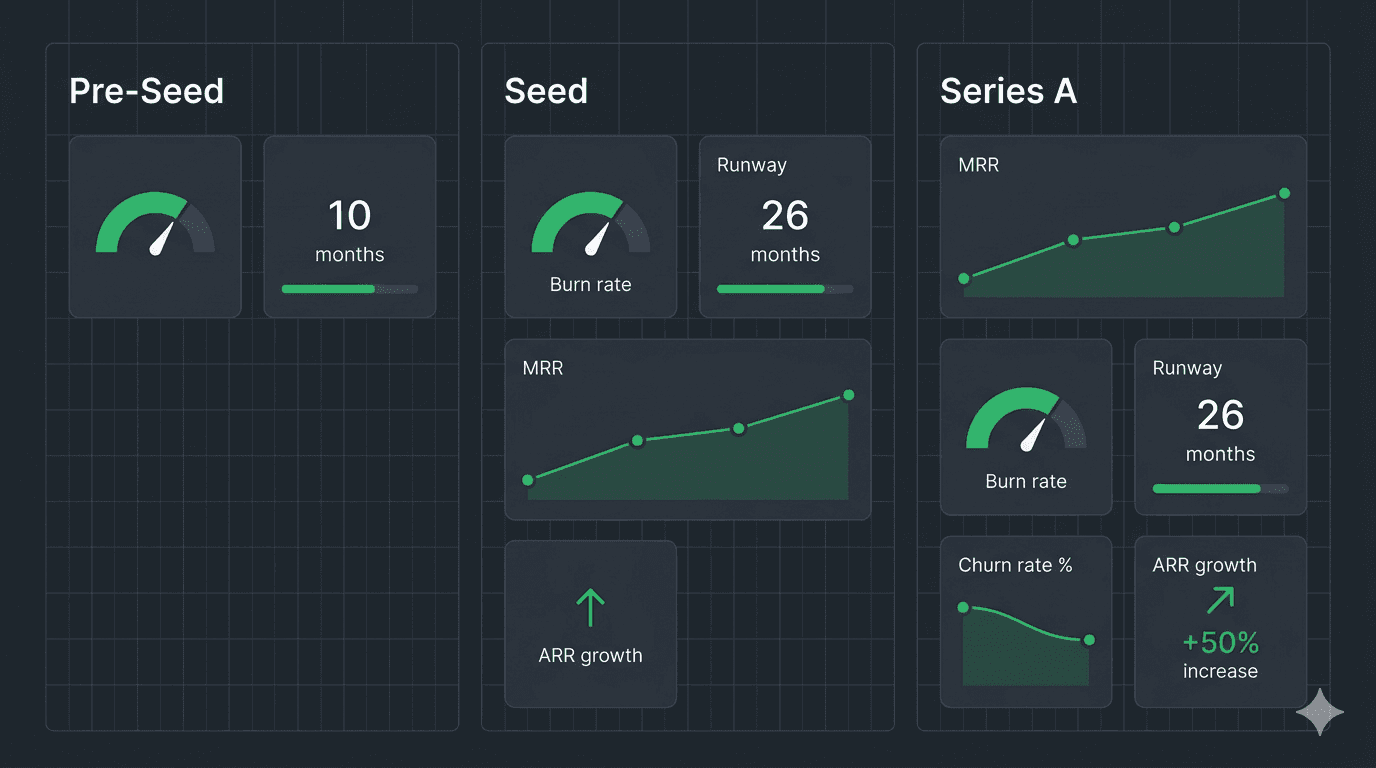
These aren't dramatic pivots. They're small, weekly adjustments that accumulate into the kind of operational clarity investors recognize in the first five minutes of a conversation. The founder isn't scrambling for answers because the answers have been informing their decisions for months.
The shift from episodic to continuous is where that clarity comes from. Not from better data. Not from more dashboards. From a habit of looking at the numbers whether anyone is asking or not.
There's a compounding effect that's easy to miss. The founder who checks their metrics weekly for 12 months before a raise has made roughly 50 small adjustments informed by those numbers. Pricing tweaks, channel shifts, hiring pace changes, expansion focus. Each one is marginal. But 50 marginal improvements, compounded, produce a business that looks meaningfully different in a pitch meeting. The metrics are better not because the founder prepared better slides, but because they made better decisions all year.
Start With One Number
This doesn't require a system overhaul or a new tool. It requires one decision.
Pick one metric you currently don't know without looking it up. Burn multiple, NRR, or CAC payback. Calculate it today. Write it down. Set a reminder to recalculate it in 30 days.
Do that for three months. By the time you're in a Series A conversation, that number will be something you know the way you know your MRR. Not because you prepared for the meeting. Because you've been running the business with it.
The founders who build great companies don't have better metrics. They have the same ones everyone else has. They just look at them more often and earlier, when the numbers can still change the decisions.
Want to know how you'd score in an investor meeting right now? Take our free Startup Fundraising Scorecard (15 questions, 5 minutes, and an honest read on where you stand across the dimensions VCs evaluate).
Futureproof calculates your burn multiple, NRR, CAC payback, and churn automatically from your live Stripe and bank data. Your metrics are always current, not just when someone asks.