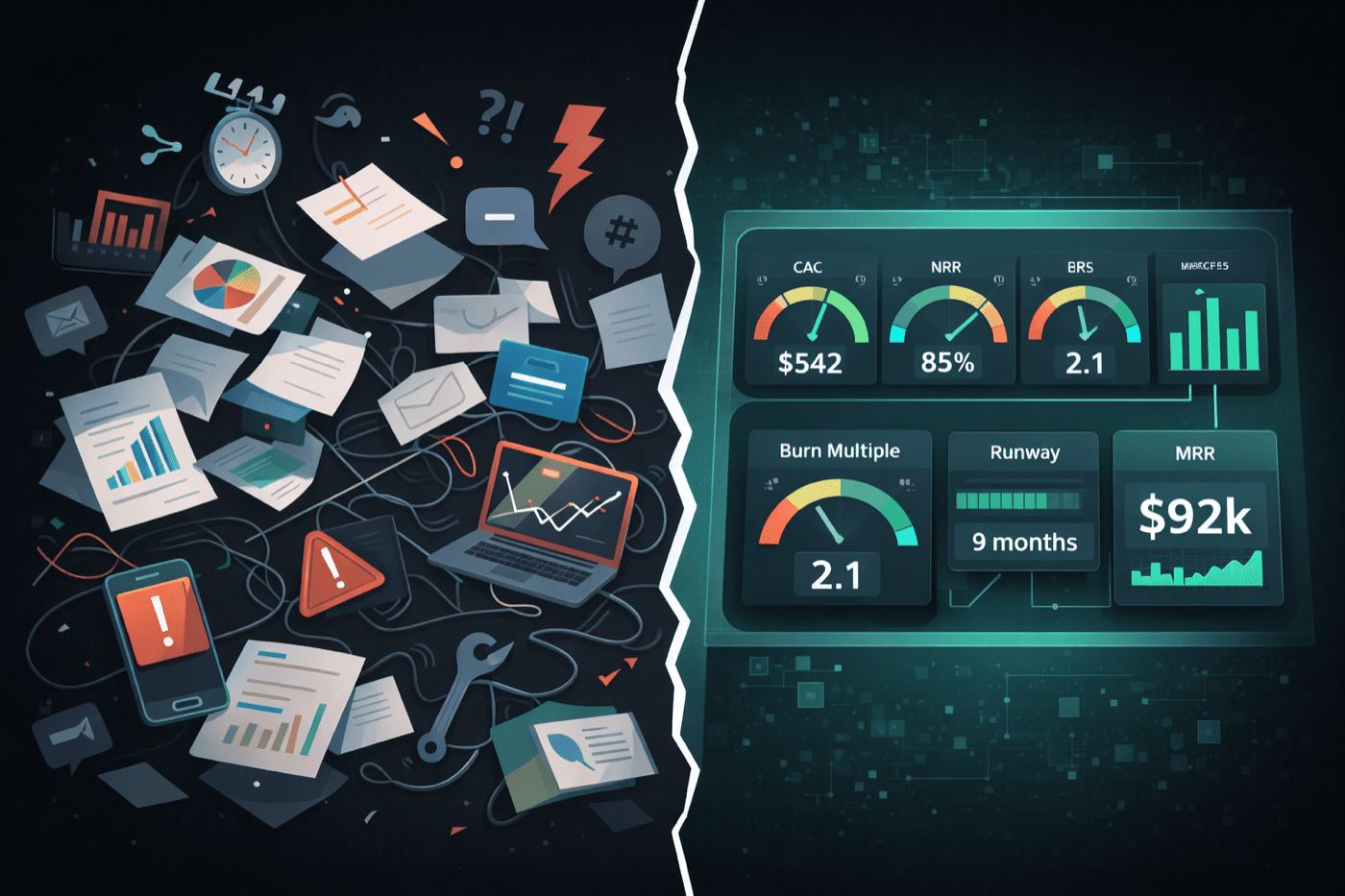


Bookkeeping has not changed much in decades. Transactions happen, someone categorizes them, accounts get reconciled, and financial statements come out the other end. The process works. It also takes too long, costs too much, and falls behind the moment a business starts growing.
AI bookkeeping changes the mechanics without changing the purpose. The same categorization, reconciliation, and reporting still happen, but machine learning handles the repetitive work that has traditionally required a human bookkeeper or hours of founder time in QuickBooks. The result is books that stay current, not books that get caught up once a month.
This guide covers what AI bookkeeping actually does, how it differs from traditional approaches, and which types of businesses stand to gain the most from adopting it.
What AI Bookkeeping Is
AI bookkeeping is the use of machine learning models to automate the core functions of financial record-keeping: categorizing transactions, reconciling bank accounts, generating financial statements, and flagging anomalies. The AI does not replace the accounting logic. It replaces the manual labor that accounting has always required.
A traditional bookkeeper looks at a charge from "AMZN MKTP US*2K7X9" and, based on training and context, categorizes it as an Amazon marketplace fee. An AI bookkeeping system does the same thing, but it does it instantly, across thousands of transactions, and it learns from every correction to get more accurate over time.
The distinction matters because AI bookkeeping is not a different kind of accounting. It is the same accounting, executed faster and more consistently. The chart of accounts stays the same. The rules of accrual and cash basis accounting still apply. GAAP principles are unchanged. The difference is that the person who used to spend eight hours a month sorting transactions now spends 30 minutes reviewing what the AI already sorted.
How AI Bookkeeping Works
The technology behind AI bookkeeping operates in five layers, each handling a distinct function that traditional bookkeeping performs manually.
Transaction Ingestion
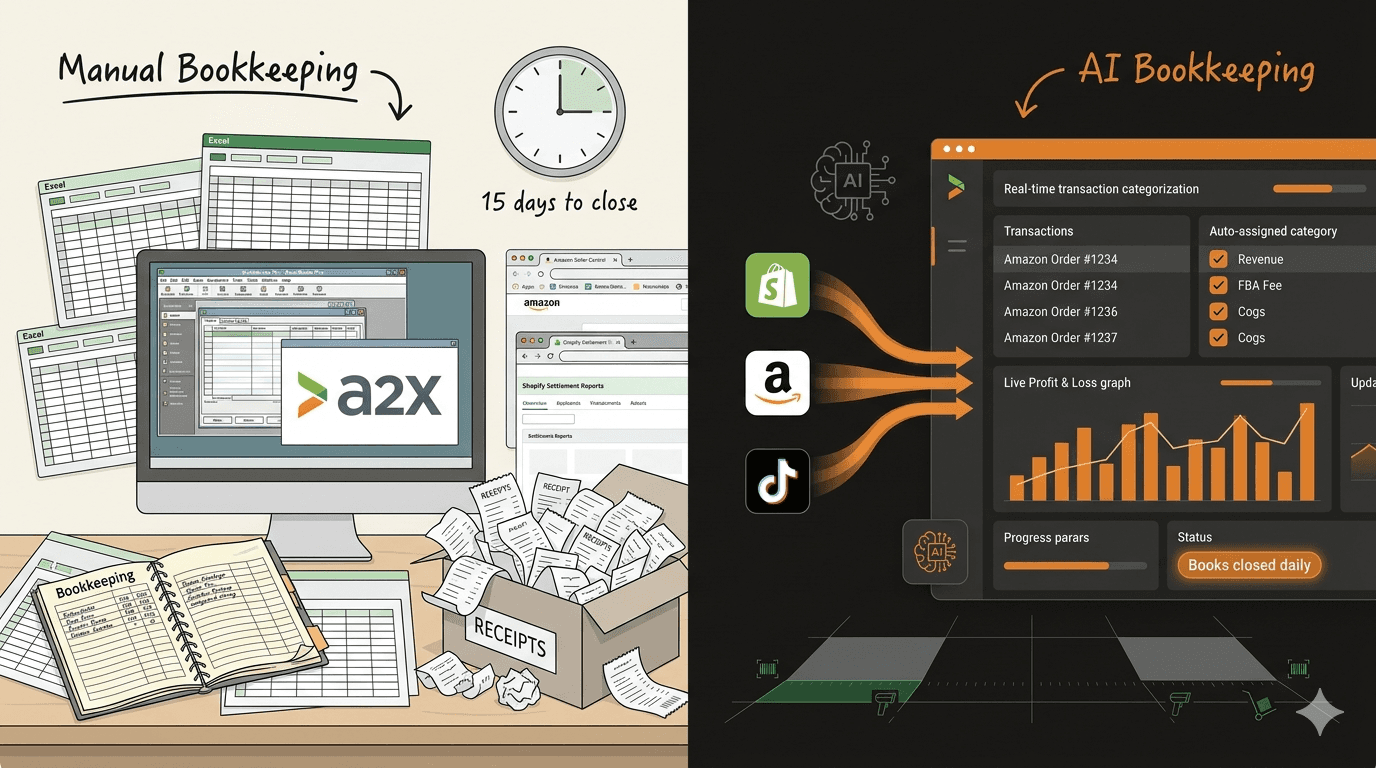
AI bookkeeping platforms connect directly to bank accounts, credit cards, payment processors, and sales channels through secure APIs. Transactions flow into the system in real time rather than being downloaded as CSV files at month-end. For ecommerce operators and sellers operating on Shopify, Amazon, and TikTok Shop simultaneously, this eliminates the manual process of pulling settlement reports from each platform and uploading them into accounting software.
Automated Categorization
This is the core function. Machine learning models trained on millions of business transactions assign each incoming transaction to the correct account in the chart of accounts. The models consider the vendor name, transaction amount, timing patterns, and the business's historical categorization patterns.
Accuracy typically lands in the mid-90s out of the box (85% to 95% initially), and climbs above 97% after two to three months of processing a specific company's transactions and learning from corrections. Human bookkeeper accuracy is harder to generalize; it varies with the individual's experience, attention, and familiarity with the business. The AI's edge is consistency: it applies the same logic to every transaction, every time.
Continuous Reconciliation
Traditional reconciliation is a monthly event. A bookkeeper compares bank statements to accounting records, identifies discrepancies, and resolves them. This process typically takes two to four hours for a business processing a few hundred transactions per month, and considerably longer for high-volume ecommerce operations.
AI bookkeeping reconciles continuously. As transactions arrive from banks and sales channels, the system matches them in real time. Discrepancies (a payout that does not match expected totals, a duplicate charge, a missing deposit) are flagged immediately rather than discovered weeks later during the monthly close.
Financial Statement Generation
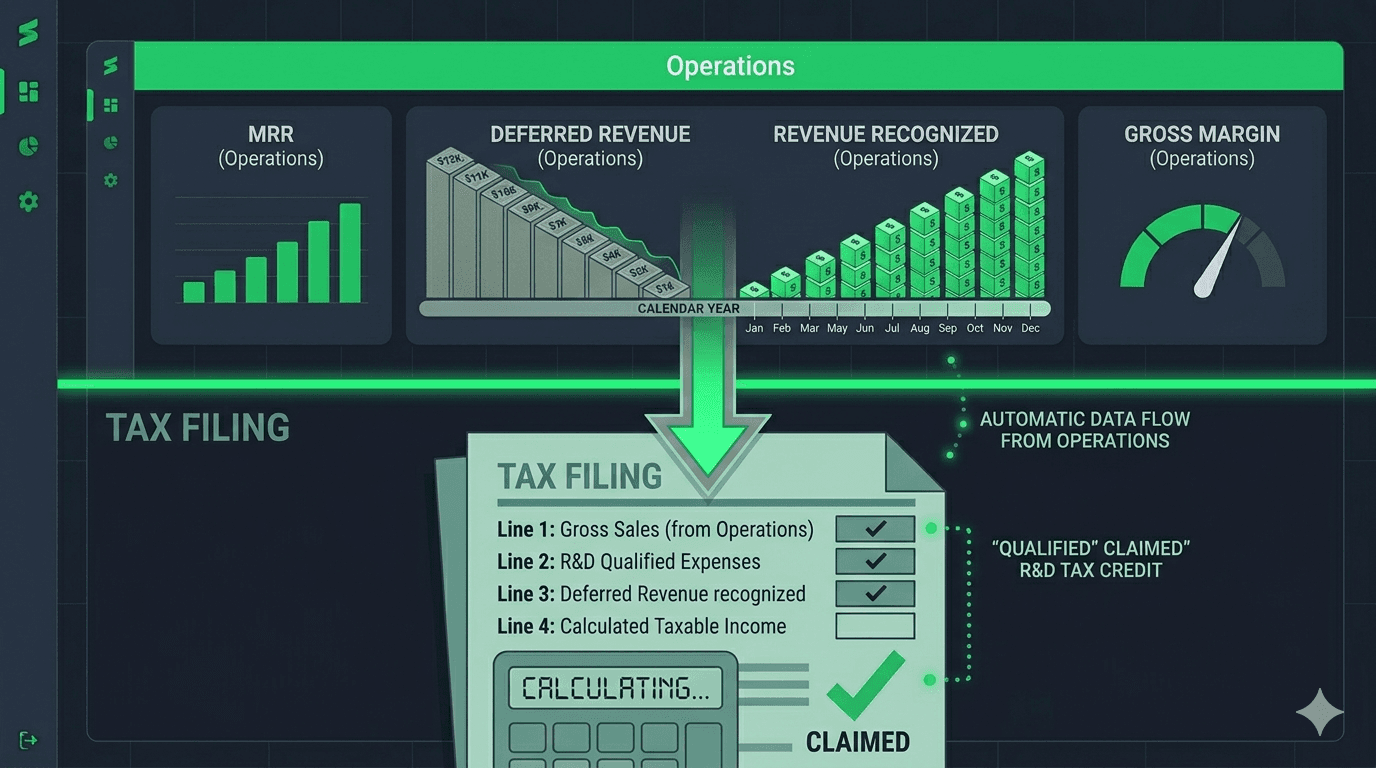
With transactions categorized and reconciled, financial statements update automatically. Income statements, balance sheets, and cash flow statements reflect the current state of the business at any point, not the state as of the last time someone closed the books.
For ecommerce businesses, this means being able to see channel-level profitability, gross margins by product category, and true cost of goods sold without waiting for a monthly report. The numbers are current because the process is continuous.
Anomaly Detection
Pattern recognition identifies transactions that fall outside normal parameters: unusual amounts, duplicate charges, missing recurring payments, sudden changes in fee structures, and categorization patterns that deviate from the established norm. These alerts surface problems that a human reviewer might miss when processing hundreds of transactions manually, and they surface them days or weeks earlier than a monthly review would.
What AI Bookkeeping Replaces
AI bookkeeping does not exist in isolation. It replaces or augments one of three existing approaches, each with its own cost structure and limitations.
The DIY Spreadsheet ($0/month + founder time)
The starting point for most small businesses. The founder tracks income and expenses in a spreadsheet, does a rough reconciliation against bank statements, and hands the file to a tax preparer once a year.
This approach works when transaction volume is low, under 50 transactions per month. It stops working when the business grows, because the time required scales linearly with volume. An operator or seller processing 500 orders per month across two channels cannot maintain accurate books in a spreadsheet without dedicating significant hours each week. For a deeper look at how this time cost compounds, see the real cost of financial chaos.
Traditional Bookkeeping ($500–$2,500/month)
A human bookkeeper, either in-house or outsourced, processes transactions, reconciles accounts, and delivers monthly financial statements. The range matches published pricing guides: FreshBooks puts basic outsourced bookkeeping at $500 to $2,500 per month. This is the established approach and it works reliably, but it comes with structural limitations.
Monthly close cycles take 10 to 15 business days. The books reflect where the business was two weeks ago, not where it is today. Quality depends entirely on the individual bookkeeper's skill and attention. And for ecommerce businesses with high transaction volumes and multi-channel complexity, the cost scales with the work required (AccountingDepartment.com's pricing survey runs from $500 to as much as $7,500 per month as volume and complexity climb). An operator or seller on Shopify, Amazon, and TikTok Shop with 2,000 monthly transactions will pay more than a single-channel operator or seller with 200.
Accounting Software Plus Middleware ($200–$800/month)
Many ecommerce operators and sellers land on a middle path: QuickBooks or Xero for accounting, plus a middleware connector like A2X or ConnectBooks to translate marketplace settlement data into journal entries. A bookkeeper or the founder reviews the output.
This approach automates data transfer but not categorization or reconciliation. The middleware translates Amazon's payout format into something QuickBooks can read, but someone still needs to review the entries, correct miscategorizations, and perform the monthly close. The total cost (software subscriptions, middleware fees, and the bookkeeper's time) often runs $700 to $2,500 per month, and the books still close monthly. For a detailed breakdown of this approach for online operators and sellers, see our guide to ecommerce bookkeeping. Shopify operators can also see our dedicated Shopify bookkeeping guide for platform-specific considerations.
Where AI Bookkeeping Fits
AI bookkeeping compresses the cost and timeline of all three approaches. It handles the categorization that DIY founders do manually, delivers the accuracy that a professional bookkeeper provides, and eliminates the middleware layer that accounting software requires. Books close daily instead of monthly. The cost structure is flat rather than scaling with transaction volume.
| Factor | DIY Spreadsheet | Traditional Bookkeeper | Software + Middleware | AI Bookkeeping |
|---|---|---|---|---|
| Monthly cost | $0 + founder time | $500–$2,500 | $200–$800 + review time | $1,000 flat (full AI finance team) |
| Close cycle | Quarterly or annual | 10–15 business days | 5–10 business days | Daily |
| Accuracy | Variable | Bookkeeper-dependent | Middleware-dependent | Mid-90s out of the box, 97%+ once trained |
| Multi-channel support | Manual | Bookkeeper must learn each | One connector per channel | Native |
| Scales with volume | Poorly | Cost increases | Cost increases | Minimal incremental cost |
The pricing model matters as much as the number. Futureproof charges $1,000 per month flat for the full AI finance team: six agents covering bookkeeping, AR, AP, FP&A, RevOps, and investor relations, with no per-seat fees and no per-channel charges. For SaaS startups, revenue flows in through billing systems like Stripe. For ecommerce operators and sellers, the same flat price covers multi-channel reconciliation, COGS tracking, marketplace fee parsing, and inventory accounting.
Compare that against the alternatives it replaces: a bookkeeper plus a metrics tool plus a forecasting tool plus cap table software runs $1,000 to $2,500 per month before anyone answers a question, and an in-house finance hire starts at $60K per year. One flat price eliminates the need to assemble that stack while keeping human judgment where it belongs: reviewing what the agents surface.
Who AI Bookkeeping Is For
AI bookkeeping is not universally the right choice. It fits certain business profiles well and others poorly. Understanding the distinction prevents both premature adoption and unnecessary delay.
Strong Fit
Ecommerce operators and sellers doing $50K to $10M in annual revenue. This is the range where transaction volume exceeds what manual processes can handle but revenue does not yet justify a full-time controller or finance team. Operators and sellers in this range typically process 200 to 5,000 transactions per month across one to four sales channels, exactly the volume and complexity where AI categorization delivers the most value.
Multi-channel operators and sellers. Businesses selling on Shopify, Amazon, TikTok Shop, or wholesale simultaneously generate the most bookkeeping complexity. Each channel has different fee structures, payout schedules, and reporting formats. AI bookkeeping platforms that handle multi-channel data natively, with no per-channel charges, eliminate the per-channel middleware cost and the manual reconciliation between platforms.
Founders spending five or more hours per month on bookkeeping. If financial record-keeping consumes meaningful founder time, that time has a high opportunity cost. Five hours a month on bookkeeping is five hours not spent on product development, customer acquisition, or supplier negotiation. AI bookkeeping reduces that to 30 minutes of weekly review.
Businesses preparing for outside investment or sale. Investors and acquirers expect clean, current financials. Producing them from books that close monthly (or quarterly) requires a catch-up process that takes weeks and costs thousands. Businesses with AI bookkeeping already have current financials because the books never fall behind.
SaaS companies at seed to Series A stage. Software companies with subscription revenue need more than basic bookkeeping. They need MRR and ARR calculations, burn rate tracking, runway projections, and churn analysis. AI bookkeeping platforms built for SaaS calculate these metrics directly from the underlying transaction data, alongside revenue analytics, fundraising tools, and financial forecasting in the same platform.
Not the Right Fit
Pre-revenue businesses with minimal transactions. A company processing fewer than 20 transactions per month does not need AI bookkeeping. A spreadsheet or basic accounting software is sufficient. The investment does not justify the return until transaction volume or complexity creates a real burden.
Businesses with complex multi-entity structures. Companies operating across multiple legal entities with intercompany transactions, consolidated reporting requirements, or international tax obligations need specialized accounting that goes beyond what AI bookkeeping currently handles. These businesses need a controller or CFO.
Companies that already run a full-time finance team. If a controller or an accounting staff is already in place and the close is landing on time, the gain is incremental rather than structural. The strongest case for AI bookkeeping is a company that has no one doing this work, or one person doing all of it.
Industries with specialized compliance requirements. Healthcare, government contracting, and certain regulated industries have accounting requirements that demand human expertise and industry-specific knowledge. AI bookkeeping handles standard commercial transactions well but is not designed for compliance-driven accounting.
How to Evaluate an AI Bookkeeping Platform
Not all AI bookkeeping platforms are equivalent. When comparing options, evaluate across five dimensions that directly affect whether the platform will deliver on its promise.
Integration depth. The platform should connect to every financial account and sales channel the business uses. Partial coverage means manual data entry for the uncovered channels, which reintroduces the delays and errors that AI bookkeeping is supposed to eliminate. For ecommerce, this means native support for Shopify, Amazon, TikTok Shop, and the major payment processors and banks. For SaaS startups, it means the billing system (Stripe, Chargebee) and the operating accounts and cards (Mercury, Brex) feeding the ledger through API connections rather than monthly CSV uploads.
Categorization accuracy and learning. Ask about initial accuracy rates and how the model improves. A platform that starts at 85% and reaches 97% after training is more valuable than one that starts at 90% but does not learn. Look for systems that learn from corrections rather than requiring repeated manual overrides.
Reporting capabilities. Financial statements are the minimum. The better platforms also deliver channel-level profitability analysis, margin trends, and the specific metrics that the business tracks. For ecommerce, this includes COGS by SKU or category, marketplace fee breakdowns, and advertising cost allocation. For SaaS, it includes MRR movements, LTV-to-CAC ratio, and burn multiple. Check that the output travels, too: statements and metrics should export in the formats a tax preparer and an investor expect, and the platform should be able to assemble board-ready reporting from the same numbers rather than sending you back to a spreadsheet.
Human review and support. The best AI bookkeeping platforms combine automation with expert human review for edge cases. Pure automation without human oversight creates risk when transactions do not fit standard patterns: refund disputes, partial shipments, promotional credits, or settlement errors. Evaluate whether the platform provides access to accounting professionals who understand the business model.
Export and tax preparer compatibility. The platform needs to produce financial statements and transaction records in formats that work with the business's tax preparer. Ask about GAAP-compliant income statements, export formats, and whether the platform integrates with tax filing software.
Getting Started
The transition from manual bookkeeping to AI bookkeeping typically takes one to two weeks and follows a predictable sequence.
Week one: connection and import. Link bank accounts, credit cards, payment processors, and sales channels. The platform ingests historical transactions (typically three to twelve months) to train its categorization model on the business's specific patterns.
Week one to two: review and correction. Spend 30 to 60 minutes reviewing initial categorizations. Correct any errors. These corrections train the model, so accuracy improves immediately and continues improving with each subsequent correction.
Ongoing: weekly review. Dedicate 15 to 30 minutes per week to reviewing flagged transactions and confirming that automated categorizations match expectations. This is the ongoing time commitment, a fraction of what manual bookkeeping requires.
The goal is not to eliminate human involvement entirely. It is to shift the human role from data entry to review, from processing to oversight. The AI handles volume. The human handles judgment.
It is worth being explicit about what the AI does not decide:
- Accrual policy and accounting method. Whether you keep books on accrual or cash basis, and when to switch, is a decision for you and your CPA.
- Revenue recognition elections. How contracts, setup fees, and multi-year deals are treated is policy, not categorization.
- Classification gray areas. Is that contractor payment COGS or R&D? Judgment calls like these get flagged for a human to approve, not decided silently. For a broader look at how AI bookkeeping fits within a consolidated financial operating system, see the finance stack for founders who want to stay lean.
Futureproof provides an AI finance team built for both SaaS startups and ecommerce operators and sellers: six agents covering bookkeeping, AR, AP, FP&A, RevOps, and investor relations for $1,000 per month flat, with no per-seat fees. For SaaS companies that includes AI transaction categorization, real-time financial statements, revenue recognition, and runway visibility. Start a free trial. For ecommerce it adds multi-channel reconciliation, COGS tracking, and marketplace fee parsing; Amazon and eBay integrations are fully live, with Shopify in beta. Start your 14-day trial. See pricing or compare Futureproof to QuickBooks, Xero, Pilot, or Finaloop.