


A bookkeeper costs $25 to $60 per hour as a freelancer, roughly $500 to $2,400 per month part time, and $39,000 to $66,000 per year as a full-time employee before benefits. Outsourced bookkeeping services run $250 to $2,500 per month. As of 2026, most startups land between $300 and $1,500 monthly.
Those ranges come from the sources that dominate this question: Bureau of Labor Statistics wage data, Upwork marketplace rates, and published pricing from firms like Pilot. They are accurate, and they are also incomplete for one specific reader. A venture-path founder does not need the same bookkeeper a landscaping company needs, and pricing the role without pricing the requirements produces the wrong budget.
This guide covers every engagement model with real numbers, then adds the part generic answers skip: what a startup headed toward institutional investors actually has to buy, and what the full stack costs once software and reporting tools join the bookkeeper. It is part of our bookkeeping for startups hub, which runs from your first chart of accounts through investor-ready reporting.
Bookkeeper cost at a glance
The table below consolidates rates from BLS data, NerdWallet's 2026 pricing survey, Pilot's state-by-state analysis, and FlowFi's published market ranges. All figures are US market rates as of 2026.
| Engagement model | Typical cost (as of 2026) | Best fit |
|---|---|---|
| Freelance, hourly | $25 to $60 per hour; $75 to $100+ for certified specialists | Cleanup projects, very early stage, low transaction volume |
| Part-time (10 to 40 hours/month) | Roughly $500 to $2,400 per month at freelance rates | Growing startups that need a steady monthly close |
| Full-time employee | $39,130 to $65,640 salary by state; $61,000 to $87,000 fully loaded | High transaction volume, in-house finance culture |
| Outsourced service | $250 to $2,500 per month by tier | Founders who want a fixed monthly price and no hiring |
The spread inside each row is wide because bookkeeping is priced on scope, not on job title. The same person charging $35 per hour for transaction categorization may charge $75 per hour for accrual work, and the gap between a $300 service tier and a $1,500 one is measured in deliverables, not effort.
What drives bookkeeper pricing
Four variables move the price more than anything else. Transaction volume comes first, since every bank line, card swipe, and payout has to be categorized and reconciled against the general ledger. A startup running 800 monthly transactions across three accounts pays materially more than one running 80.
Accounting method is the second driver. Books kept on cash-basis accounting record money when it moves, which is fast and cheap. Books kept on accrual accounting record revenue when it is earned and expenses when they are incurred, which takes judgment, adjusting entries, and review time. Most advertised entry-level rates quietly assume cash basis.
Experience and geography fill out the list. NerdWallet's analysis puts the average Upwork bookkeeper at $43 per hour with experienced professionals reaching $80 or more, while BLS data shows the same full-time role paying $39,130 in Michigan and $65,640 in Washington, DC. Remote hiring has narrowed the geographic gap but has not closed it.
Freelance and hourly bookkeepers
Hourly is the cheapest way to buy bookkeeping and the hardest way to budget for it. Typical freelance rates run $25 to $60 per hour, with CPAs charging $60 to $100 or more for the same work and certified specialists in complex industries topping $100. A straightforward monthly close for an early startup might take five to ten hours, which pencils out to $150 to $600 per month.
The catch is variance. Hours expand in messy months, after fundraises, and at year-end, and the invoice arrives after the work rather than before it. Hourly engagements work well for defined projects such as a historical cleanup or a QuickBooks migration, and less well as the permanent operating model for a company whose complexity compounds every quarter.
Part-time and full-time bookkeepers on payroll
A part-time bookkeeper working 10 to 40 hours per month at market rates costs roughly $500 to $2,400 monthly. This is the natural next step when the founder stops wanting to think about the books weekly, and it usually holds until transaction volume or reporting demands outgrow a few hours a week.
Full time is a bigger commitment than the salary line suggests. BLS state averages run from $39,130 to $65,640, with the national median near $49,210, but Pilot's analysis notes the real cost of an employee lands at 1.25 to 1.4 times salary once payroll taxes, benefits, software seats, and overhead are counted. A $55,000 bookkeeper is a $69,000 to $77,000 annual decision, or roughly $5,700 to $6,400 per month.
For most pre-seed through Series A startups, that math does not work. The company needs perhaps 15 hours of bookkeeping a month but 40 hours of financial thinking spread across forecasting, invoicing, bill pay, and investor updates, and a single full-time bookkeeper covers only the first slice.
Outsourced bookkeeping services
Outsourced services replace the hire with a subscription. NerdWallet's 2026 survey clusters basic tiers at $250 to $350 per month, mid-range tiers at $500 to $700, and premium tiers at $1,000 and up, with the overall market spanning $250 to $2,500. Pilot, one of the best-known startup providers, starts at $599 per month for companies with expenses up to $30,000.
The tier you need depends on what the price includes, and the fine print varies more than the headline numbers do. Entry tiers generally cover categorization, reconciliation, and a monthly P&L on cash basis. Accounts payable, accounts receivable, accrual conversion, and controller review each push you up a tier, and complex setups with controller oversight reach $1,500 to $2,500 or more. Watch the fine print for what quietly triggers overages: transaction-count caps, extra bank or credit card connections, and "catch-up" fees for messy prior months.
What a venture-path startup actually needs
Here is the gap in nearly every answer to this question. The rates above price a bookkeeper for a generic small business, where cash-basis books and a tax-ready year-end package are the finish line. A startup that intends to raise institutional capital has a different finish line, and it costs more to reach.
Investors, and eventually auditors, expect accrual books. SaaS companies recognizing subscriptions need revenue recognition schedules that match revenue to the service period, plus deferred revenue tracking that a $300-per-month tier will not touch. Board meetings require financials a founder can defend line by line, delivered days after month-end rather than weeks. Our guide to accounting for startups covers the full requirements list by stage.
Priced honestly, that shopping list lands a funded startup in the controller tier at $1,000 to $2,500 per month, or in a part-time hire plus fractional oversight arrangement that costs about the same. Founders who buy the $300 tier instead usually pay the difference later in cleanup fees and stalled diligence. The cost of that outcome is its own subject, which we cover in the real cost of bad bookkeeping.
The total cost of the bookkeeping stack
A bookkeeper is also never the whole invoice, and stack math is the second thing generic answers omit. The bookkeeper needs an accounting platform subscription, which the company pays for. Metrics live somewhere else, so a SaaS startup typically adds a dashboard or analytics tool to track ARR and burn rate, and forecasting usually happens in a founder-built spreadsheet that nobody fully trusts.
Then there is the labor the bookkeeper does not do. Someone still chases unpaid invoices, schedules bill payments, updates the forecast, and assembles the investor update, and at most early startups that someone is the founder. Adding a mid-tier service at $600 to software, tools, and five to ten founder hours a month puts the true monthly cost well past $1,000 before anyone has produced a forecast.
That founder time is the expensive part, because it comes out of product and sales. It also directly affects how long your cash lasts, which you can pressure-test in a few minutes with our startup runway calculator.
How AI changes the bookkeeper math
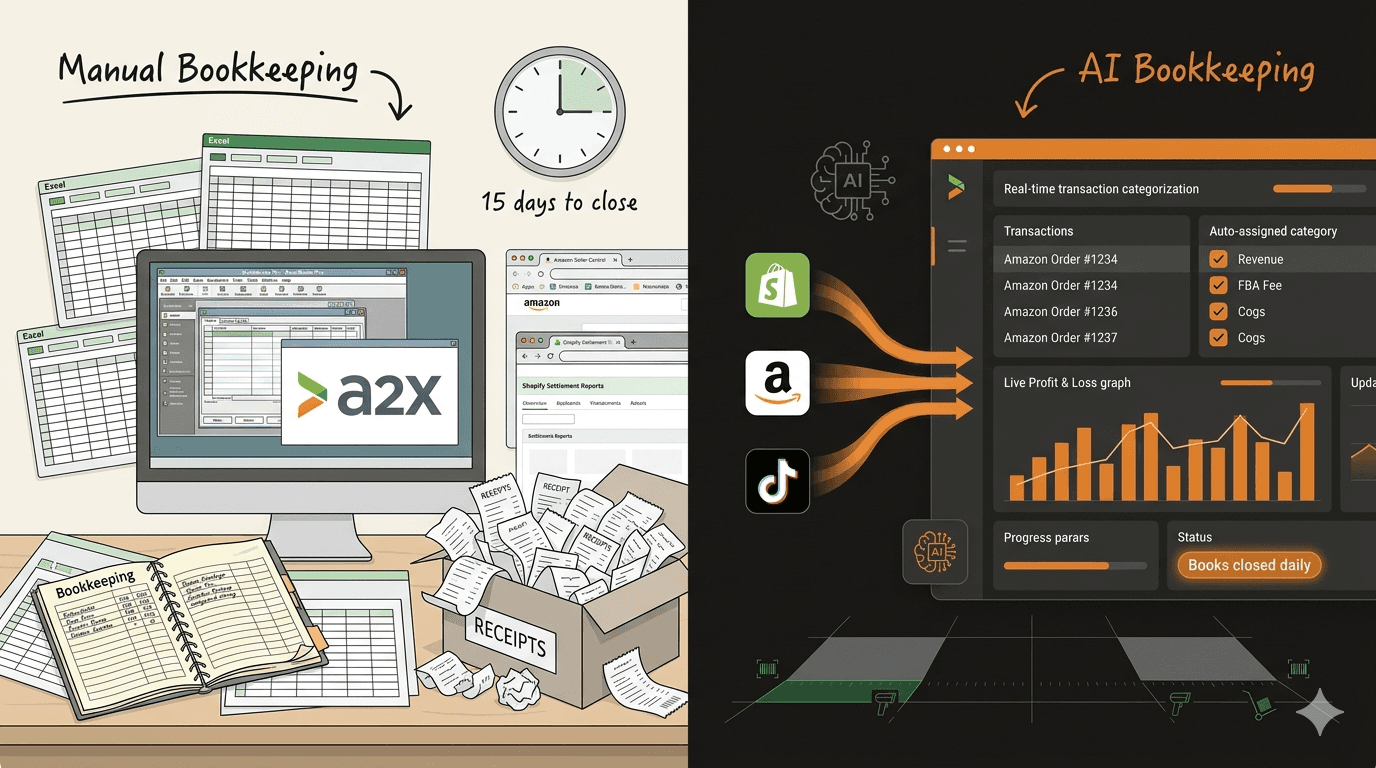
AI bookkeeping compresses this stack. Instead of paying a person hourly to categorize transactions and then paying separately for the analysis around them, the software connects to your banks, cards, and billing system and does the recording work continuously, with judgment calls surfaced for approval instead of batched into a monthly meeting. The mechanics are covered in detail in how AI bookkeeping works.
Futureproof takes this further than categorization. For $1,000 per month flat, startups get an AI finance team of six agents: Vic keeps accrual books current daily, Remi chases receivables, Theo handles bills, Margo maintains the forecast, Hugo watches revenue operations, and Nia prepares investor reporting. Compare that against the controller tier at $1,500 to $2,500, or a loaded full-time hire near $6,000 per month, and the line item covers several roles instead of a slice of one. Human oversight is built in as well: every plan includes a monthly review call with a financial specialist.
The honest framing is not that AI is cheaper than every bookkeeper, because a $300 cash-basis tier will always undercut it. The framing is that AI at a flat rate is cheaper than the full set of things a venture-path startup ends up buying around that bookkeeper. Founders can see their own books running this way by starting a free trial.
Frequently asked questions
How much does a bookkeeper cost per hour?
Freelance bookkeepers charge $25 to $60 per hour as of 2026, with the average Upwork rate around $43. Certified or industry-specialized bookkeepers charge $75 to $100 or more, and CPAs doing bookkeeping bill $60 to $100+. Employee wages are lower, with the BLS median near $23.66 per hour, but that excludes taxes and benefits.
How much does a bookkeeper cost per month?
Expect $250 to $700 per month for basic outsourced service on cash basis, $500 to $1,200 once bill pay and invoicing enter scope, and $1,000 to $2,500 or more for accrual books with controller review. A part-time freelancer typically runs $500 to $2,400 monthly depending on hours.
How much does a bookkeeper cost for a small business?
Most small businesses pay $300 to $800 per month, consistent with NerdWallet's finding that typical spend centers around $300 and Pilot's benchmark of 1 to 3 percent of revenue. Startups planning to raise capital should budget higher, since accrual books and investor-grade reporting price into the $1,000 to $2,500 controller tier.
How much does a virtual bookkeeper cost?
Virtual bookkeepers price like their in-person peers, roughly $25 to $60 per hour freelance or $250 to $700 per month through an online service, since the work happens in cloud software either way. AI-native options change the structure rather than just the location, replacing hourly labor with flat-rate software plus review, at $1,000 per month in Futureproof's case for all six agents.