
Outsourced bookkeeping pricing in 2026 runs $200 to $400 per month for transactions-only service, $500 to $1,200 once accounts payable and receivable enter the scope, and $1,000 to $2,500 or more with accrual accounting and controller review. The right tier depends on your transaction volume, accounting method, and who reads your financials.
Those ranges come from the published rates and editorial guides that dominate this search: Bench lists plans from $199 to $599 per month, Pilot starts at $599, and NerdWallet pegs the typical small business at about $300 per month. The problem is that a monthly price tells you almost nothing by itself. Two firms quoting $600 can be selling wildly different amounts of work.
This guide breaks down what each pricing tier actually includes, what quietly pushes you into the next one, and where AI execution changes the math entirely. For the full picture of setting up your financial foundation, start with our bookkeeping for startups hub, which covers everything from your first chart of accounts to investor-ready reporting.
The Three Tiers of Outsourced Bookkeeping
Almost every outsourced bookkeeping service, whether it calls itself virtual bookkeeping, online bookkeeping, or fractional accounting, sells some version of the same three tiers. The names change. The scope boundaries barely do.
Here is what the market looked like as of mid-2026, based on published pricing from Bench, Pilot, and NerdWallet's small business survey data.
| Tier | Typical monthly price | What is included | What is usually not |
|---|---|---|---|
| Transactions-only | $200 to $400 | Transaction categorization, bank and card reconciliation, monthly P&L and balance sheet, year-end tax-ready package | Accounts payable, accounts receivable, invoicing, payroll, accrual adjustments |
| Full-charge (adds AP/AR) | $500 to $1,200 | Everything above, plus bill pay, invoicing and collections support, faster monthly close, more responsive communication | Controller review, revenue recognition, forecasting, board reporting |
| Controller-level | $1,000 to $2,500+ | Everything above, plus accrual accounting, month-end close procedures, controller review of the general ledger, audit-ready documentation | CFO-level strategy, fundraising support, financial modeling |
The transactions-only tier is where most advertised "starting at" prices live. Bench's Grow plan at $199 per month covers categorization, reconciliation, and year-end financials, but reserves unlimited communication for its $399 Core plan and restricts Grow to businesses under $250,000 in annual revenue. That is the pattern across the industry: the headline price buys a narrow slice of the work.
The full-charge tier is where a service starts acting like a part-time finance person rather than a categorization engine. Someone pays your bills, chases your invoices, and closes your books on a schedule you can plan around. Pilot's entry pricing of $599 per month sits at the bottom of this tier, and it applies only to companies with monthly expenses up to $30,000.
The controller tier exists because investors, lenders, and auditors do not accept lightly reviewed cash-basis books. Once you need GAAP-aligned accruals, deferred revenue schedules, and a documented close, you are paying for senior review time, and senior review time is expensive. Companies that raise a priced round almost always land here whether they planned to or not.
Flat Rate, Hourly, or Volume-Based Pricing Models
Beyond the tier you pick, the billing model shapes what you actually pay over a year. Virtual bookkeeping pricing generally follows one of three structures, and each one shifts risk between you and the provider in a different direction.
Hourly billing runs $20 to $60 per hour for independent bookkeepers, with freelance marketplaces averaging around $43 and specialist QuickBooks support like Bench's hourly service at $55. Hourly is fine for a one-time cleanup or a few hours of monthly help, but it makes budgeting hard because a messy month bills more than a clean one. You carry all the volume risk.
Flat monthly subscriptions are what Bench, Pilot, and most online bookkeeping services sell, and they are what the tier table above describes. The predictability is real, but read the fine print on the brackets. Most flat rates are flat only within an expense or transaction band, so the price steps up as you grow, and annual prepayment discounts of 15 to 20 percent lock you in before you know whether the service fits.
Volume-based pricing ties the fee directly to transaction count or monthly expenses, sometimes as a base fee plus a per-transaction charge. It looks fair on paper and works for genuinely small operations. For a growing startup it means your bookkeeping bill compounds with your growth, which is exactly backwards: the months when you are scaling fastest are the months you can least afford a surprise invoice.
For most funded startups, a flat rate with wide, clearly documented brackets beats the alternatives. The goal is a bill you can forecast twelve months out without knowing your December transaction count in March.
What Actually Moves You Between Tiers
Pricing pages present tiers as a choice. In practice, four triggers decide the tier for you, and they are worth understanding before you sign anything.
Transaction and expense volume. Most services price on monthly expenses or transaction count, not revenue. Pilot's $599 rate holds only up to $30,000 in monthly expenses, and Bench gates its cheapest plan by annual revenue. A busy month with heavy ad spend or inventory purchases can reprice your whole engagement, which is worth remembering when you model spend against your startup runway calculator.
Cash versus accrual. Accrual bookkeeping takes more work every single month, so services either charge a premium for it or exclude it from lower tiers entirely. If you sell annual SaaS contracts or carry inventory, cash-basis accounting will misstate your position badly enough to matter. Our guide to accrual versus cash basis for SaaS and ecommerce covers when the switch becomes unavoidable.
Entities and complexity. A second legal entity, a foreign subsidiary, or multi-state payroll typically adds a per-entity fee or forces a custom quote. The same goes for industry complexity: inventory, revenue share agreements, and usage-based billing all push quotes upward because they add judgment calls a junior bookkeeper cannot make alone.
Catch-up and cleanup work. If your books are behind, expect a separate project fee before monthly service begins. NerdWallet cites cleanup projects starting at $1,000, and Bench charges $1,200 in onboarding for its hourly QuickBooks service. Months of neglect cost more to fix than they would have cost to maintain, a dynamic we cover in the real cost of bad bookkeeping.
What the Pricing Pages Leave Out
We fetched the top-ranking pages for this query and audited what they disclose. The pattern is consistent: prices are visible, scope is not.
Pilot's own cost guide quotes a $250 to $2,500 monthly range and its $599 starting price, but never itemizes what the entry price includes. NerdWallet's guide gives useful market ranges and names complexity as the cost driver, yet does not define what separates a $300 engagement from a $700 one. Bench publishes the clearest plan breakdown of the three, and even there, AP, AR, invoicing, and payroll sit outside every core bookkeeping plan.
That omission is the entire game. The useful comparison is never price against price. It is scope per dollar: how many hours of actual finance work, at what level of judgment, does each dollar buy, and what happens to the price when your volume grows. A $399 plan that excludes bill pay is not cheaper than a $700 plan that includes it if you spend six founder-hours a month paying bills yourself.
So before comparing quotes, write down the jobs you need done: categorization, reconciliation, bill pay, invoicing and collections, accrual adjustments, month-end close, and reporting. Then ask each provider which jobs are in scope at the quoted price, which trigger overages, and what the price becomes at twice your current transaction volume. The answers vary far more than the headline prices do, as we explain in our broader guide to accounting for startups.
Where AI Execution Changes the Tier Math
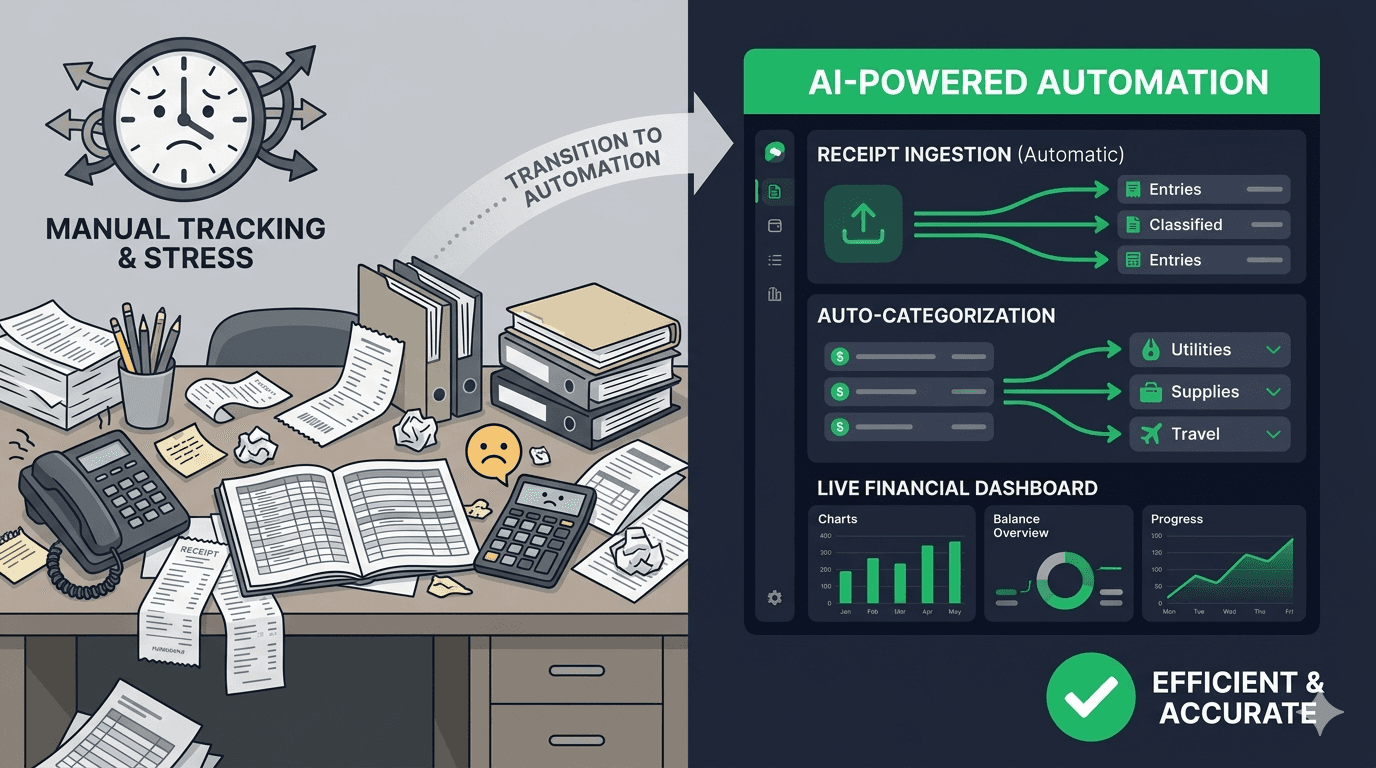
The three-tier ladder exists for one reason: human hours scale with transaction volume and complexity, so providers meter both. Every tier boundary is a labor boundary. That logic breaks when software does the execution.
AI bookkeeping platforms categorize transactions, reconcile accounts, and draft the close continuously instead of in a monthly batch, which removes the cost link between volume and price. Our breakdown of how AI bookkeeping works covers the mechanics. The practical effect on pricing is that scope stops being the thing you ration.
Futureproof is built on that model. For $1,000 per month flat, startups get an AI finance team of six agents: Vic handles bookkeeping, Remi runs accounts receivable, Theo manages accounts payable, Margo builds forecasts, Hugo covers revenue operations, and Nia prepares investor reporting. That scope spans all three traditional tiers plus FP&A work that bookkeeping firms do not offer at any tier, with no per-seat fees and no volume-based repricing. Companies that want a licensed accountant reviewing the agents' work can add human oversight on the Human in the Loop plan at $2,000 per month total.
The comparison worth running is simple. Controller-level service from a traditional firm runs $1,000 to $2,500 per month for bookkeeping alone, with AP, AR, and forecasting priced separately or not offered. If you want to see what the full-scope model looks like against your own books, you can start with Futureproof here.
Frequently Asked Questions
How much does outsourced bookkeeping cost per month?
Expect $200 to $400 per month for basic transaction categorization and monthly statements, $500 to $1,200 for service that includes AP and AR, and $1,000 to $2,500 or more for accrual books with controller review. NerdWallet's 2026 guidance puts the typical small business around $300 per month, but that figure buys the narrowest tier.
What is included in basic outsourced bookkeeping services?
The entry tier covers transaction categorization, bank and credit card reconciliation, a monthly P&L and balance sheet, and a year-end tax-ready package. It almost never includes bill pay, invoicing, payroll, or accrual adjustments. Communication is often limited too: some providers reserve unlimited access to your bookkeeper for higher plans.
Why does accrual accounting cost more than cash basis?
Accrual books require monthly judgment work: deferring revenue, accruing expenses, and maintaining schedules that cash-basis books skip. That work needs senior review, so providers either price accrual as a premium tier or decline it at lower price points. SaaS companies with annual contracts and any startup heading toward a priced round should budget for accrual from the start.
What triggers overage charges with outsourced bookkeeping?
The most common triggers are transaction or expense volume crossing a plan threshold, adding a legal entity, switching from cash to accrual, and catch-up work for months that were never closed. Ask every provider for the exact thresholds in writing, and ask what your price becomes at double your current volume.
Is outsourced bookkeeping cheaper than hiring in-house?
Almost always at the startup stage. Pilot's state-by-state data puts full-time bookkeeper salaries at $42,000 to $60,000, and loaded cost runs 1.25 to 1.4 times salary once you add taxes, benefits, and software. Outsourced service delivers the same core work for $2,400 to $30,000 per year depending on tier, and an AI finance team covers a wider scope than a solo bookkeeper at the low end of that range.