

Inventory financing is a loan or credit line secured by the stock you own or are about to buy, repaid on a schedule as you sell through it. Purchase order financing pays your supplier directly to fulfill a confirmed customer order, and the customer's payment settles the debt. The core difference: inventory financing funds stock you will sell later, PO financing funds an order someone has already placed.
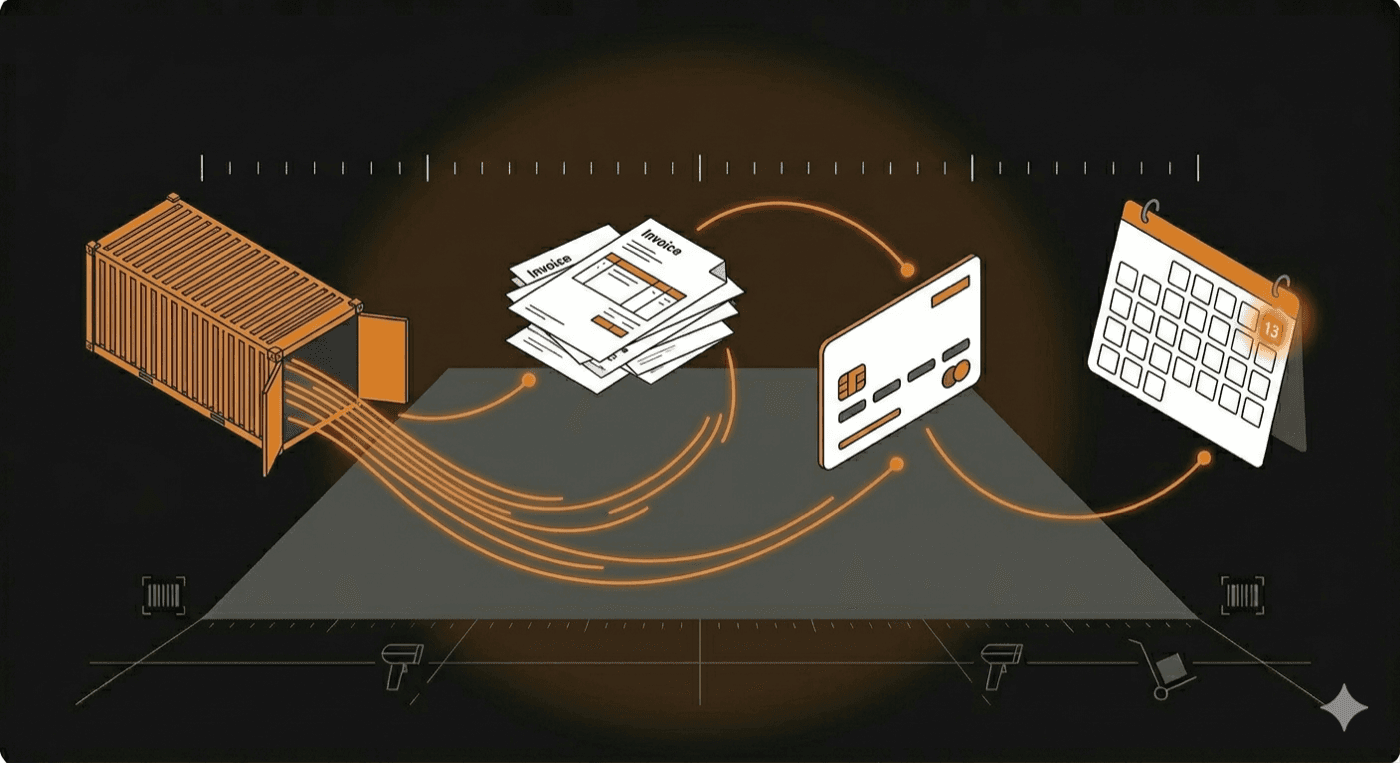
Both exist because inventory eats cash before it produces cash. You pay the factory today, wait weeks for the container, then wait again for sales to convert stock back into money. That gap is your cash conversion cycle, and when a big order or a seasonal buy stretches it past what your bank balance can absorb, financing becomes the question.
This guide covers how each product works, what they actually cost once you convert monthly fees into annual rates, and what lenders will want to see in your books before they say yes. It sits alongside our complete guide to ecommerce accounting, which covers the bookkeeping foundation all of this depends on.
How inventory financing works
Inventory financing uses your stock as collateral. Lenders offer it in two main structures. An inventory loan delivers a lump sum you repay in fixed installments, which suits a single large buy such as a holiday season order. An inventory line of credit is a revolving facility you draw against as needed, which suits brands that reorder continuously.
Because the collateral is product rather than property, lenders care about how sellable that product is. They will look at your inventory turnover, your sales history by channel, and how much of your stock is aging past its sell-by window. Slow-moving stock weakens your case, which is one more reason to deal with dead stock before you apply rather than after.
As of 2026, ecommerce-focused lender guides put inventory financing fees at roughly 2 to 8 percent of the borrowed amount, with typical eligibility floors around six months of sales history and $20,000 or more in average monthly revenue. Online lenders can fund in days. Banks take longer and price lower.
How purchase order financing works
Purchase order financing is narrower. You receive a large confirmed order, usually from a retailer, distributor, or government buyer. You lack the cash to pay your supplier for the goods. A PO financing company pays the supplier directly, often up to 100 percent of the production cost, the supplier ships, you invoice the customer, and the customer pays the financing company. The lender deducts its fee and remits the balance to you.
Notice who repays the loan: your customer, not you. That is why PO financing underwriting focuses on your customer's creditworthiness and your supplier's track record more than on your own balance sheet. It is also why PO financing only fits business-to-business and business-to-government sales. A direct-to-consumer brand has thousands of small customers, and no lender will chase them individually.
As of 2026, published lender guides (NerdWallet and SoFi among them) quote PO financing fees of 1 to 6 percent of supplier costs per 30-day period, with typical minimums of $50,000 per order and gross margins of at least 20 percent on the deal. Wholesale resellers who source against supplier invoices are the classic fit: the paperwork trail lenders want already exists.
Inventory financing vs PO financing vs a line of credit
Most brands weighing these two should also price a third option, the ordinary revolving business line of credit. Here is how the three compare.
| Inventory financing | PO financing | Revolving line of credit | |
|---|---|---|---|
| What it funds | Stock you buy to sell later; the inventory is the collateral | A specific confirmed customer order; lender pays your supplier directly | Anything: inventory, ad spend, payroll gaps |
| Who qualifies | Brands with sales history (roughly 6+ months and about $20K+ monthly revenue per 2026 lender guides) and sellable, documented stock | Brands with B2B or B2G orders, typically $50K+ per order and 20%+ margins; your customer's credit matters most | Established businesses with solid revenue, credit history, and clean financials |
| Typical cost | Fees of roughly 2 to 8% of the amount borrowed, as of 2026 guides | 1 to 6% of supplier costs per 30 days, as of 2026 guides; annualized often above 20% | Usually the lowest of the three when you qualify; varies by lender and credit profile |
| Speed | Days with online lenders, longer with banks | Days to weeks; the lender vets your customer and supplier | Slower to open, instant to draw once in place |
| Best fit | DTC brands funding seasonal or growth restocks | Wholesale sellers and resellers landing orders bigger than their cash | Brands with recurring, predictable working capital swings |
The pattern: PO financing solves a deal-shaped problem, inventory financing solves a stock-shaped problem, and a line of credit solves a timing-shaped problem. Price all three before committing, because the cheapest option you qualify for wins.
The true cost: converting fees into APR
Lender pricing is designed to sound small. "Three percent" reads like a rounding error until you annualize it. Here is an illustrative example, with round numbers chosen for clarity rather than quoted from any lender.
Suppose a reseller lands a $150,000 wholesale order with supplier costs of $100,000, and takes PO financing at 3 percent of supplier costs per 30 days. The customer pays on net-60 terms, so the financing runs two periods. The fee is $100,000 × 3% × 2 = $6,000. That is 6 percent of the borrowed amount for two months of money, which annualizes to roughly 36 percent simple APR.
The deal can still be worth doing. On that order, $150,000 in revenue minus $100,000 in cost of goods sold leaves $50,000 of gross profit, and paying $6,000 to capture $44,000 you otherwise could not fund is a rational trade. The point is to run this math before signing, not after. The same conversion applies to inventory financing, with one extra trap: a 6 percent flat fee repaid over four months looks like about 18 percent simple annualized, but that assumes you hold the full principal for the whole term. An inventory loan is repaid in fixed installments, so your average balance is only about half the principal, and the effective APR is roughly double the simple figure: mid-30s percent over four months, mid-40s over three. Every extra 30 days your customer takes to pay, or your stock takes to sell, raises the effective rate.
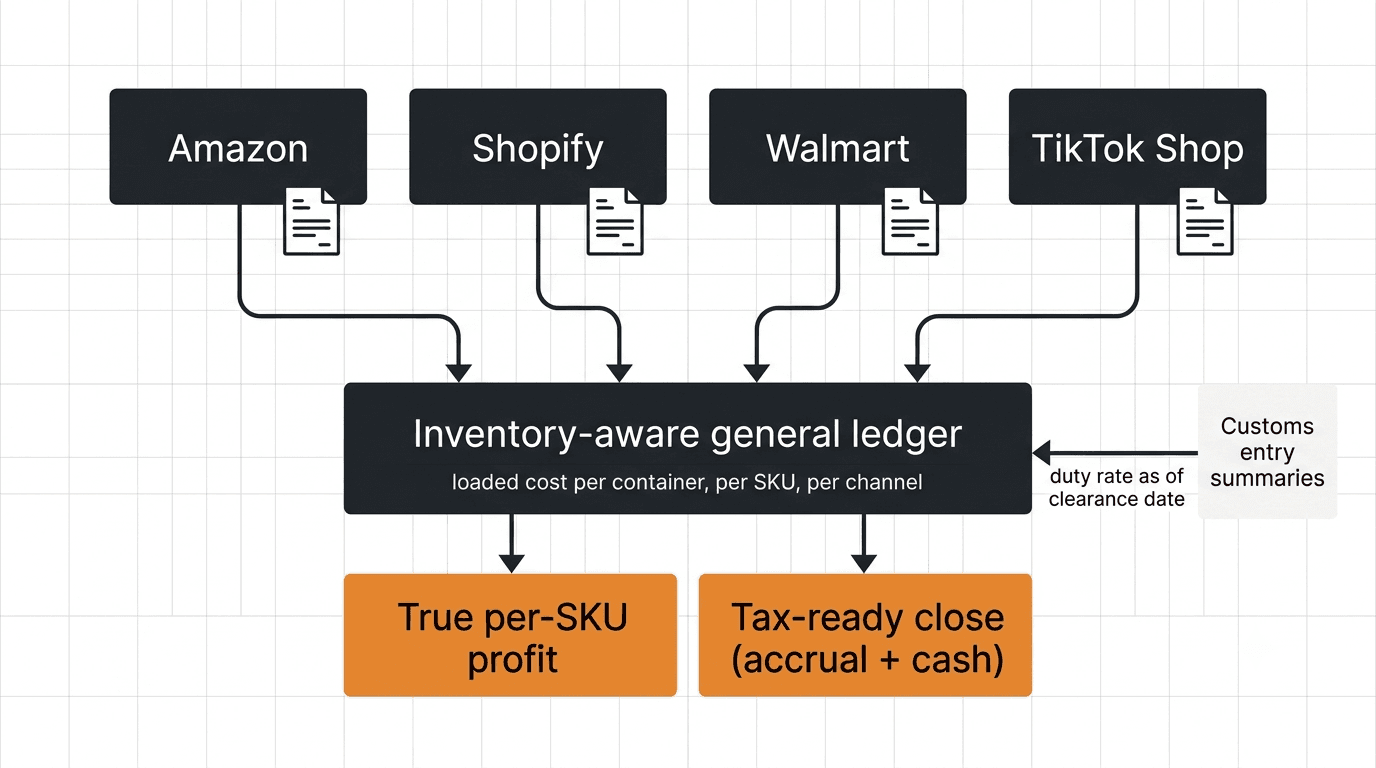
Two things quietly move this math against you. First, slow customer payments extend PO financing fee periods you do not control. Second, rising landed costs mean the same reorder needs more borrowed dollars than the last one did. Brands importing in 2025 and 2026 have watched duties and freight reprice between containers, which is why we recommend tracking true landed cost per SKU before deciding how much financing you actually need. If you sell on marketplaces, our ecommerce fee calculators help you confirm the margin left after channel fees can absorb a financing cost at all.
What lenders will ask for from your books
Every lender guide converges on the same document list, and it is exactly what clean books produce. Expect to hand over bank statements, a current profit and loss statement, a balance sheet, tax returns, and accounts receivable and payable aging. Inventory lenders go deeper: SKU-level counts, unit costs, turnover by product, and aging or shrink reports that prove the collateral is real and moving.
Brands with reconciled, accrual-basis books can produce this package in an afternoon. Brands running on a spreadsheet and a bank feed spend weeks reconstructing it, and the gaps show. Lenders read messy books as risk and price accordingly, when they do not decline outright.
Before you borrow at all, check whether better operations can shrink the need. Tightening your reorder point and order quantities often frees more cash than a credit line delivers, without the fee. Our working capital blueprint for ecommerce walks through those levers in detail, and the working capital position they improve is the first number any underwriter checks.
Seeing the need before it becomes urgent
The worst time to shop for financing is the week you need it. Rushed borrowers accept the first term sheet, and the math above shows how expensive that can be.
Futureproof does not provide financing. What our AI finance team does is make the need visible early and the application painless. Vic keeps your books reconciled with inventory and COGS handled correctly, so the statements lenders ask for already exist. Margo runs your cash forecast, including the 13-week cash flow view, so you can see the reorder that will outrun your cash two months before it happens and compare what each financing option would cost you in that window.
Amazon and eBay integrations are fully live, with Shopify in beta. If you want lender-ready books and a forecast that flags the financing decision before it becomes an emergency, start your 14-day trial.
Frequently asked questions
Is inventory financing a good idea?
It depends on the margin math. If borrowed stock sells through at healthy gross margin within the repayment window, the fee is a cost of growth. If sell-through is uncertain, you risk paying interest on stock that becomes a markdown problem, while the lender holds it as collateral. Run the annualized cost against the gross profit of the specific buy, not against revenue.
What do you need to qualify for inventory financing?
As of 2026, ecommerce lender guides typically look for at least six months of sales history, roughly $20,000 or more in average monthly revenue, consistent bank balances, and documented inventory: SKU-level counts, unit costs, and turnover data. Traditional banks add credit history and financial statement requirements. Clean, reconciled books improve both approval odds and pricing.
What is the difference between PO financing and invoice factoring?
Timing. PO financing funds an order before it ships, paying your supplier to produce the goods. Invoice factoring funds an invoice after delivery, advancing cash against what your customer already owes. Many brands use them in sequence on the same deal: PO financing to fulfill, then factoring to pull the receivable forward once the invoice exists.
Can a new ecommerce brand qualify for PO financing?
Sometimes, because underwriting rests on your customer's credit rather than yours. A young reseller with a purchase order from a strong retailer can qualify where a traditional loan would be declined. The practical hurdles are deal size and margin: most lenders want orders of $50,000 or more with at least 20 percent margin, and they will vet your supplier's ability to deliver.
How much does purchase order financing cost?
As of 2026, published guides quote 1 to 6 percent of supplier costs per 30-day period. The annualized rate depends on how long your customer takes to pay: a 3 percent monthly fee running 60 days costs 6 percent of the borrowed amount, roughly 36 percent as a simple annual rate. Always convert the quoted fee to an annualized figure before comparing options.